Slate has a reputation for being indestructible, and the lifespans are real. MyBuilder quotes a well-installed slate roof as lasting 80 to 100 years or more, with Welsh slate often passing the hundred-year mark. That long life comes from the stone itself. The roof as a whole is another matter, because it is made of thin, brittle sheets hung from small fixings, and it is easy to damage while cleaning.
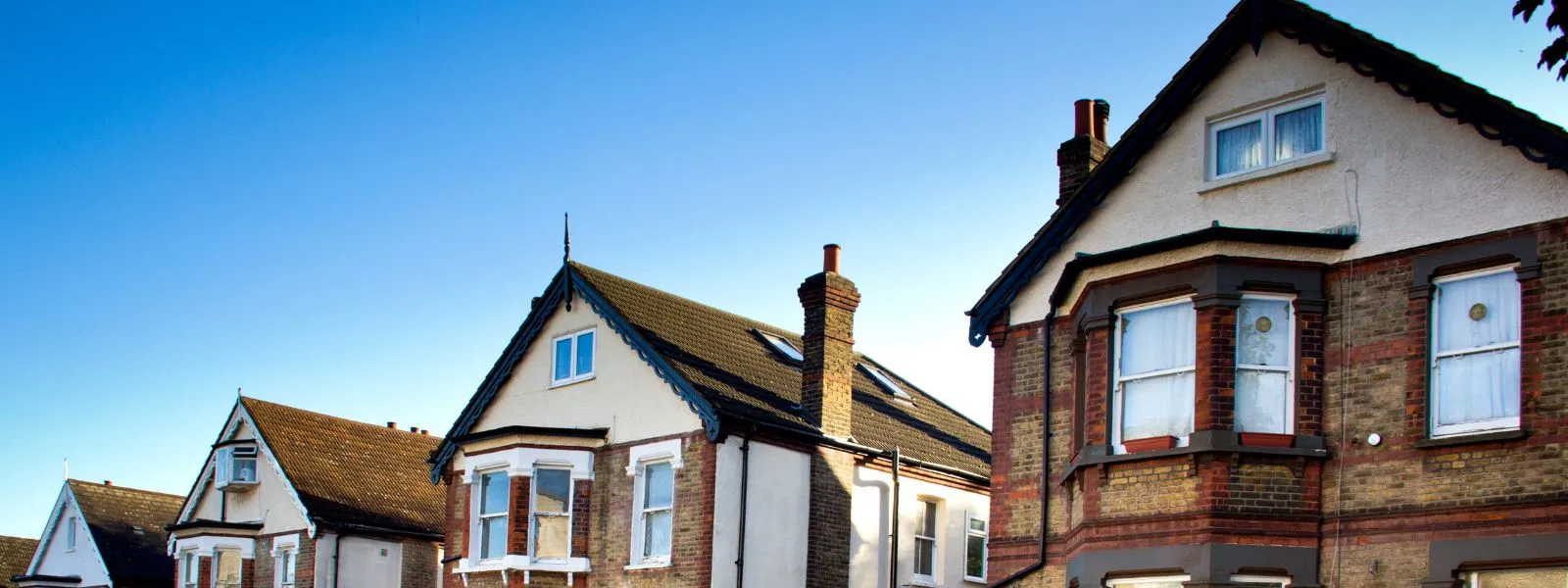
Welsh slate sits on many of the older terraces and villas by the Worthing seafront, usually under tall stacks and decorative ridges, so the question comes up here a good deal. A slate roof that has gone green or grey usually just needs cleaning, but how it is cleaned decides whether it is still sound afterwards.
This guide covers why slate is more delicate than it looks, what to check before any cleaning begins, how a roofer gets onto it without breaking slates, the methods that suit it, what drives the price and what to do afterwards. If your slates are old, slipping or flaking, a repair may be the better first step than a clean.
Why a hard stone roof breaks so easily
A slate is a thin sheet split from rock, laid in overlapping courses and held by a pair of nails, or sometimes by a hook or clip. It resists weather very well, but it is brittle across its thickness. A foot placed between the fixing points, or a point load from a ladder foot, can snap a slate that looks perfectly sound. The crack is often hidden beneath the slate above, so nobody sees it until the roof leaks.
Fixings are the second weakness. Older roofs were usually nailed with iron or similar nails, and those can corrode over the decades, letting the slate slip. The slate itself is fine, but the fixing has failed. A cleaning method that vibrates or flexes the roof can shake loose slates that were only just holding.
Soft and hard varieties
Not all slate behaves the same. Good Welsh slate is hard and dense. Some other slates, and some long-weathered ones, split into layers at the edges, a defect called delamination, and these are more fragile. A tile roof can be walked on carefully in many cases, but a slate roof is better treated as something you do not step on at all.
Pitch matters too. BS 5534 indicates a minimum natural slate pitch of 20 degrees for moderate exposure with a 500 mm slate and a 115 mm overlap, while Cupa Pizarras advises against hook fixings on anything under 25 degrees. A shallow or poorly fixed roof deserves extra care.
The takeaway is that the right question is how a roof was laid and what it has been through since, not just how hard slate is. A survey answers that before any cleaning method is chosen.
The checks that come before any cleaning
A slate roof should be inspected before it is cleaned, not after. Cleaning can hide problems, spread them or simply make them appear, so you need to know what you are starting with.
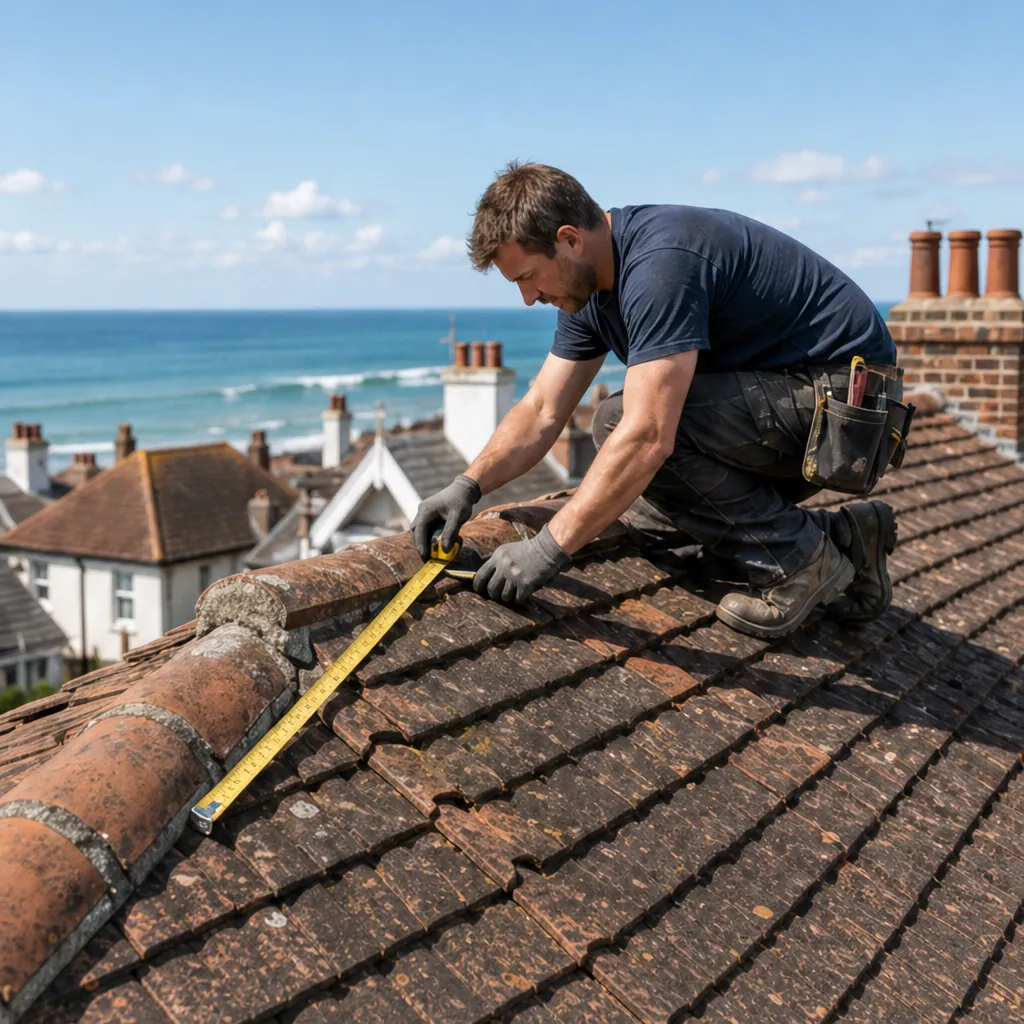
From the ground, with binoculars, we look for slipped slates sitting lower than their neighbours, gaps showing the dark underlay, broken corners and slates that have lifted at the tail. Up in the loft, we check for pinpricks of daylight, damp timbers, stained underlay and signs that water has been running in. The courses at the eaves and around valleys and chimneys get particular attention, since they take the most water.
What decides whether to clean at all
If a number of slates are loose, cracked or hanging by corroded nails, cleaning first is the wrong order. Repairs should be done, and the roof made sound, before anyone brushes or sprays across it. Otherwise the cleaning itself dislodges slates and the owner pays twice.
We also check the lead around chimneys, valleys and abutments. A roof that is leaking at a flashing needs that fixed whatever the slate looks like, and cleaning does nothing for it.
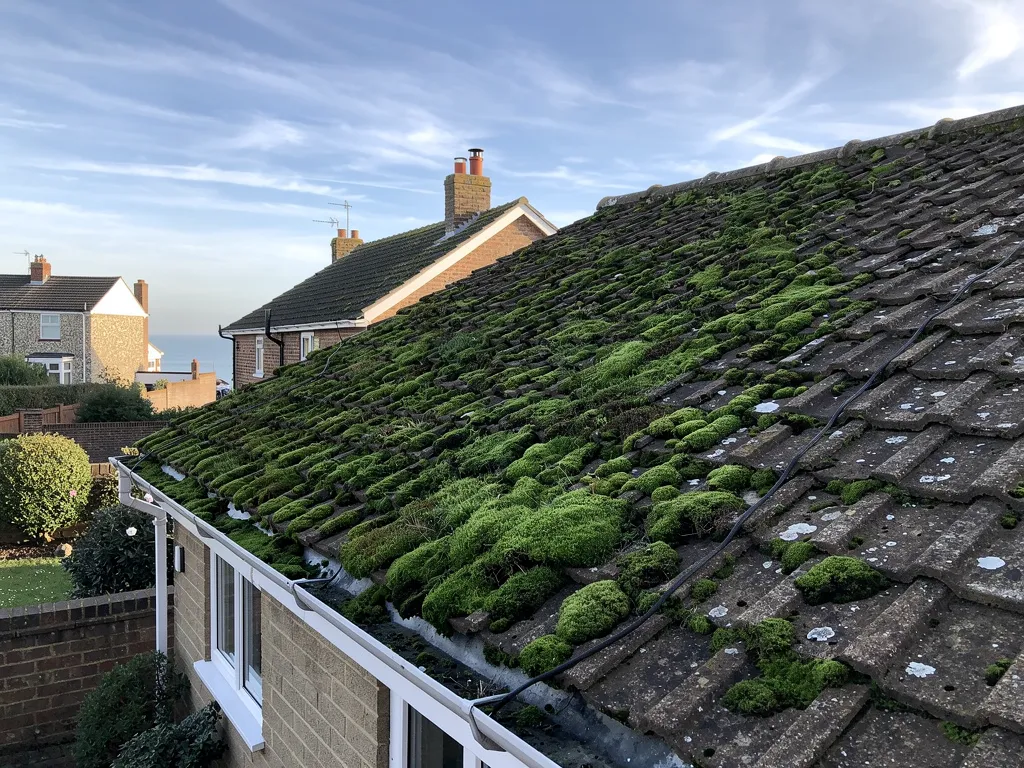
The other thing we check is whether the growth is really a problem. Lichen and moss on slate are often cosmetic, and on a good roof a light covering can be left. Our separate guide on whether moss damages roof tiles sets out when it matters. If it does not, the right advice may be to leave the roof alone and tidy the gutters.
The written quote arrives with photographs of your own slopes, so the slipped slates and cracked corners we saw are in front of you too.
Getting onto the roof without breaking it
Access is where many slate roofs are damaged. The safest approach is to avoid putting weight on the slates at all, and there are several ways to do that.
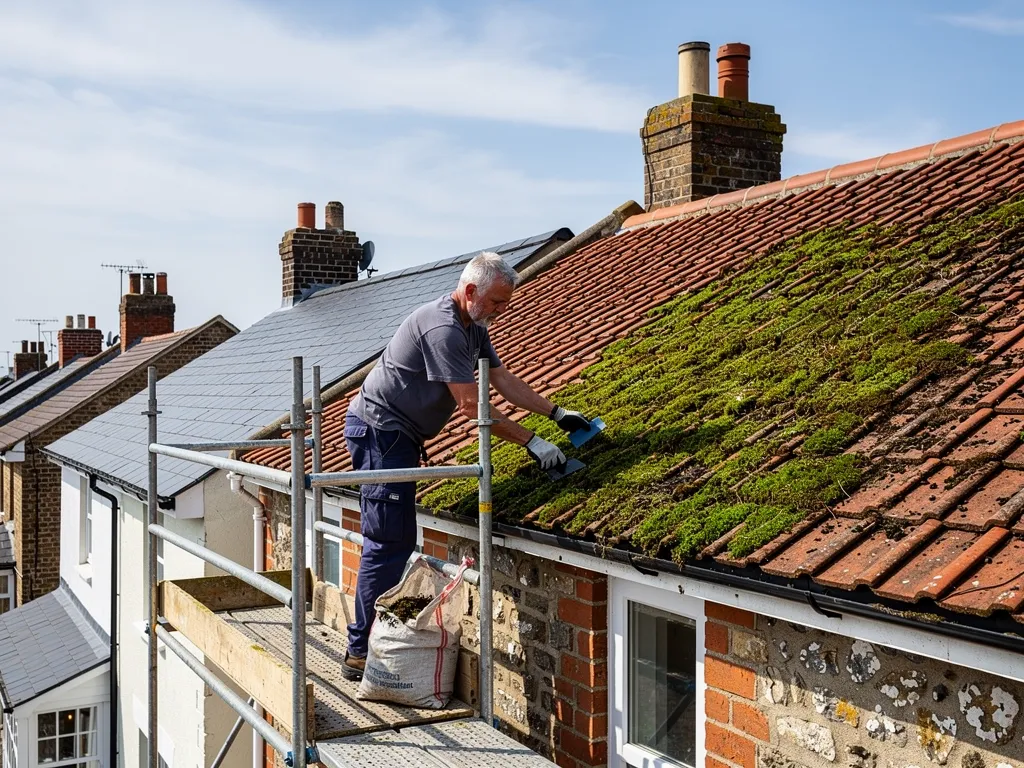
Scaffolding gives a stable working platform at the eaves, and from there much of a roof can be reached with long-handled tools. It also protects the slates from ladders and gives the crew a safe place to stand. On a terrace or a semi with a long elevation, it often pays for itself in reduced damage. Ask whether a quote includes it. If the poles stand on a public footway, the scaffold contractor arranges the council licence.
Roof ladders and crawling boards
Where a scaffold is not practical, a roof ladder or a crawling board spreads the load. A roof ladder hooks over the ridge and lies flat along the slope, and a crawling board is a wide plank that carries a person's weight across many slates at once. Neither is a licence to walk freely, since they are for reaching and for brief work, and the slates beneath them are protected by padding.
Other access options include a cherry picker or mobile platform, a tower beside the house, or a pole and camera from the ground. Cameras and drones can inspect a roof but cannot clean it.
What to avoid
- Walking directly on the slates, especially wet or mossy ones, which are slippery as well as brittle.
- Leaning a ladder against the slates themselves instead of onto the gutter bracket or a stand-off.
- Carrying heavy equipment across the roof.
A roofer who strolls across slate as if it were a pavement has shown you how careful the cleaning is likely to be.
Methods that suit slate, and the ones that do not
The gentlest method that works is the right one. On slate, that normally means hand work and a low-pressure treatment.
Hand brushing and careful scraping with a soft-edged tool lift loose moss without scouring the surface. It is slow, but it gives the operator a feel for the slates and shows up loose ones as they go. Manual scraping is typically quoted at £5 to £10 per m² in the MyBuilder roof cleaning guide (updated 21/08/2026).
A biocide then deals with the lichen, algae and moss spores that remain. It is applied by a low-pressure spray and left to work, and the dead growth fades over the following weeks. Our guide to roof coatings after cleaning covers what happens next if you consider a coating, though slate rarely needs one.
Why jets are a poor choice
Strong jets are the most common way slate roofs are harmed. MyBuilder cautions against jetting delicate tiles, and slate is among the most delicate of all. A jet can cut into the surface, drive water up under the overlaps, wash out the lining or loosen slates that are barely held. It also strips the natural patina.
Acids and strong household chemicals are no better. They can stain slate, attack metal flashings and run into gutters and onto plants. We keep to products suited to roofs and apply them with care.
A roof cleaned well should look cleaner without looking scrubbed. The edges of the slates remain crisp, the colour is even and nothing has moved. If a quote involves a heavy jet on slate, ask what protection there is for the slates and why.
What affects the price of cleaning slate
The quoted range for roof cleaning is wide, and slate sits near the upper end. MyBuilder gives a typical UK range (updated 21/08/2026) of around £300 and up for roof cleaning, with slate roofs at £500 to £1,000, against £400 to £750 for tiles and £450 to £850 for pitched roofs generally. That is a guide to what is typically quoted nationally, not a Watertight price.
Several things move a slate quote up or down.
- Access. A roof that needs scaffolding costs more to reach than one served by a tower or a platform. Make sure each quote states if scaffolding and VAT are included.
- Size and shape. Large roofs, steep pitches, many valleys and tall stacks all add time.
- Condition. Loose or broken slates need repair before cleaning, and that work is separate from the clean.
- Growth. Thick moss needs far more time than a thin film of lichen.
- Run-off. Protecting gutters, walls and plants takes time on a house with narrow side access.
Cleaning against repairing
It is worth setting the clean against the roof's overall condition. If a slate roof is near the end of its life, or has many corroded nails, spending money on a clean makes little sense. For comparison, MyBuilder gives a typical range of £100 to £180 per m² for a slate re-roof, so a full replacement is a different order of cost.
The written quote follows a survey, comes as one total price and is priced at a good, fair figure. We tell you if a repair, a partial re-lay or leaving things alone is the better answer for the money.
After the clean: keeping slate in good order
Once the growth has gone, the roof is in the best state to be inspected, so use the moment. Walk round the house, or ask for the survey photographs, and note anything the cleaning revealed: hairline cracks, thinning corners, discoloured slates that may have started to delaminate.
Slipped slates can be re-fixed with a slate clip or a replacement slate slid into place, which is a small job if done early. Left alone, the gap lets water into the underlay and the battens that carry the slates, and the repair grows.
Why north faces go green again
Shaded slopes tend to regrow first, and our answer on why moss grows on the north side of the roof explains the reasons. You can slow regrowth by cutting back overhanging branches, keeping gutters clear and avoiding anything that holds dirt against the slates, like leaf litter in valleys.
Historic slate roofs need more thought. A Victorian roof on a listed building or in a conservation area may need a gentler method than a standard clean, and our guide to cleaning a historic or listed roof goes into this. If you are unsure whether the work needs consent, ask the Adur & Worthing planning team before it starts. Gentle maintenance cleaning is very different from altering the roof, and the council can say which side of the line a plan falls on.
Cleaning is a good time to look at the nails and slate ends too, so the survey notes anything slipped or cracked. Call 01903 299063, send a message on WhatsApp or use the enquiry form with a photograph of the slope. See also our roof cleaning and moss removal page for the overall service.