Once a roof has been cleaned, a coating is usually the next thing offered. It is a paint-like layer, rolled or sprayed over the tiles, sold as a way to refresh the colour, slow regrowth and protect the surface. The brochure pictures are persuasive, because a faded, patchy roof really can look new again.
What the brochure leaves out is that a coating is a decision you cannot easily reverse. It sits on the tile for years, it has to be maintained, and if the tile underneath is wet, worn or already failing, the coating can trap the problem instead of solving it. On some roofs it is a sensible, modest investment. On others, such as historic clay, hand-made tiles and listed buildings, it is the wrong thing to do.
We start from a simple position. Clean roofs first, repair what the cleaning reveals, and treat a coating as an optional finish for a sound roof. This guide sets out what a coating does, what it cannot do, why breathability matters, how the preparation works, which buildings need extra thought, and the questions to ask before you agree to one.
What a roof coating actually is
A roof coating is a liquid film, usually acrylic or a similar polymer, that dries on the surface of a tile into a thin protective skin. Some are clear, some are pigmented to match or change the colour, and some carry an additive intended to discourage growth. They are applied by roller, brush or spray after the roof has been cleaned and left to dry.
The idea is straightforward. A tile that has weathered has a porous, slightly rough face where moisture lingers and spores settle. A coating fills and smooths that face, so rain runs off faster and growth finds it harder to take hold. It can also even out colour where the tile has faded in patches, which is why it is popular on concrete tile roofs that have lost their original finish.
What it is not
It is not a repair. A coating does not mend a cracked tile, replace a slipped slate, or restore a failed ridge bedding. It will not stop a leak that comes from a flashing, a valley or a gutter, and it will not make a worn-out covering last for decades.
It is also not permanent. Coatings are exposed to sun, frost and rain on a surface that expands and contracts every day. Over time they wear, fade and can lift at the edges, and then the roof needs recoating or stripping. Products differ widely, so the manufacturer's data sheet, and the conditions it attaches, are the documents to ask for.
The cost depends on the product, the size and pitch of the roof, how much preparation the surface needs and the access required. We price it on survey and send a written quote.
The case for a coating
There are real reasons to choose one, and it is worth setting them out fairly.
The first is appearance. Concrete tiles in particular lose their pigmented top layer as the years pass, and a roof can end up streaked, patchy and dull. A coating gives an even colour that a clean alone cannot. If a house is being prepared for sale, or the roof is a prominent part of the front elevation, that can matter.
The second is a smoother surface. A tile that has been cleaned still has a rough, weathered face, and a coating fills some of that texture. Water sheds a little faster and regrowth has a harder time getting started. Owners who have a shaded slope under trees sometimes see a longer gap between cleans.
A coating on a roof that suits it
The best candidates are sound, dense concrete tiles with a worn finish, on a roof that has been cleaned thoroughly and checked for defects. In that case, the coating works as a surface treatment on a covering that does not need to breathe through the tile face, and the owner gets a tidy, uniform roof.
A coating can also bind a surface that is beginning to powder. The film holds loose grains in place and slows the loss of material. That is not a cure for a tile that is wearing out, but it can extend the useful life of a tile that has plenty left.
Finally, some owners like having a defined maintenance cycle. A coating with a clear specification gives you a date to plan around, and a roof that is visibly tended is a roof that someone looks at regularly.
The case against, and the breathability question
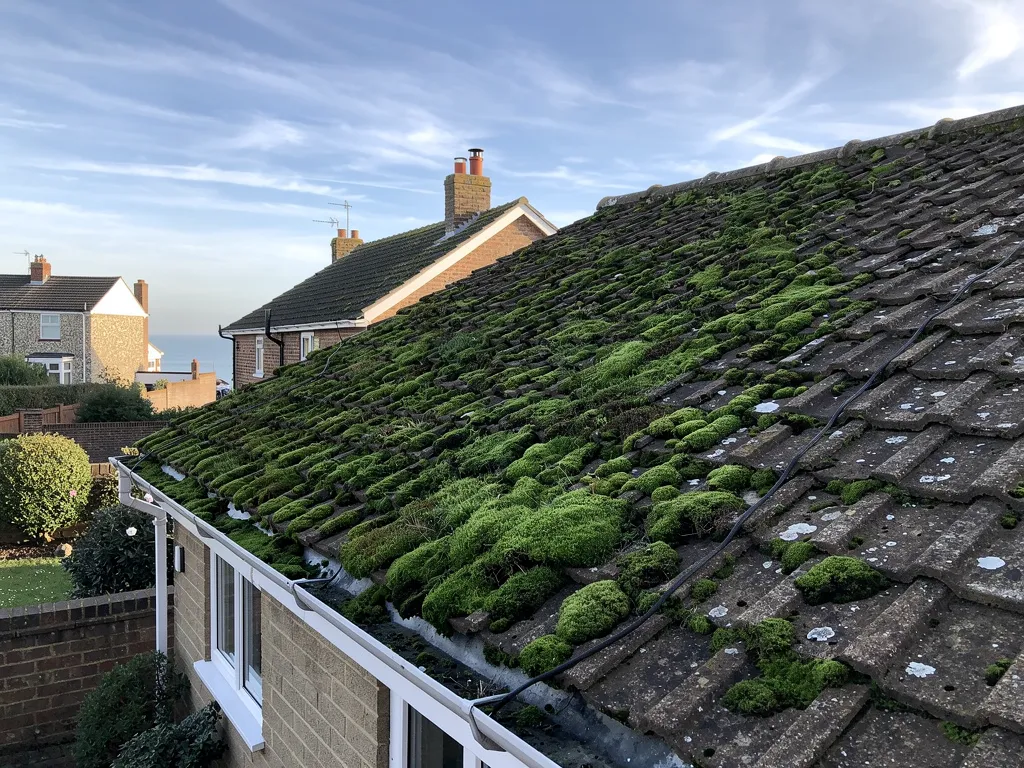
The drawbacks are just as real, and the biggest is moisture. A tile takes in water and gives it up again through its face. A thick, impermeable film on top interrupts that. If water gets in from behind, through a cracked tile edge, a failed joint or from condensation in the roof space, a sealed face cannot let it out. The moisture sits in the tile, freezes in winter and can force the coating off in blisters and flakes.
That is what breathability means in practice: whether the film lets water vapour pass. Some coatings are vapour-permeable and some are not, and the manufacturer's information should say which. On old, soft clay and handmade tiles, a sealed face is a poor idea, and the same caution applies to any roof where the tile is already damp or crumbling.
Other costs to weigh
- Preparation is everything. A coating applied over residual moss, algae or dust will fail early, so the roof must be cleaned well and dry.
- Poor adhesion shows. Flaking and peeling make a roof look worse than a plain weathered one.
- It hides ageing. A fresh finish can mask cracks, thin edges and failing tiles, so check the roof before it goes on.
- Maintenance continues. You are committing to periodic recoating, and removing a failed coating is slow work.
- Walking and ladders can mark a coated roof, so every later repair visit carries a small risk to the finish.
A coating is also no guarantee against moss. Growth can establish on the film itself in damp shade, especially if dirt collects on it. How soon that happens depends on the setting, and our answer on how long before moss grows back looks at the factors involved.
Preparation: where coatings succeed or fail
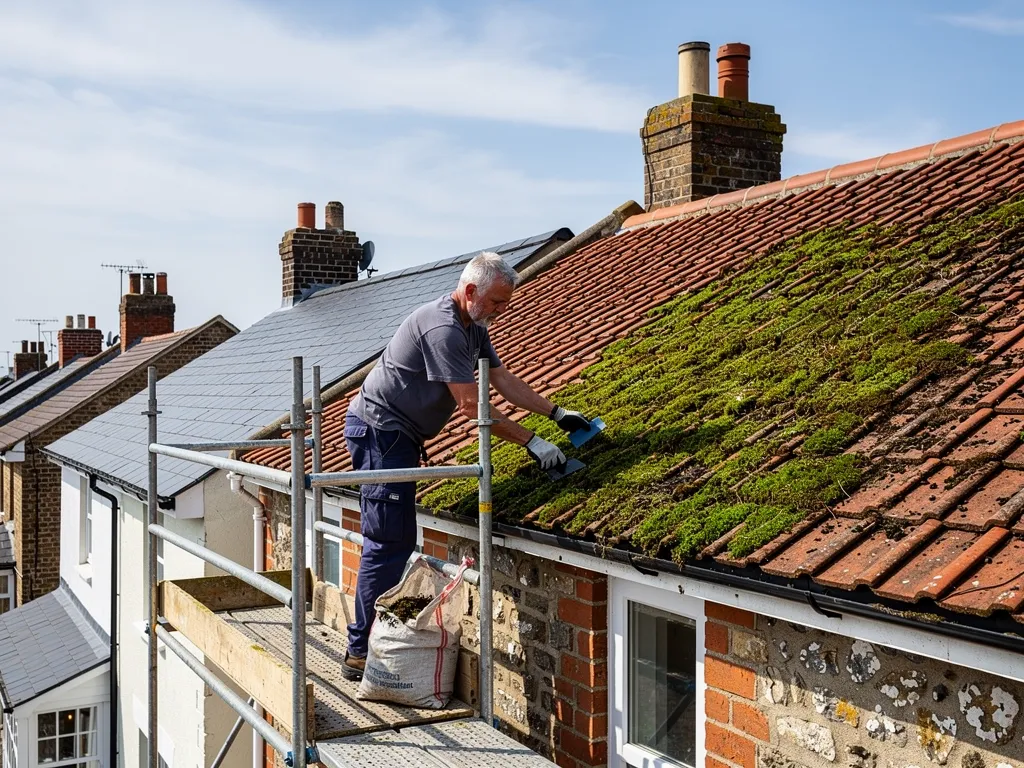
Most coating failures trace back to the surface beneath, not the product itself. For the film to bond, the tile needs to be dry, clean and sound, with nothing loose left on it. That usually means removing moss and lichen, treating the surface so nothing regrows, rinsing off residues and then allowing time for the roof to dry fully.
The treatment matters. A tile that still holds spores or damp will push the new film off from below. Dead growth that has been left in place leaves a weak, dusty layer that the coating bonds to instead of the tile.
The sequence we would expect
- Inspect the roof, from the loft and outside, and repair cracked, slipped or missing tiles first.
- Clean the roof and treat it so growth is killed at the root.
- Rinse thoroughly, and leave the roof until the tiles are dry through.
- Apply the coating in dry weather, at the temperatures the manufacturer allows, in the coats and coverage it specifies.
Weather is a real constraint on this coast. A roof that has been soaked by sea fog or a week of drizzle is rarely dry enough, and a coating applied in damp air can trap that moisture. Be wary of anyone who offers to clean and coat on the same afternoon. Our guide to cleaning a slate roof shows why slate is handled differently, and in practice slate is almost never a candidate for a coating.
Ask for the product name and data sheet in advance, and confirm what conditions a manufacturer warranty depends on. Any warranty from the maker protects the product itself, which is a separate matter from how well it was applied.
Conservation areas, listed buildings and planning
Before agreeing to a coating, check whether your property sits in a protected setting. Putting a film on a roof can change its appearance and, in some places, count as a change that needs consent.
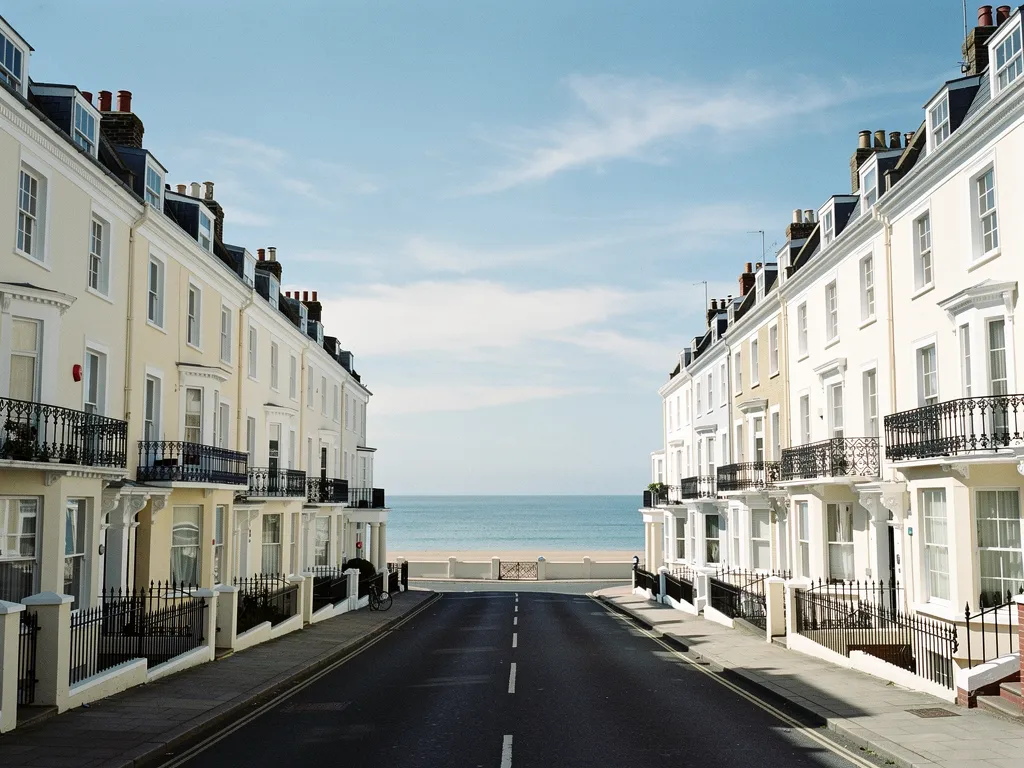
Renewing a covering with the same covering seldom needs planning permission, yet a coating changes how the surface looks, so it is not automatically the same thing. Some streets are covered by Article 4 directions, which withdraw permitted development rights for particular works. Two examples show how specific they are. Old Shoreham and Kingston Buci, both in Adur, have directions that reach roof coverings on any elevation that fronts the highway. The Warwick Gardens direction in Worthing names the painting of a roof among the matters that now need permission. Both are only examples, and the council holds the wording that applies to your road.
Listed buildings
On a listed building the position is stricter. Adur & Worthing Councils list repairs that are not in matching materials among the works needing consent. A coating applied to historic tiles may not count as a matching material, and it is difficult to undo. Check with the Adur & Worthing planning team before applying anything to a listed roof, and in the National Park, check with the South Downs National Park Authority.
Our guide to cleaning a historic or listed roof covers the gentler options that normally suit those buildings. In most such cases, careful cleaning and repair are the better course, and a coating is left out.
Questions to ask before you agree to a coating
If you are weighing up a quote that includes one, these questions separate a sensible proposal from a sales pitch.
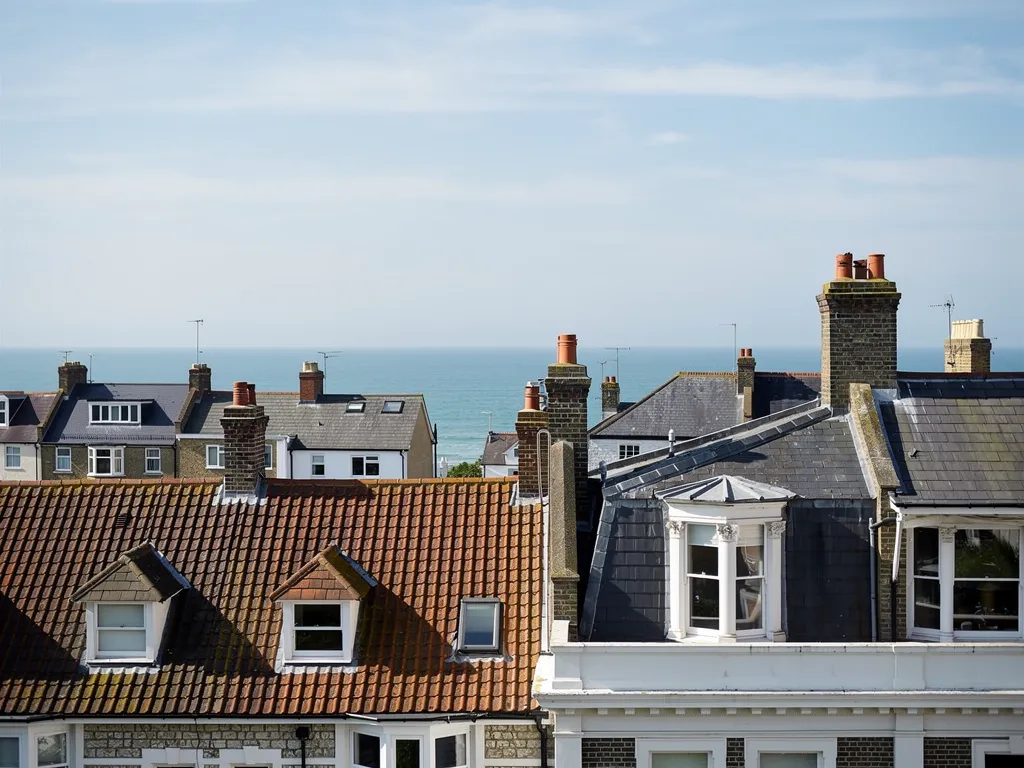
Ask what the tile is and what condition it is in. A sound concrete tile with a worn finish is a reasonable candidate, while soft clay, slate and anything historic generally are not. Ask who has checked the roof for damage first, and whether you can see photographs of the problem areas. A coating should go over a roof that has been repaired, not one with unknown faults.
Ask how the surface will be prepared and how long it will be left to dry. Ask for the product name, the data sheet and what the manufacturer says about breathability, minimum temperature and the number of coats. A professional will answer plainly.
Cost and commitment
Ask what recoating will involve, and roughly when, because the finish is not a one-off. Ask what happens if it peels, who deals with it, and what any cover includes. Keep any warranty for the product with the paperwork for the application.
Ask for everything in one written quote with a single total, and check whether VAT and any scaffolding are included. A coating can sit alongside a clean without being part of it, so make sure you know what you have agreed to.
If you are unsure whether you need one, a survey commits you to nothing. We will photograph the tiles, tell you whether the surface suits a coating and recommend only what the roof needs. Often that is a clean, a few repairs and a plan for the gutters. The number is 01903 299063, and WhatsApp and the enquiry form reach us too.
You can also read about the wider service on our roof cleaning and moss removal page.