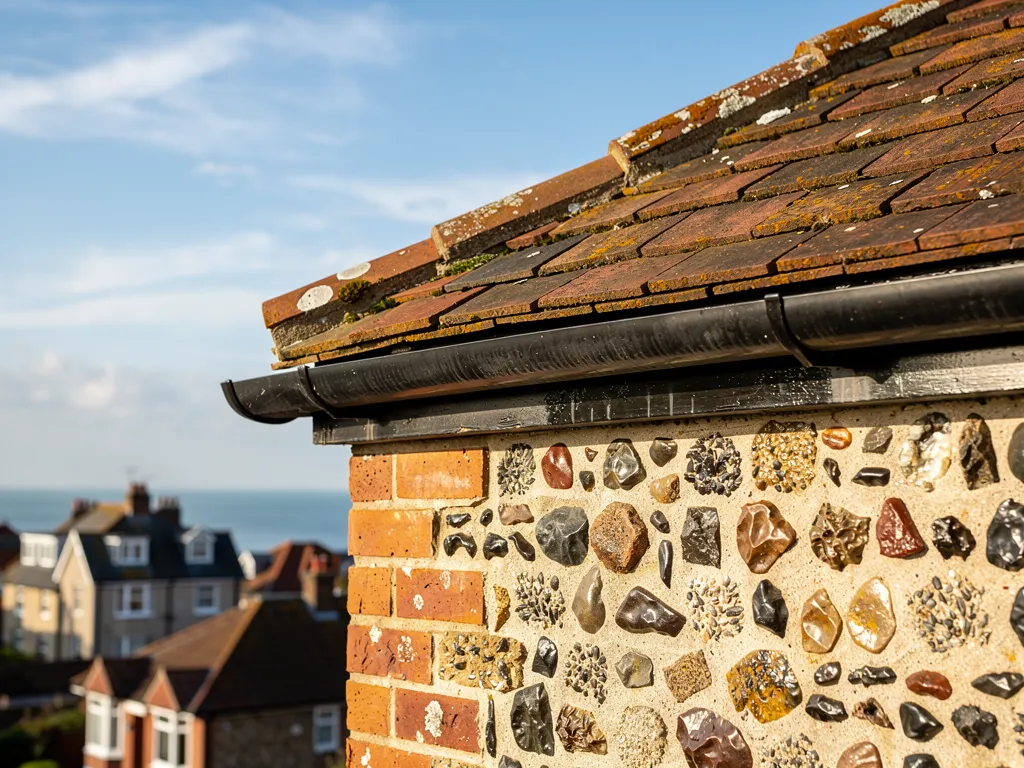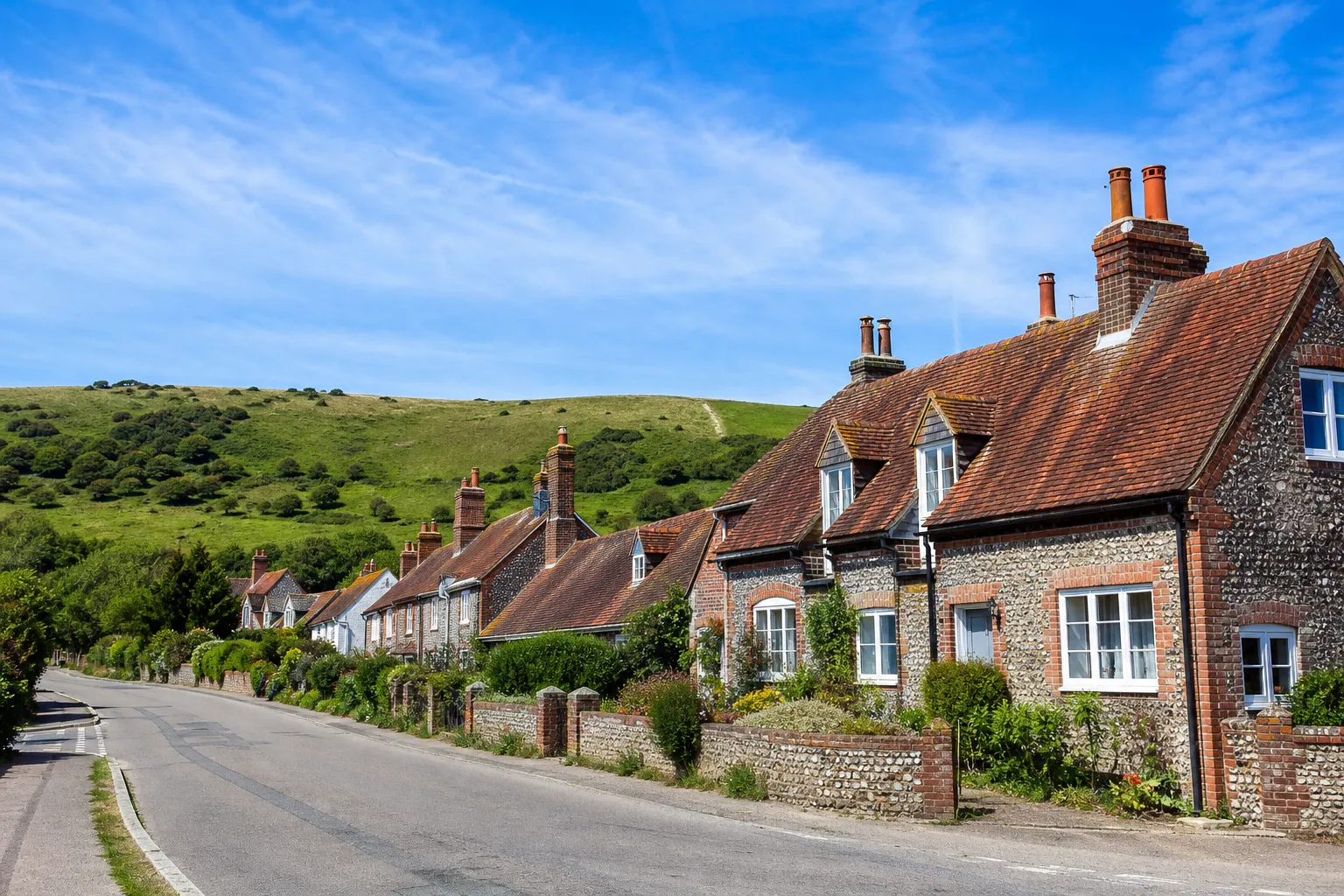
Moss and lichen on a Victorian terrace are a maintenance job. On a sixteenth-century cottage, a Georgian rectory or a farmhouse roofed in stone, the same growth sits on materials that cannot be replaced from a builders' merchant. Hand-made clay peg tiles, thin stone slates and old Welsh slate have weathered into a surface that harder cleaning removes, and what comes off does not go back on.
So the question for a historic roof is not only how to get the growth off. It is how little we need to do to the covering to get it clean, whether some of the growth should stay, and whether anything about the work falls under planning or listed building rules. The answers differ for a listed house, an unlisted house in a conservation area and a church, and it is worth knowing which one you own before anyone climbs a ladder.
This guide sits within our roof cleaning and moss removal work and sets out the gentle methods we favour, how we handle stone and peg tiles, where consent can arise, and what we do when the cleaning uncovers damage. None of it is a substitute for asking the planning team about your own building.
Why old coverings need a lighter hand
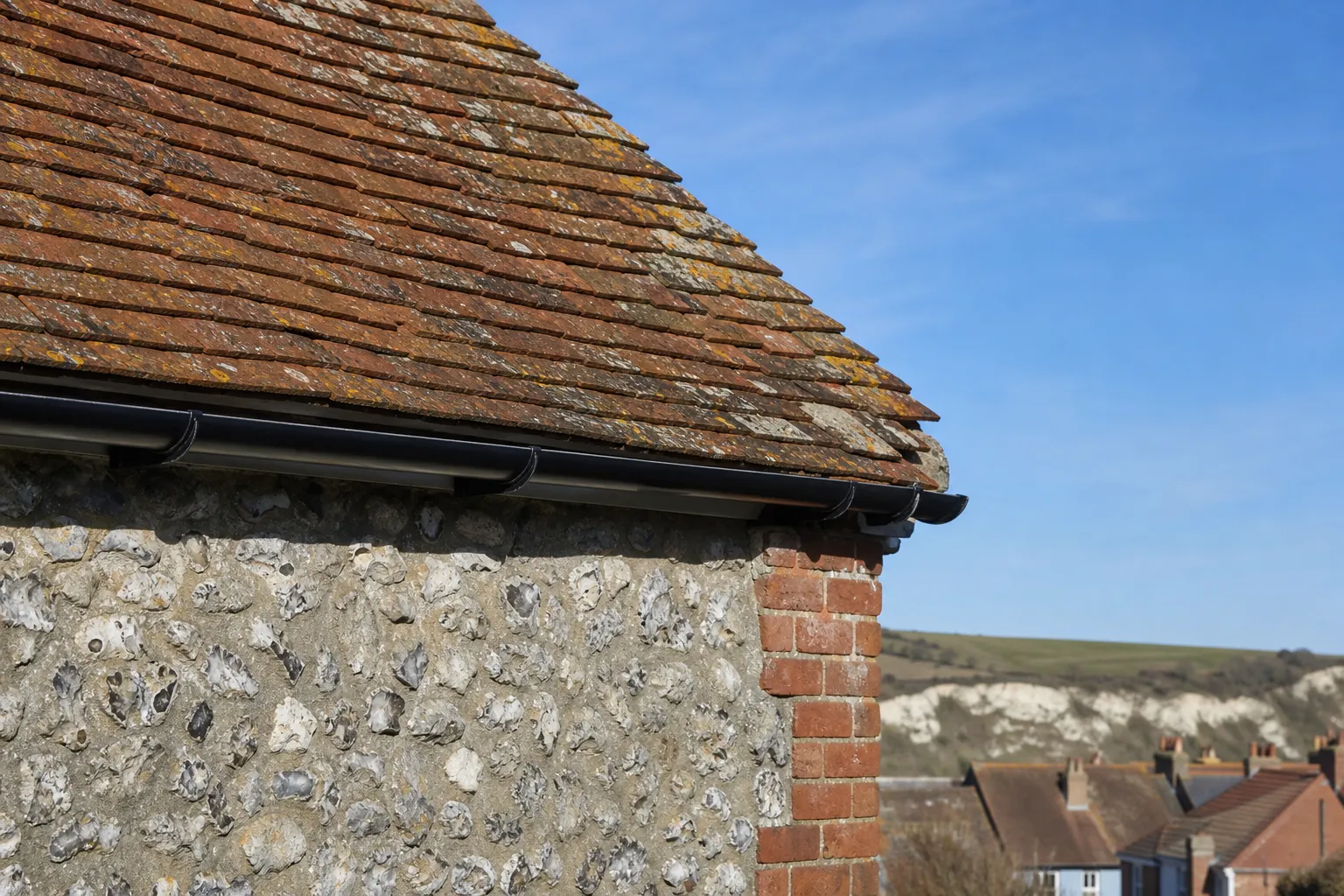
A modern machine-made tile has a uniform, hard surface. A hand-made peg tile does not. It is more porous, slightly uneven and often thinner at the edges, and after generations of wetting and drying the face may be flaking in places. Stone slates are laminated, which means they split along their bedding planes under the wrong sort of pressure. Old slate can have gone brittle where its nail holes have rusted.
That is why the method matters more than the speed. Age is a useful clue. Building Conservation Directory observes that the usual 60-year life quoted for clay tiles tells you little about old peg-tile roofs, because historic tiles were made differently and plenty have outlasted it by a wide margin. A roof that has survived this long has done so partly because nobody scoured it.
The practical consequences are simple. We keep weight off the covering by working from roof ladders and crawl boards that spread it across several courses. We do not walk across a stone slate roof unless there is no alternative. We do not use anything that forces water sideways under the laps, because old roofs rarely have a modern underlay behind them, and water driven past a tile lands on timbers that may be centuries old.
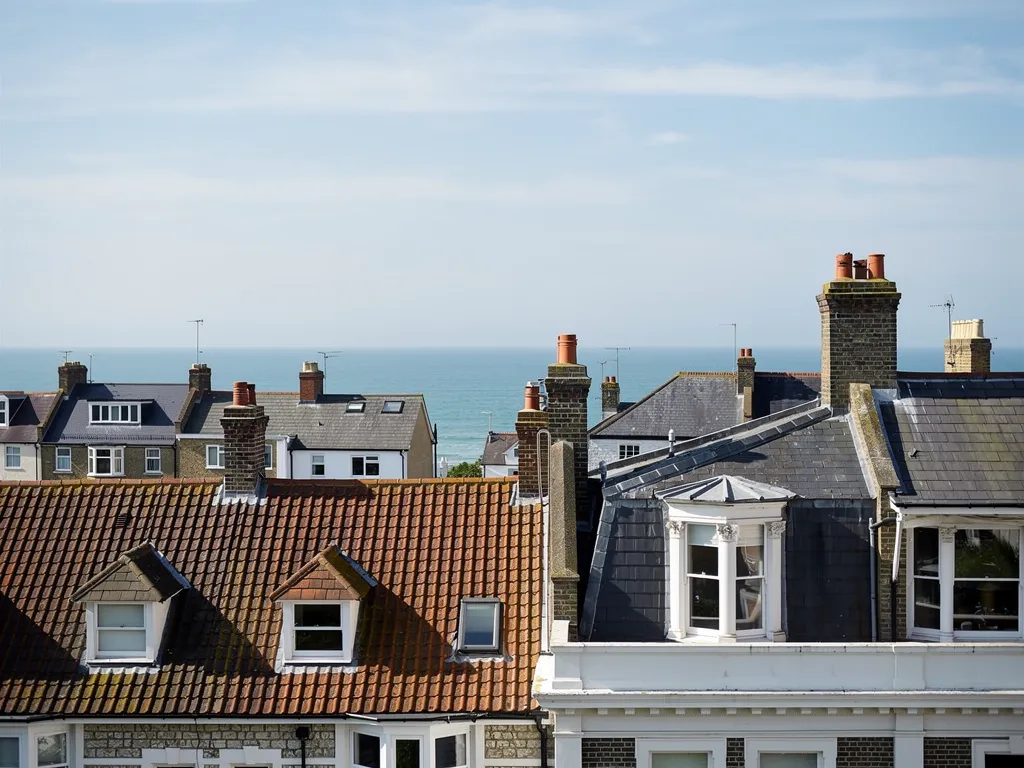
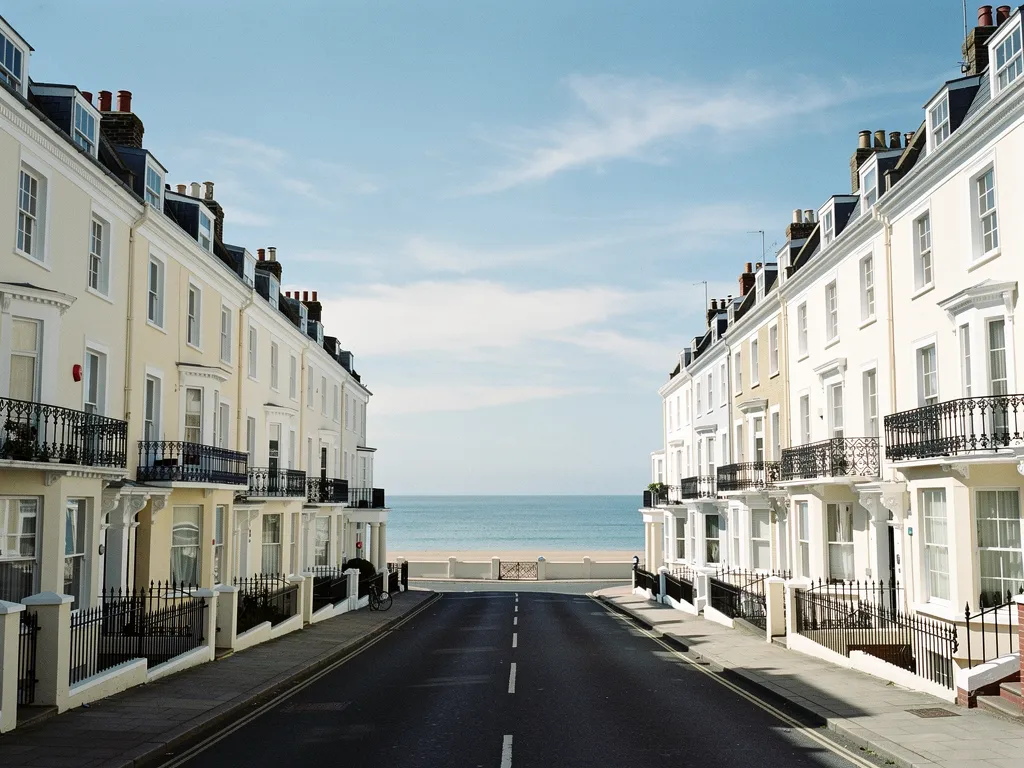
Cost guides caution that jetting can harm delicate tiles, and that matters even more on a historic roof. The surface loss from a jet cannot be repaired afterwards. Our guide to cleaning a slate roof covers the same principle for the material most often found on Victorian houses along the seafront.
Dry brushing, soft tools and slow treatment
The method we start from is the least intrusive that works. Thick moss is lifted by hand, with a soft brush or a plastic scraper held flat to the tile, and it is lifted in the direction the water runs so that it does not catch under the lower edge of the course above. Wooden or plastic tools do not scratch the face. Metal scrapers are kept away from anything hand-made.
Once the bulk is off, the thin film left behind is treated with a biocide, a product that kills the moss spores and algae. On a historic roof we apply it with a low-pressure sprayer or a garden-type applicator and then leave it. It works over weeks, not minutes, and the dead growth washes off with the rain. That slow route suits a fragile covering because no one has to scrub the surface to clear it.
If water is used at all, it is a gentle rinse from a hose with the nozzle held well back, never a jet. Some roofs get no water at all. A bat roost in the roof space, for instance, is a reason to leave a roof dry and ask for advice first, since bats and their resting places are protected.
Why we avoid coatings and sealers
A coating that forms a film over the tile traps moisture and changes the way the surface breathes, and a roof that was bright and clean for two seasons can then start shedding its face. Clear sealers are sold to property owners as a protective finish. On historic fabric we would not apply one. If someone proposes it, ask what it does to the vapour movement through the tile and whether the conservation officer has seen it.
For the longer-term picture, see how long a roof clean takes, since gentle work takes longer.
Stone slates, Horsham slabs and the lichen question
West Sussex has a particular inheritance here. The stone is a flaggy, lime-bearing sandstone, split into slates that are laid in graded courses, big ones low down and small ones near the top. Conservation area appraisals mention Horsham slab roofs at Steyning, Storrington and Henfield and in a few Adur villages, and the Steyning appraisal adds that they survive in large numbers.
A roof like that is not cleaned like a tiled one. The slabs are heavy and uneven, the bedding is old, and stone is thick enough to hold lichen in its surface. Lichen is not always a fault on stone. It is slow growing and, in many cases, part of what the roof looks like after centuries. Heavy growth that is holding water against a joint is another matter, and the decision about how much to take off is one we make with you, and often with the conservation officer, case by case.
Repairs are where historic stone roofs are most often damaged. The Steyning appraisal names relaying Horsham slabs with mortared joints as inappropriate, while the Stone Roofing Association ranks reuse of the roof's own slates ahead of every other option. That affects cleaning. If our brushwork shifts a slab or reveals a cracked one, we record it and leave the repair for a proper method. We do not bed anything in cement to make the roof look finished.
Reclaimed slates from other buildings are common because new supply is short, and the Stone Roofing Association says to avoid them where possible. Ask where any replacement stone came from.
Listed buildings, conservation areas and consent
Cleaning is not normally a change to a building's character, so the usual position is reassuring. The Adur & Worthing guide to listed building consent says that, apart from prudent maintenance and general repairs, no special action is called for unless an owner wants to make alterations. Inside the South Downs National Park, the authority's own guidance treats routine upkeep and small like-for-like patching as outside listed building consent, while any job that alters or takes away historic fabric so as to change the building's character does need it.
The line to watch is between cleaning and changing. Sealing or painting the roof, replacing tiles with different ones, or removing a lot of the covering is no longer maintenance. Works that affect a listed building's character without authority are an offence under the Planning (Listed Buildings and Conservation Areas) Act 1990 (sections 7 and 9), so ask first, not afterwards.
A conservation area does not by itself stop you cleaning a roof. Local Article 4 directions can go further. The Warwick Gardens direction in Worthing, for example, lists the painting of any part of a wall or roof among the matters needing permission, so a coating on a street-facing roof there is a planning question.
Churches have a different route. Where a church is still in use, under the ecclesiastical exemption, five denominations run their own approval routes: the Anglicans, Catholics, Methodists, Baptists (through the Baptist Union) and the United Reformed Church. Closed churches and other faiths go through the council. Scheduled monuments need scheduled monument consent. Not sure which applies? Put the question to the Adur & Worthing planning team, or to the South Downs National Park Authority for a property inside the Park.
What we do when cleaning shows damage
Growth hides faults. Moss packs the gap under a lifted tile, lichen covers a hairline crack, and a thick mat of it can be the only thing holding a slipped slate where it is. Once it comes off, the roof may look worse than it did, and that is the point of doing the job carefully: you find out what is really there.
When we find a problem we stop and show you. Close-up pictures of the problem tile or slab reach you before any repair is discussed. For a historic roof the repair question comes before the price. Can the existing tile or slab be refixed? Is there a matching reclaimed tile of the same age and size? Is the repair like for like? The Adur & Worthing listed building guide lists repairs done in non-matching materials among the work that needs consent, so putting a modern lookalike on a listed roof is something to raise with the conservation officer first.
Fixings are part of the same conversation. Under the 2014 revision of BS 5534, ridge and hip tiles are held by a mechanical fixing as well as the bedding beneath. The 2018 amendment adds a caution that heritage roofs may need a different approach, and the guidance sends owners to the council and a conservation specialist. On an old ridge, then, we agree the fixing method with you first.
The written quote follows a survey, and it covers the repair as one total price. Any old tiles or slabs that come off are kept aside for you to see before anything leaves the site. If the roof is part of a wider project, such as re-roofing a rear slope, the same gentle principles apply to the part that stays.
Gutters, trees and keeping the roof as you found it
A cleaned historic roof needs less intervention to stay that way than most owners expect, as long as the water is leaving it properly. Old cast iron gutters, and the half-round or ogee profiles on period houses, clog with debris and drip onto walls that were never meant to be wet. Our guide to moss blocking gutters and downpipes sets out how that happens and how it is cleared with the roof, in the right order.
Overhanging trees matter more on old roofs because shade holds moisture on porous tiles for longer. Cutting back a branch is cheaper than repeated cleaning. If a tree is protected, or stands in a conservation area, tell the council before cutting it, and take care near nesting birds, whose active nests are protected by law.
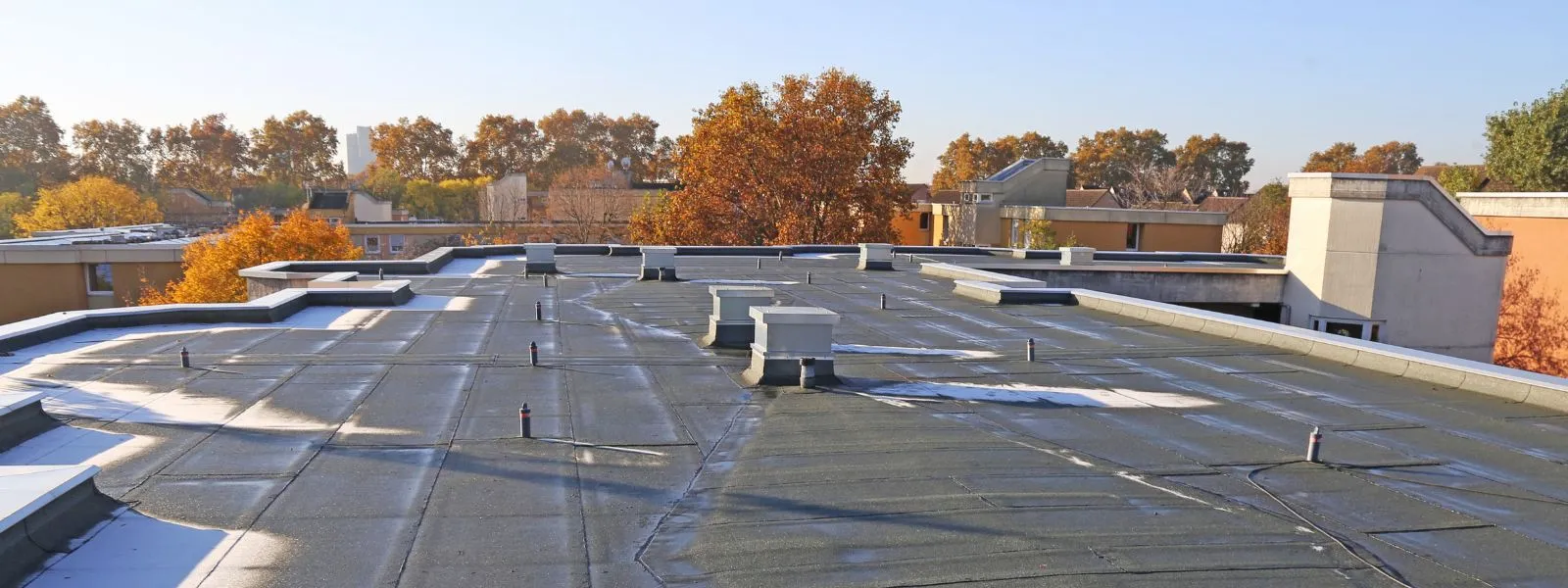
Flat-roofed additions are common on old houses, a lean-to scullery or a link between buildings, and they need different handling because membranes are not like tiles. See cleaning a flat roof.
Choosing who goes up
Ask whoever quotes how they intend to reach the roof, what they will not do to it, and whether they have worked on stone or peg tiles before. A firm that opens with a pressure washer has answered the first question for you. A sound answer begins with the material on your roof and how you want it to look afterwards. Ask, too, what happens if a tile cracks during the work, who pays to put it right, and whether the quote allows for a matching replacement from stock, since a listed roof rarely takes a new tile of the wrong colour or size without comment from the council.