Small roof faults are easy to put off. The tile that slipped last month has not leaked yet, or the stain on the landing ceiling has not grown. Nothing seems urgent, the weather is dry, and the repair feels like an expense that can wait for spring.
The trouble is what happens underneath while you wait. A roof is a layered system, and each layer protects the next. Once the top layer is breached, rain reaches the layers below, and each of those is more expensive to replace than the one above. A job that could be done from a ladder in an hour can, over a couple of winters, turn into timber replacement, new insulation and redecorating.
There is a second cost that surprises people. Home insurance policies often exclude damage that happens gradually, and a fault left unrepaired can fall into that category. This page follows the chain of damage in order, shows how the published repair bands step up, and explains what to do if you have already waited. It forms part of our roof repairs guidance.
Where the water goes after a tile slips
When a tile moves, it leaves a gap in the outer layer, and the rain falls on the underlay. The underlay is the membrane laid over the rafters beneath the tiles, and its job is to catch the small amount of water that always gets past tiles in wind-driven rain and carry it down to the gutter. It is a backstop, not a roof. Left uncovered, it takes the full weight of the weather, and it was never designed for that.
On older houses the underlay may be bitumen felt that has stiffened and split over the years, or there may be none at all. In that case, water falling through the gap reaches the battens, the cross-timbers the tiles are hooked onto, straight away.
At first the damage is invisible. Water runs along the top of the underlay, finds the lap between sheets or a nail hole, and drips onto timber or insulation in the loft. You will not see it from the house. The first symptom indoors tends to arrive weeks or months later, as a faint mark on a ceiling, and by then the water has been travelling for a while.
Why the stain is not where the gap is
Because water follows the slope and then the timber, the visible mark is usually downhill from the fault, sometimes in a different room. This is why we trace the leak from the loft before pricing anything. Our guide to how roofers find a roof leak sets out the method.
In the early stages, though, the fix really is small: refix the tile, check the ones either side, and renew a section of underlay if it has torn.
Wet battens and rafters
Timber can handle the occasional wetting. It dries out, and if the roof is ventilated, the loft air carries the moisture away. The danger starts when the same piece of timber is soaked repeatedly and never fully dries. After a few seasons, softwood that stays damp begins to decay, and the fixings holding the tiles to it begin to loosen.
That loosening is the part owners overlook. A rotting batten no longer grips the nails or clips that hold the tiles in place, so more tiles slip in the next gale. The fault spreads, and a repair that needed one tile now needs a section re-battened.
Battens are cheap timber, but renewing them means lifting the covering above them, so the cost is mostly labour and access. If rot has got into the rafter feet at the wall plate, the repair becomes structural, and a carpenter may be needed alongside the roofer.
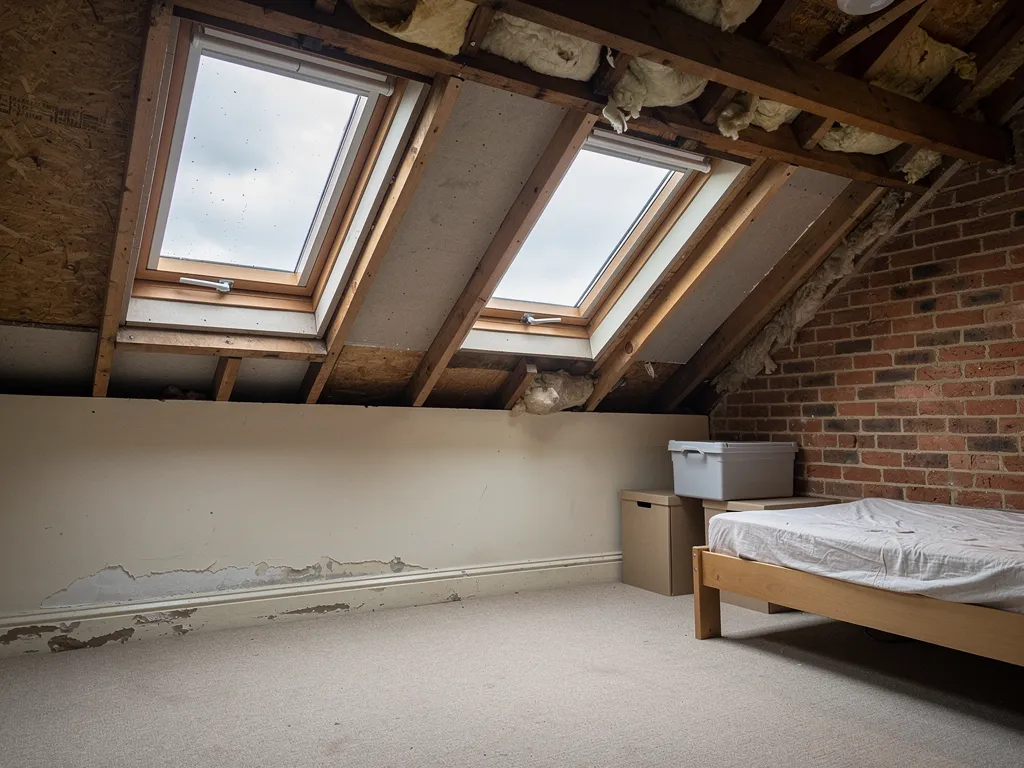
You can often see the first signs from the loft: dark staining on the underside of the roof timbers, a musty smell, or a spot where a screwdriver or thumbnail sinks into the wood. Taking photographs of anything you find is worthwhile, because it gives the roofer a head start and shows you how it develops.
Nobody wants to hear it, but this is the point where repair prices move from the hundreds into the thousands, and where the neat, quick visit becomes a planned job with a programme of its own. Roofing at that scale usually means the covering is lifted over a wider area, the damaged timber is cut out and replaced, and the tiles are laid back or renewed. MyBuilder's guide treats a major repair as starting at £2,500, and structural timber work belongs in that band.

Insulation, ceilings and damp
Water that gets past the timber lands on loft insulation, and mineral wool soaks it up like a sponge. Wet insulation is heavy, it presses down on the ceiling, and it stops insulating until it has dried, which in a cold loft can take a long time. Some of it will never recover and has to be replaced.
Next in line is the ceiling itself. Plasterboard weakens when it stays wet. It stains first, then softens, and a ceiling that bulges is carrying a quantity of water that has to be released safely. If you see that, do not poke it. Put a bucket underneath and call us, and we will make it safe first. Our page on a ceiling bulging with water sets out what to do.
Where the water finds a wall instead, it can travel down the inside face, lift paint and plaster, and feed mould. Damp walls are slow to dry, and the redecoration bill often passes the cost of the roof repair that would have prevented it.
Drying out takes time
Even after the roof is sound, the building has to dry. Wet insulation is removed or aired, and a ceiling that has been soaked may need replacing. Giving the loft ventilation a check at the same time helps keep it dry afterwards. Our guide to wet loft insulation explains what can be saved.
The roofer's part of the bill is rarely the biggest in this chain. The plasterer and decorator are paid for work that would not have been needed had the first tile been refixed.
How the repair bill steps up
National cost guides show the pattern clearly. MyBuilder's roof repair guide (updated 21/08/2026) gives typical UK ranges for three levels of repair, and each step is a multiple of the one before.
| Stage of the fault | Repair band | Typical UK range |
|---|---|---|
| Tile slipped, nothing wet yet | Minor | £100 to £300 |
| Underlay torn, a few battens damp or soft | Moderate | £500 to £1,000 |
| Rotten timber and a wet ceiling beneath | Major | £2,500 or more |
The left-hand column is our general description of how a fault progresses, and each case is different. The figures are national guide ranges and not a price for your roof, which we give you on paper as a single total once we have surveyed the roof. But the shape is right: leaving it means moving down this table, and each row is a larger job than the one above it, with more timber, more access and more days on site.
Access adds to the jump. A small fault caught early can often be reached by ladder. Left until the timber has gone, the job may need scaffolding, and MyBuilder's scaffolding guide (updated 21/08/2026) gives £850 to £1,200 as a typical UK range for a standard two-storey house. Our guide to roof repair costs sets out the other ranges.
Think too about how long each stage takes. A minor job is normally over in a visit. Anything with timber involved needs the covering stripped and relaid, so it takes longer and disturbs the household more, quite apart from the money. These ranges also leave out the redecorating, the replaced insulation and the carpet. Each of those falls to a different tradesperson, a different invoice, and sometimes a different household budget.
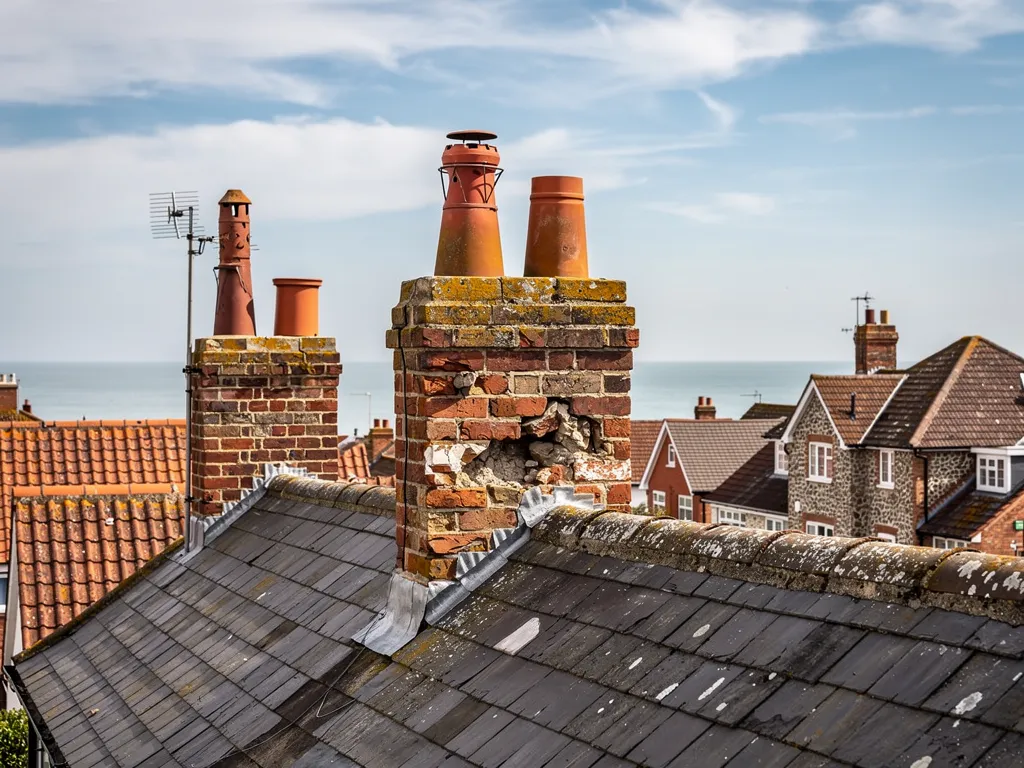
Insurance and the gradual damage trap
Many owners assume that home insurance will cover roof damage whenever it happens. In practice, the cause matters. The Financial Ombudsman Service notes that policy exclusions frequently take in damage that builds up over time, and a leak that has been wetting the same timber for months looks gradual to an insurer. Which? gives a wear-and-tear example in its November 2025 article: if water enters your home through a poorly maintained roof, that is the kind of damage a policy may not cover.
Storm damage is treated differently. The Ombudsman sets out the questions it asks about a storm claim: did a storm really occur when the damage appeared, and were storm conditions, rather than something else, the main cause? A tile that blew off in a named gale, reported straight away with photographs, sits in a stronger position than the same tile left for a year.
Which? also reports Financial Conduct Authority figures showing that only 32% of storm-related claims made in 2024 resulted in a payout, so it is wise not to count on one. Whether yours would succeed is a question for your insurer, not a roofer. What we can do is photograph the fault and put in writing what we found, which gives you evidence to show your insurer.
What to do first
Read your policy wording and ask the insurer before you commission anything beyond emergency work. Industry advice issued for Storm Eunice in 2022 told householders to get in touch with their insurer promptly and to arrange temporary emergency repairs to limit the damage, after speaking to the insurer. If you are unhappy with a decision, you can read the Ombudsman's guidance on gradual damage for your next step.
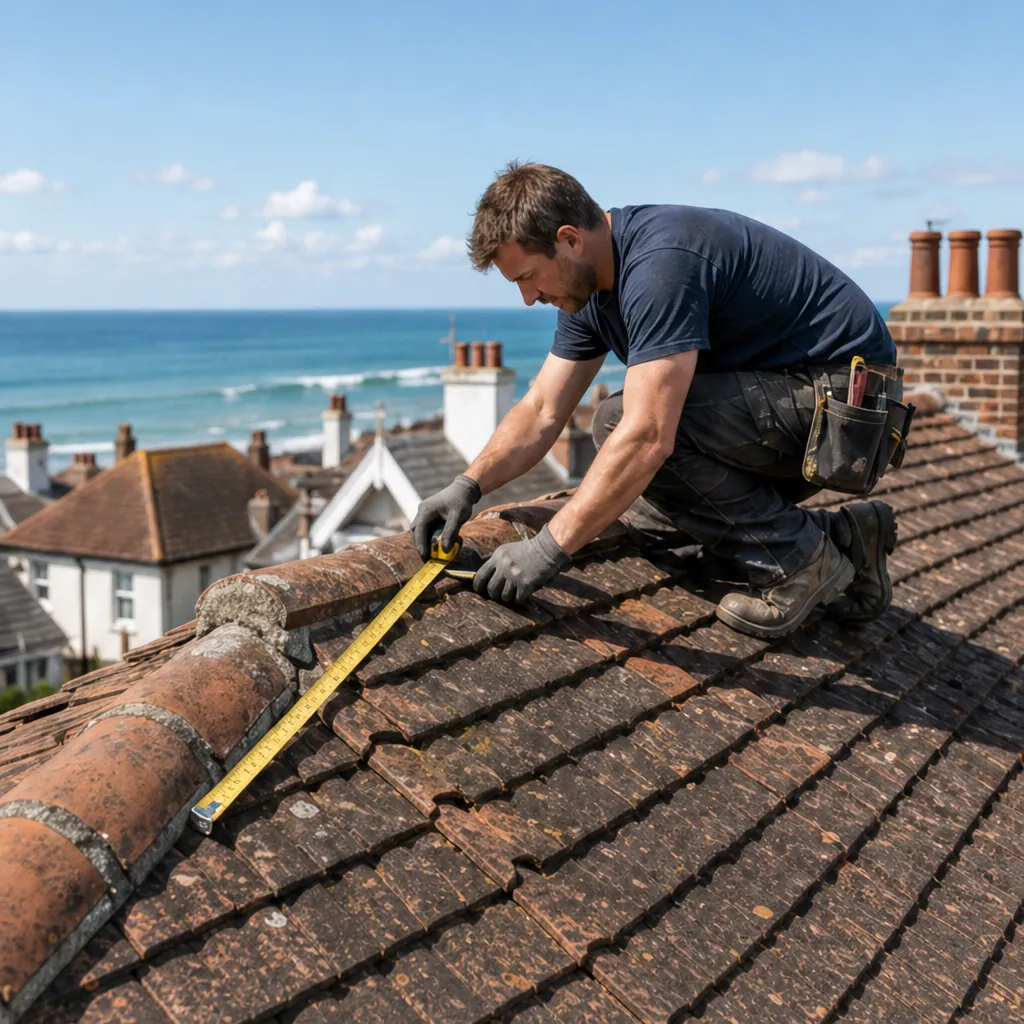
Already waited? What to do now
If the fault has been there a while, the worst thing is to carry on waiting. Neither the damage nor the bill gets smaller. But there is no need to panic either, and a calm sequence gets a roof back under control.
First, deal with any water that is coming in. Put a bucket under a drip, move furniture, and keep clear of a bulging ceiling. If the roof is open to the weather, an active leak is made safe before anything else, with temporary sheeting or a patch, and leaks and storm damage take priority over planned work.
Second, get the cause found. A survey from the loft and from outside shows how far the damage has gone, and the photographs allow you to judge it for yourself. That evidence also helps if you later need to explain the damage to an insurer.
Third, ask for the least work that gets the roof sound again. Often that is a refix and a new section of underlay. Sometimes the battens need renewing across one slope. Occasionally the covering has run out of years and a larger job is the better spend. We say which it is and give our reasons.
Last, put a routine in place. A check after each storm, a clear gutter and a periodic look from the loft catch faults while they are still cheap. Our guide to how to make your roof last longer sets one out, and the page on how long a roof repair takes shows how little time a small job needs when it is caught early. A small repair caught early usually needs only a few tiles, a section of flashing or a refixed ridge, which is why the survey photographs matter so much when you compare the cost of acting now with waiting.