Roofs seldom fail in one go. A gale takes a tile, a mortar joint cracks over a few winters, a gutter silts up with moss until it overflows. Each fault is small, and most are cheap to put right when they are found early. The difficulty is that the sign you notice indoors, a brown mark on a ceiling or a drip in the loft, is often several metres from the actual fault.
This guide takes the faults one at a time, in the order we usually meet them on a survey: tiles, ridges, flashings, valleys, flat roof coverings, then gutters and condensation, the last two being the problems that most often get blamed on the covering. For each, you will find what it looks like from the ground, what causes it, and what a lasting repair involves.
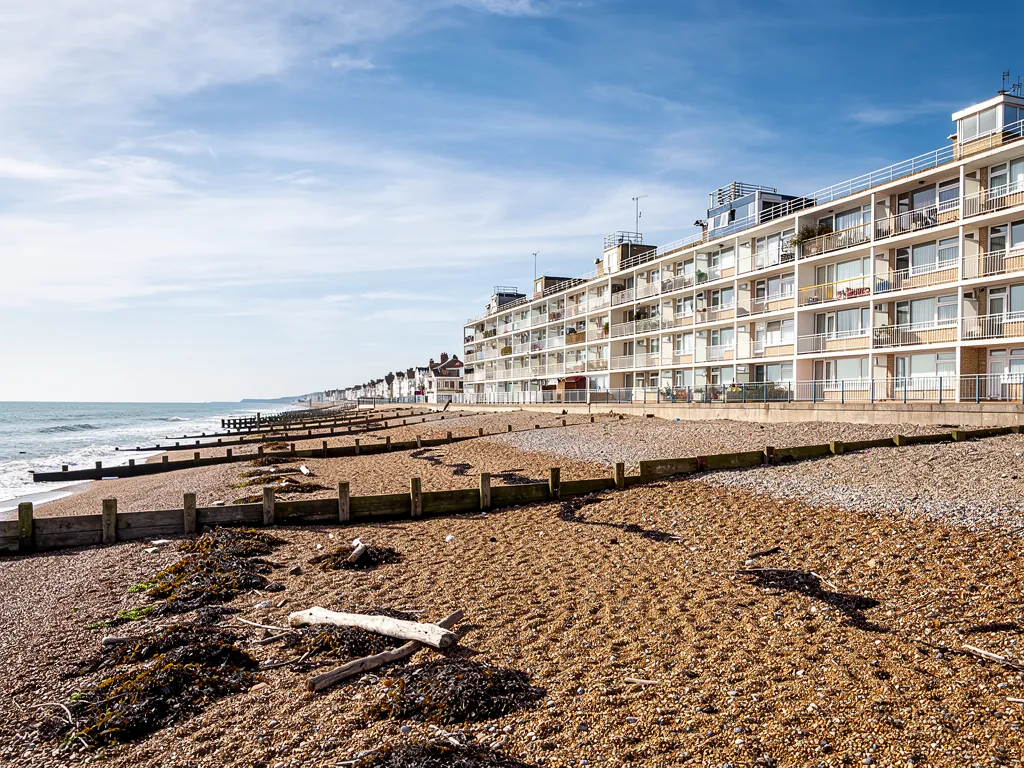
The coast adds its own pressure, with salt air, gales and driving rain, so a fix that would pass inland may not survive a winter on the seafront. Where that changes the method, we mention it. All of this sits within our wider roof repairs service.
Slipped, cracked and missing tiles
This is the fault you can often see from the pavement: a gap in the pattern, one tile standing higher than the rest, or a fragment on the lawn after a gale. Behind it, the cause is usually one of three things. The nail or clip holding the tile has corroded or pulled out. The tile itself has frozen, cracked and let go. Or the batten beneath it, the timber strip the tiles hang from, has weakened.
Wind is what turns a loose tile into a missing one. Marley's wind guidance notes that on pitches below 30° the slope facing the weather can suffer strong suction, which lifts any tile that is not properly held. Single-lap tiles, the interlocking kind, need at least one mechanical fixing each, according to Wienerberger, and the fixing specification should take account of location and local wind exposure.
What the repair involves
Replacing a single tile sounds simple and often is. The trap is a repair that ignores why the tile went. If a run of tiles has lost their fixings, replacing one invites the next to follow. We check the neighbouring tiles by hand, look at the batten under the gap, and refix or replace what is loose, not only what has already fallen.
Matching matters as well. A weathered clay or concrete tile is a slightly different colour and size from a new one, so we look for reclaimed or closely matched tiles, and on a prominent elevation we say plainly if the patch will show.
Houses near Shoreham airport can need special advice on the fixing specification from the tile maker, and the quote will tell you if yours does.
Ridge and hip mortar that has cracked or dropped
At the very top of the roof, where two slopes meet, runs the ridge, and the hips are the sloping outer corners of a hipped roof. Both are capped with curved tiles bedded in mortar. That mortar takes the full force of the weather. It shrinks, cracks, and is washed out by rain over the years. From the ground you may see dark lines under the ridge tiles, grit from the bedding collecting in the gutter, or a ridge tile that has tilted.
Standards have moved on. Under BS 5534 as revised in 2014, bedding mortar is no longer trusted to hold the ridge and hip tiles unaided, so each also gets a mechanical fixing. Marley says bedded tiles and fittings should now include mechanical fixings. Re-pointing a cracked ridge with fresh mortar, the old quick fix, therefore only repeats the weakness. It looks tidy for a season and cracks again.
Re-bedding or dry ridge
There are two lasting repairs. Re-bedding takes the ridge tiles off, lays fresh mortar and refixes each tile with a mechanical fixing. A dry ridge system replaces the mortar entirely with clips, rails and a ridge roll, and BS 8612:2018 is the specification such systems are tested to. Dry fix suits many roofs, but it needs the right tiles and the right ridge angle, and a survey tells us which route suits your roof. Whichever is chosen, the old mortar and any loose tiles come off first, so the new fixings bite into sound material and the finished ridge sits straight along its full length.
The verge, the sloping edge beside a gable wall, follows the same logic. Our guide to ridge re-bedding goes through the process in more detail.

Flashings and the lead around chimneys
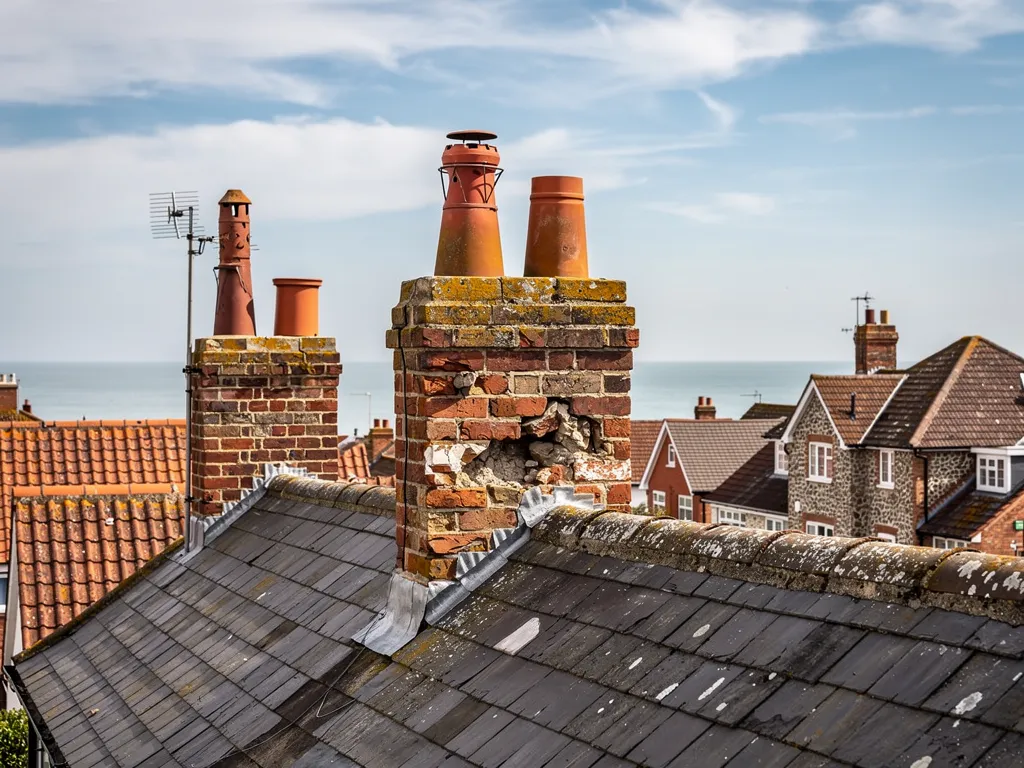
Flashing is the lead, or other metal, dressed over the joint between a roof and something taller: a chimney, a party wall, a dormer cheek, a gable. Lead is the traditional choice, shaped to the joint with its upper edge wedged into a cut in the brickwork. Water gets in when the lead lifts, splits or pulls away, or when the mortar holding its top edge perishes.
The evidence indoors is typically a stain on a ceiling or wall near the chimney breast, often after wind-driven rain, because the leak shows only when water is pushed sideways into the joint. Outside, we look for lead that has curled up at the edges, hairline splits where it has been bent repeatedly, and white or grey crust where the surface has weathered.
Leadworx describes code 4 as the common choice for general flashing, and code 3 is recommended for soakers only. Soakers are the small folded lead pieces that sit under each tile course along a wall. Lead can last a long time, and MyJobQuote notes that lead flashing can last for over 80 years, but only when it is fitted well and the surrounding brickwork stays sound.
Fixing it properly
A bead of sealant along a failed flashing keeps the water out for a short time. The lasting fix is to strip back to sound materials, renew the lead to the right code, dress it properly, and repoint the chase.
Where a fillet, a sloping bead of mortar used instead of lead, has cracked away from the wall, the same logic applies. Our guide on mortar fillet repair explains it. The stack itself can also fail at the flaunching, the mortar collar around the pots, so we look there too.
Valleys that block, split or overflow
A valley forms at the inside corner between two slopes, and the rain from both of them pours down it. That makes it the busiest channel on the roof and a likely place to fail in a downpour. The usual problems are debris and moss choking it, so water is held back and creeps beneath the tiles, and a lining that has cracked along its length.
The signs show up in two ways. From outside, you may see standing water, a green line of moss along the valley, or tiles either side that have slipped. Inside, a stain on an upper floor ceiling beneath the line of the valley is a strong hint. Because the valley collects so much water, even a pinhole defect can lead to a large wet patch.
Debris is the easier case. A blocked valley is cleared by hand, the lining checked for splits and the cut edges of the tiles checked for gaps. If the lining is sound, that is the whole job, and our guide to a blocked roof valley covers the steps.
When the lining has failed
A split lead lining cannot be patched with any confidence. The metal fatigues where it has cracked, and a patch tends to fail beside itself. The lasting repair is to lift the tiles on both sides, remove the old lining, and lay new lead or another suitable lining, with the tiles cut back neatly to leave a clear channel.
Valleys come in several forms, so we show you photographs of yours and explain which type you have, instead of guessing from the ground.
Flat roof splits, blisters and ponding
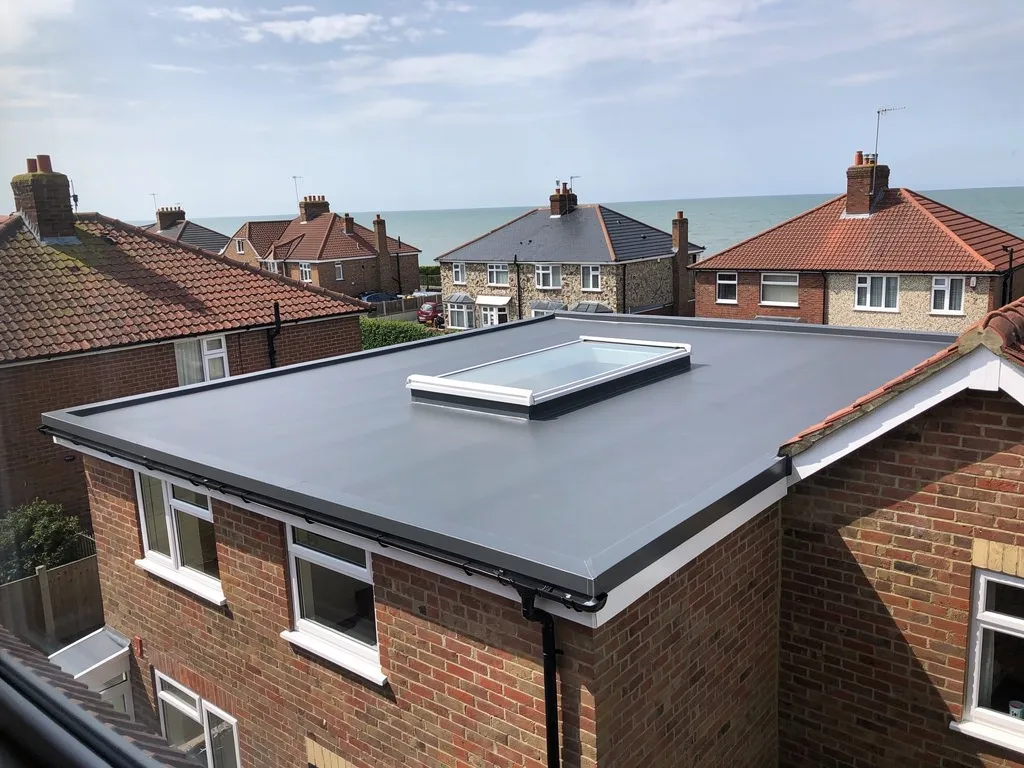
Flat roofs fail in different ways from pitched roofs, and the commonest is water that stays put. A flat roof is meant to drain, which is why it is laid to a slight slope. IKO, citing the 2018 edition of BS 6229 (since revised), says to design for a fall of 1:40, so that the finished roof still has at least 1:80 after building tolerances and sag. A roof that has sagged, or never had enough fall, holds a pool of water that works at every seam.
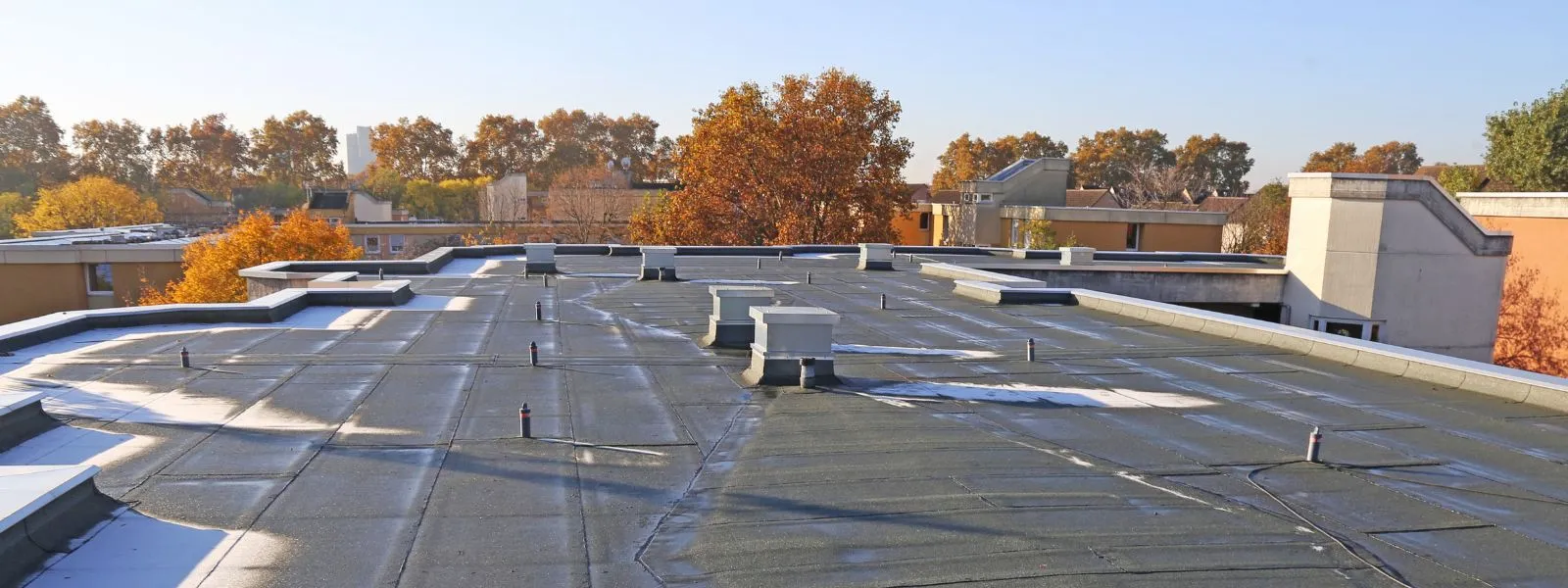
The usual symptoms are a puddle that is still there a day or two after rain, a blister or bubble in the felt, a split along a seam or at an upstand, and a stain on the ceiling directly below. On extensions and garage roofs, the edge trim and the junction with the house wall are the weak points.
The covering decides what a repair looks like. Torch-on felt and bitumen systems can be patched. EPDM, a single sheet of rubber, can be repaired with adhesive and patches, and GRP, a fibreglass laminate, can be re-laminated locally. Lifespans differ. MyBuilder puts the usual life of a flat roof at 15 to 30 years, and the material and workmanship move a roof within that spread.
Repair, or recover?
Damage confined to one area, over a deck that feels firm, usually calls for a repair. If the deck is soft underfoot, or the water has been through the insulation, or ponding is general, patching is only postponing the job. Our page on flat roof repair or replacement sets out how that decision is made.
Gutters, and the damp that only looks like a leak
Two problems sit beside the roof covering and take the blame for faults that start elsewhere. The first is the gutter. A gutter choked with moss, leaves or tile grit overflows over the rear lip and soaks the fascia, so the damp appears on the inside of the wall and is easily mistaken for a leak through the roof. Joints come apart, brackets sag, and a run laid without enough slope keeps a puddle.
Brett Martin suggests 1mm of fall for every 600mm, FloPlast recommends 1:350 for its MiniFlo system, with brackets spaced at 900mm at most. Sagging between brackets is therefore a sign of a weak or missing support, not just age. Clearing and refixing is usually cheaper than replacement, and a visit with a ladder will show whether the gutter is worth keeping.
Condensation
The second is condensation in the loft. Warm, damp air from kitchens and bathrooms rises, meets cold roof timbers and condenses. It leaves a film of water on the underside of the underlay, dark mould on the rafters and damp insulation, and it can drip enough to stain a ceiling. Nothing is wrong with the covering at all.
The remedy is ventilation. Marley's reading of BS 5250 is that a roof with high-resistance underlay and a pitch above 15° needs a continuous 10mm opening at the eaves, plus extra ventilation high up on steeper or wider roofs. Our guide to telling condensation from a leak shows how to separate the two before anyone replaces anything.
Left unchecked, either problem turns into the costly kind, and where a fix needs access equipment our note on scaffolding for roof repairs explains the choice. See what a small roof fault costs if you leave it for how that happens.