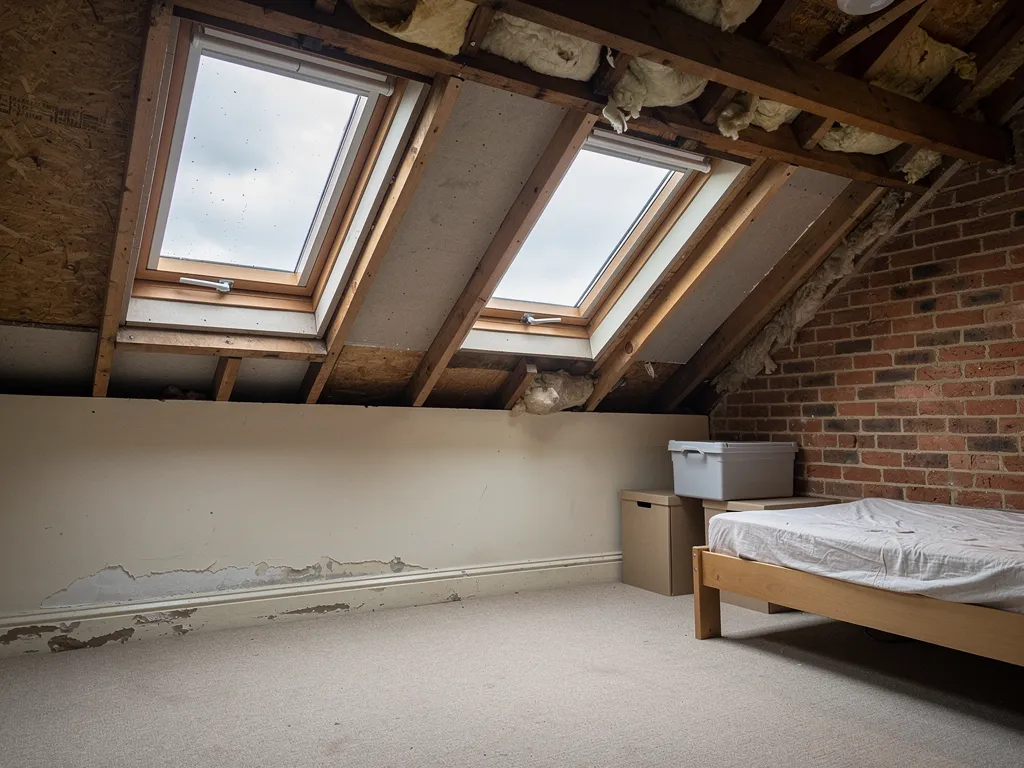
Ask five people what a roof repair costs and you will hear five different numbers, because the label covers very different jobs. Re-seating a few slipped tiles is a short visit. Relining a split valley, rebuilding a length of ridge or renewing a failed patch of flat roof covering takes days, and may need scaffolding before the first tile is lifted.
National cost guides cope with this by sorting repairs into minor, moderate and major, then quoting a typical range for each. Those ranges are a sensible first check, and they are the ones used below, each with its source and date. Treat them as a yardstick, not as a figure for your own roof. What you pay depends on the ease of reaching the roof, what it is covered with, how big the repair is and what turns up once someone has been up and looked properly.
This page deals with planned repairs, part of our wider roof repairs service. Urgent call-outs after a storm are priced differently, and our guide to emergency roof repair costs covers those.
Minor, moderate and major: the published ranges
MyBuilder's roof repair guide (updated 21/08/2026) gives a typical UK range of £150 to £1,500 for a roof repair, then divides it into three bands. A minor repair runs from £100 to £300, a moderate one from £500 to £1,000, and a major one starts at £2,500 and goes up from there.
| Band | Typical UK range | The kind of work involved |
|---|---|---|
| Minor | £100 to £300 | Re-seating a few slipped tiles, replacing one cracked tile, clearing a choked valley |
| Moderate | £500 to £1,000 | Refixing a length of ridge, renewing a run of flashing, patching a small flat roof split |
| Major | £2,500 or more | Relining a valley, repairing a large area of covering, replacing rotten battens or rafter ends |
Notice the gap between £300 and £500, and again between £1,000 and £2,500. Nobody prices repairs in neat steps. The bands are a sorting device, and a job that sits between two of them is simply priced for what it needs.
Why a tiny job can look dear
Getting to a roof costs much the same whether one tile has moved or six. Ladders or a tower go up, the roofer works safely at height, the slope is checked for other faults, and the site is left clean. On a very small repair that fixed effort makes up most of the bill, which is why replacing a single tile can feel expensive next to a bigger job where the same visit fixes a dozen things. It is also why a short list of minor faults is better dealt with together than one visit at a time.
That reasoning is general. Your own figure is one total price, set down on paper after our visit.
Rates per square metre, by covering
Some repairs are better judged by area than by visit, especially where a section of covering has to be stripped and replaced. Checkatrade's roof repair guide (page updated 10/26, price table last updated June 2026) lists typical UK rates per square metre for repair work, and states that all of them exclude VAT.
| Covering | Typical UK range per m2 |
|---|---|
| Concrete tiles | £90 to £120 |
| Clay tiles | £110 to £160 |
| Natural slate | £150 to £220 |
| Bitumen flat roof | £100 to £140 |
| EPDM rubber flat roof | £120 to £170 |
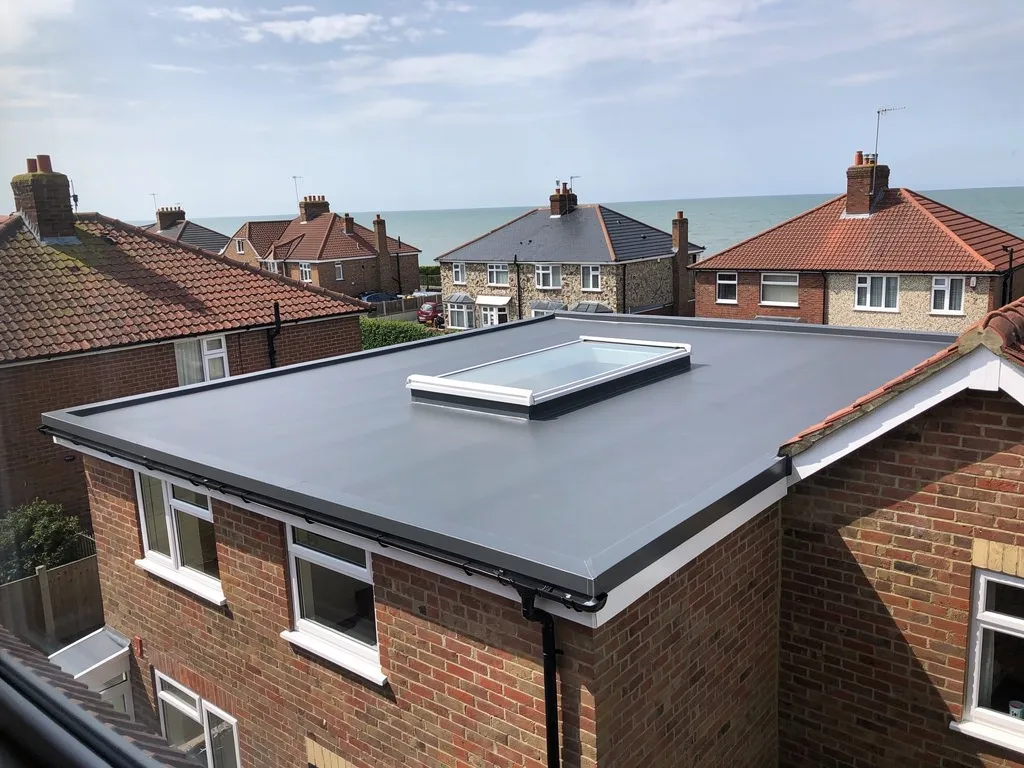
| GRP (fibreglass) flat roof | £130 to £180 |
The order makes sense. Concrete tiles sit at the lowest rate among the pitched coverings. Clay costs more, and natural slate more again, which fits the dearer material and the slower, more careful work of slating. On flat roofs, bitumen felt carries the lowest rate, while EPDM, which is synthetic rubber supplied in large sheets, and GRP, a glass-fibre and resin laminate, sit higher.
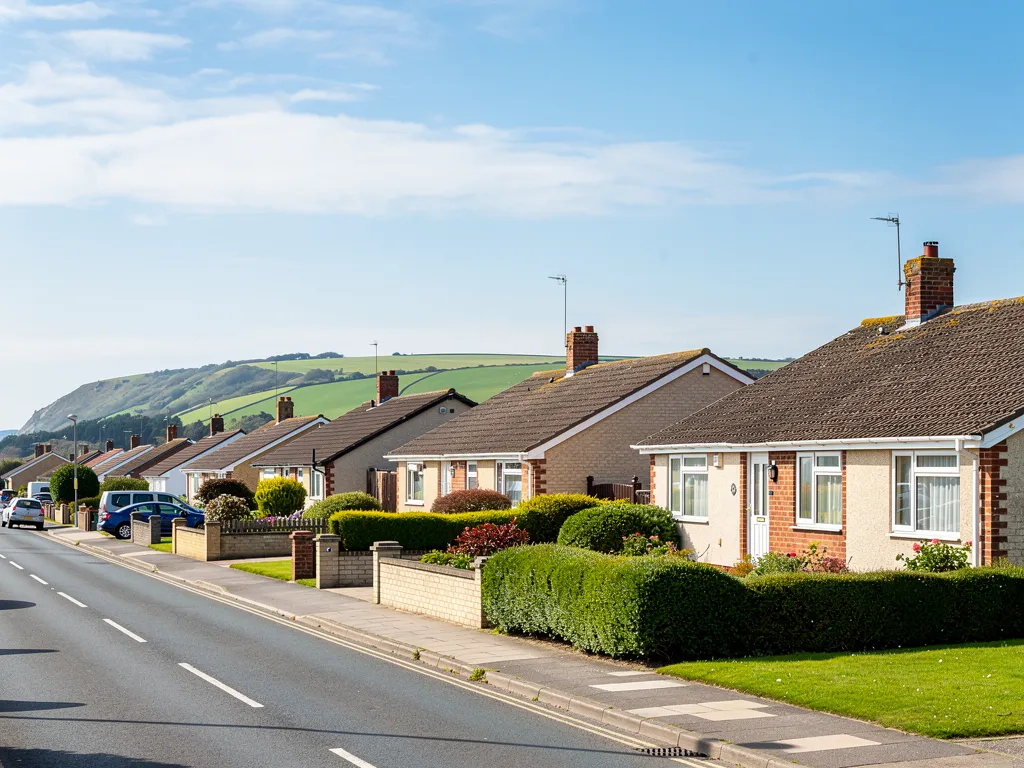
These are rates for the repaired area only. They say nothing about getting to it, so a small patch on a high or awkward slope can cost more than the area suggests, and a large patch on an easy bungalow slope can cost less.
Repairs to a covering also depend on how well the rest of the slope is holding up. A neat patch beside tired tiles is a short-term answer, and the survey tells you which situation you have.
If your roof is a mix, as many extended houses are, with tiles on the main slope and a flat roof over the kitchen, expect each part to be priced to its own covering.

Hourly rates, day rates and scaffolding
The same Checkatrade guide gives roofers' labour as £35 to £45 per hour, or £280 to £360 per day. MyBuilder's new-roof guide (updated 21/08/2026) puts a roofer's day rate slightly lower, at £250 to £300. The two guides measure slightly different things, which is why they do not match, and both are fair markers for a quote you are checking.
Labour rates are still a poor way to judge a repair. A roofer's day on a straightforward slope clears far more work than a day spent working round a conservatory roof, a bay or a steep pitch. And the hours worked tell you little about the skill needed to find the cause in the first place.
Scaffolding is a separate question
Where the repair is above first-floor height, or the eaves are awkward to reach, scaffolding may be needed. MyBuilder's scaffolding guide (updated 21/08/2026) puts a typical UK set-up for an ordinary two-storey house at £850 to £1,200, and a tower for a chimney at £400 to £900. That single item can outweigh the repair itself, so it is the first thing to ask about. Our guide on when a roof repair needs scaffolding explains how that decision is made and how it can often be avoided for a minor job.
Before you accept a quote, ask whether tax and the access equipment are already in the total. Cost guides vary on both. Checkatrade's figures exclude VAT, so a number that looks low on a website may rise once tax is added. A written quote that states one total price makes that check simple, because there is only one figure to read.
What common repairs cost on their own
A few repairs come up often enough to have their own published figures. They give a useful picture of what the moderate band is made of. These are national guide figures, never a Watertight price.
- Ridge tiles. In MyBuilder's slate roof guide (updated 21/08/2026), ridge tiles that need re-bedding or replacing run from £300 to £600, and repointing a ridge or hip is £200 to £400. Its dry ridge guide quotes £40 to £60 for each linear metre of a dry ridge system, with a typical job between £500 and £1,000. Our guide to ridge re-bedding explains what each option involves.
- Lead flashing. MyJobQuote (22/09/26) puts patching chimney leadwork at £150 to £250. Replacing it in full is £350 to £460, or £700 to £920 once scaffolding is added.
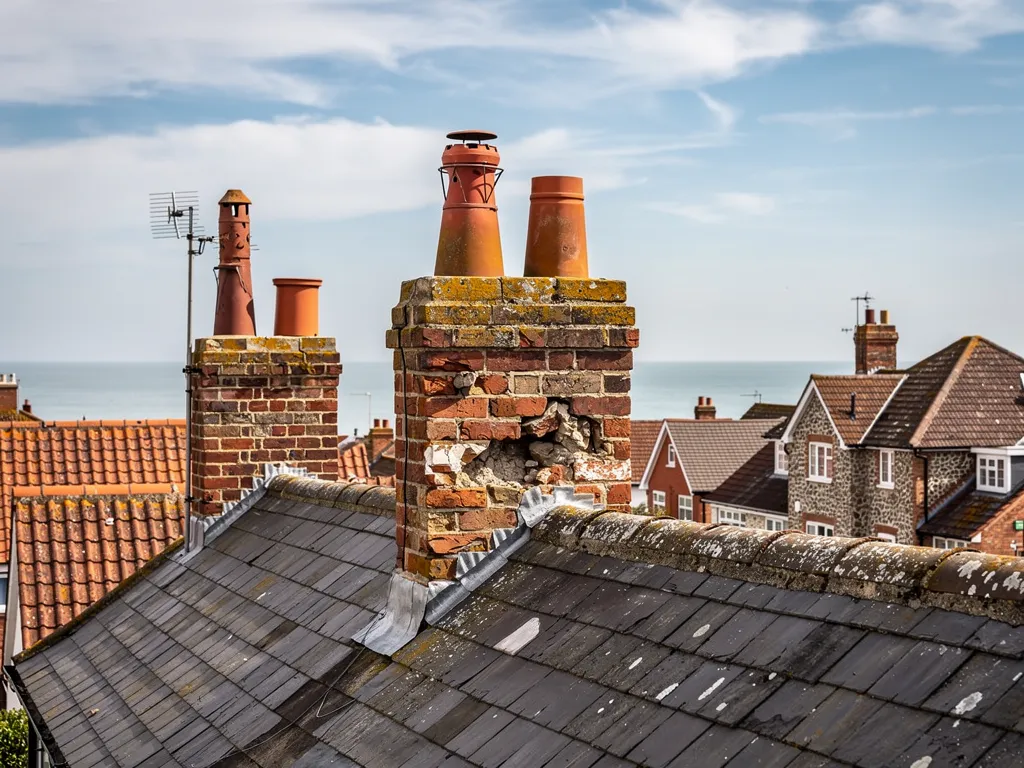
- Chimney repointing. MyBuilder's chimney guide (updated 21/08/2026) puts the typical job at around £750, with a wide range of £500 to £2,000 depending on the stack.
- Roof inspection. The same site gives £150 to £250 for a standard roof inspection, which is the kind of figure to expect if you want a second opinion before committing to work.
Look at how scaffolding shows up in the lead figures. Identical work costs roughly double once a tower is needed. That is the pattern across the whole page: the repair is rarely the biggest variable, access is.
If a ridge needs rebuilding, patching the mortar only sets up the next crack, and the survey photographs show you which case you have before any money is agreed. A repair is worth paying for only when it removes the cause.

What moves a roof repair price up or down
Five things account for most of the difference between one quote and another for a similar-sounding job.
Access. A single-storey rear roof within ladder reach is simpler than a three-storey terrace with a narrow pavement frontage. Anything that needs scaffolding, a tower or a cherry picker adds to the total.
The covering. Matching old clay peg tiles or natural slate costs more than matching concrete tiles, and the table above shows how the per-metre rates climb. Horsham stone slabs, found around Steyning, Henfield and Storrington, are a specialist matter, and we price them only on survey.
Size and spread. One fault in one place is cheaper than the same fault repeated across a slope, since repeated faults often mean the whole area has worn out.
What is underneath. The visible damage may be the least of it. If a slipped tile has let water reach the battens,those cross-timbers may need replacing too. Our guide to what a small roof fault costs if you leave it shows how a cheap job grows.
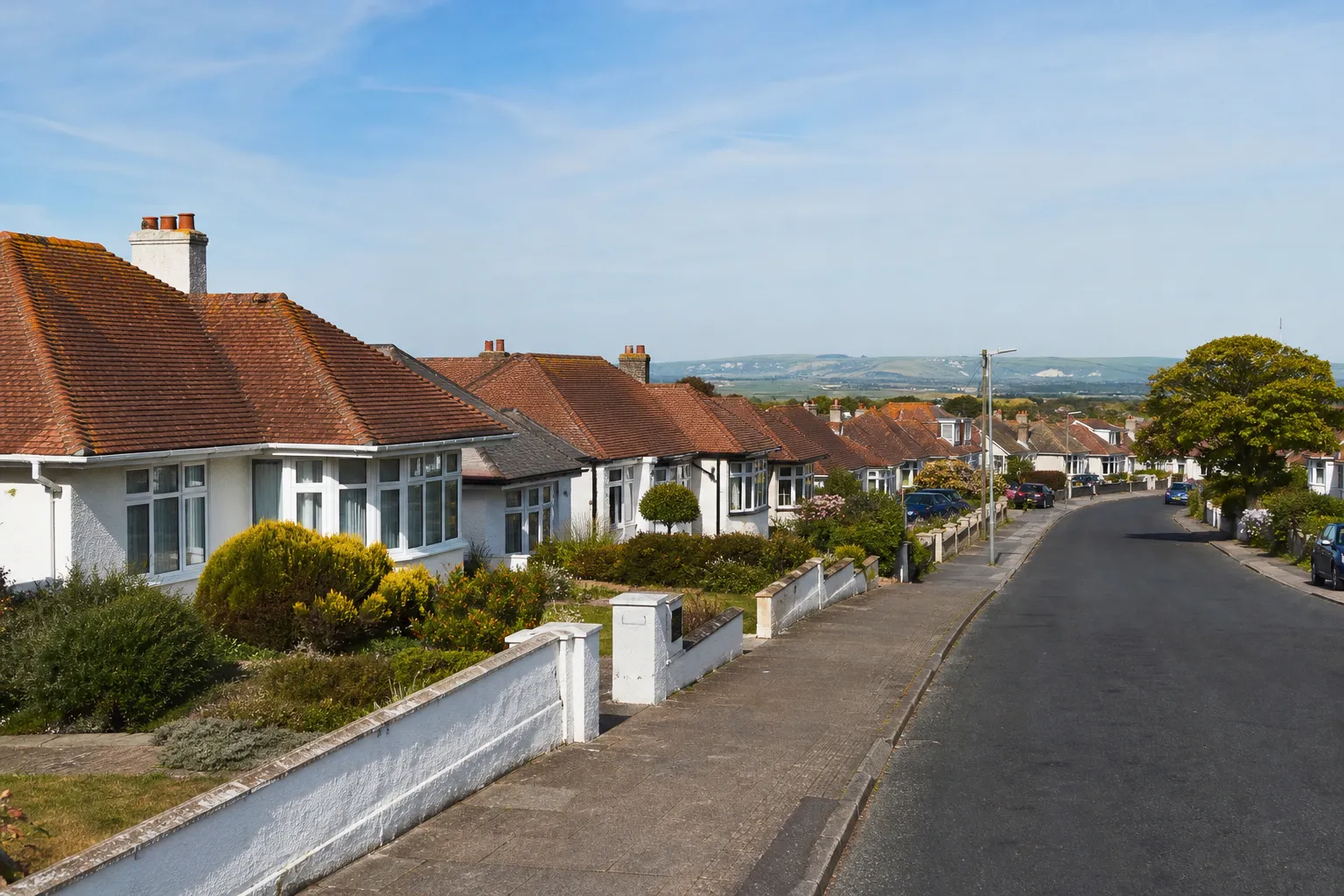
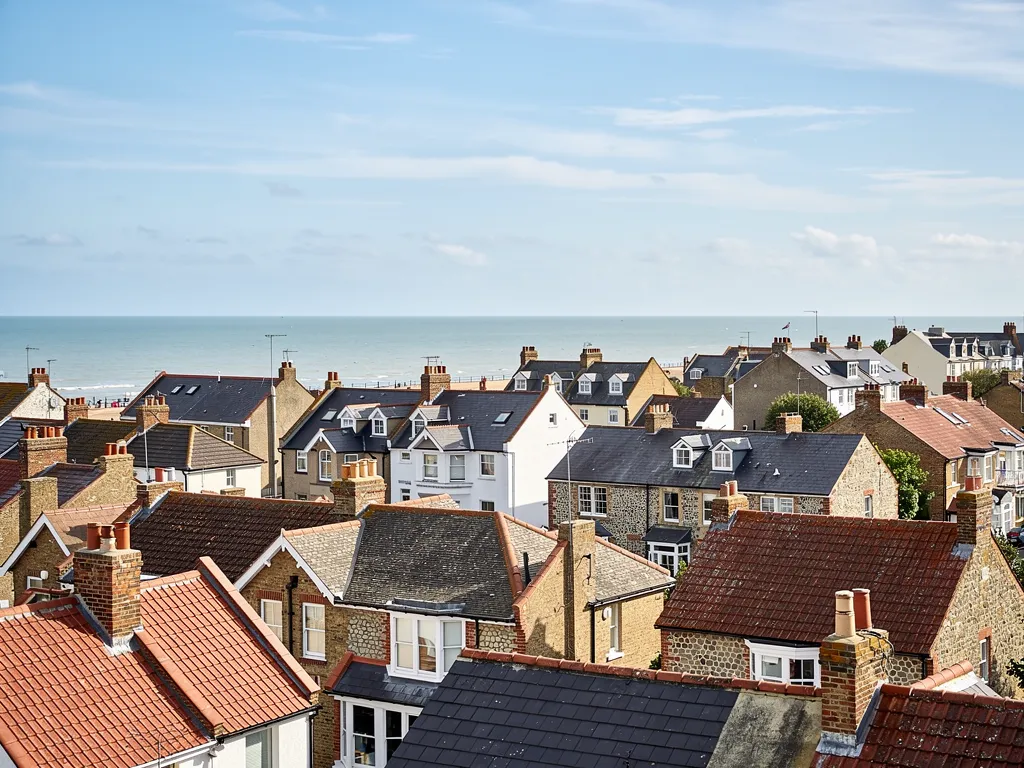
Where you live. Seafront houses in Worthing, Shoreham and Littlehampton can be harder to reach and more exposed, and a terrace may share a roof line with a neighbour. See repairing a terraced house roof for how that changes the work.
Because of all this, the cause is found first, and only then is the least work that cures it for good priced. The price reaches you on paper once our survey is finished, as one sum, and we keep it good and fair. Check VAT is included in any figure you are given.
When paying for repair stops making sense
A repair is the right spend when it solves the problem. It stops being sensible when the same roof needs patching again and again, or when the work costs a large share of a new covering for a slope that has little life left.
Signs that point towards replacement rather than another repair include slipping tiles across a whole slope, a covering that has gone brittle or flaky, widespread nail failure, or underlay that has perished. A slope like that may take a fresh repair every winter. The cumulative bill can pass the cost of recovering it, and the next repair is still not a fix.
The opposite mistake is just as expensive. Re-roofing a slope that needed two flashings and a ridge refix wastes money that could have gone elsewhere. For lifespans by material, typical figures run from 20 to 30 years or more for EPDM, to well over a century for good natural slate, and every one depends on exposure, workmanship and upkeep. They are never a promise.
A word on doing it yourself
Small jobs tempt people to try themselves, and working on a roof carries real risk. If you are weighing it up, read our guide to DIY roof repair first, and stay off the roof itself.
Whoever does the work, ask what caused the fault and to see pictures of it. Ask, too, for the cover to be in writing, so you can read what stands behind the repair. For a list of the faults most often behind these bills, see the most common roof problems and how they are fixed.