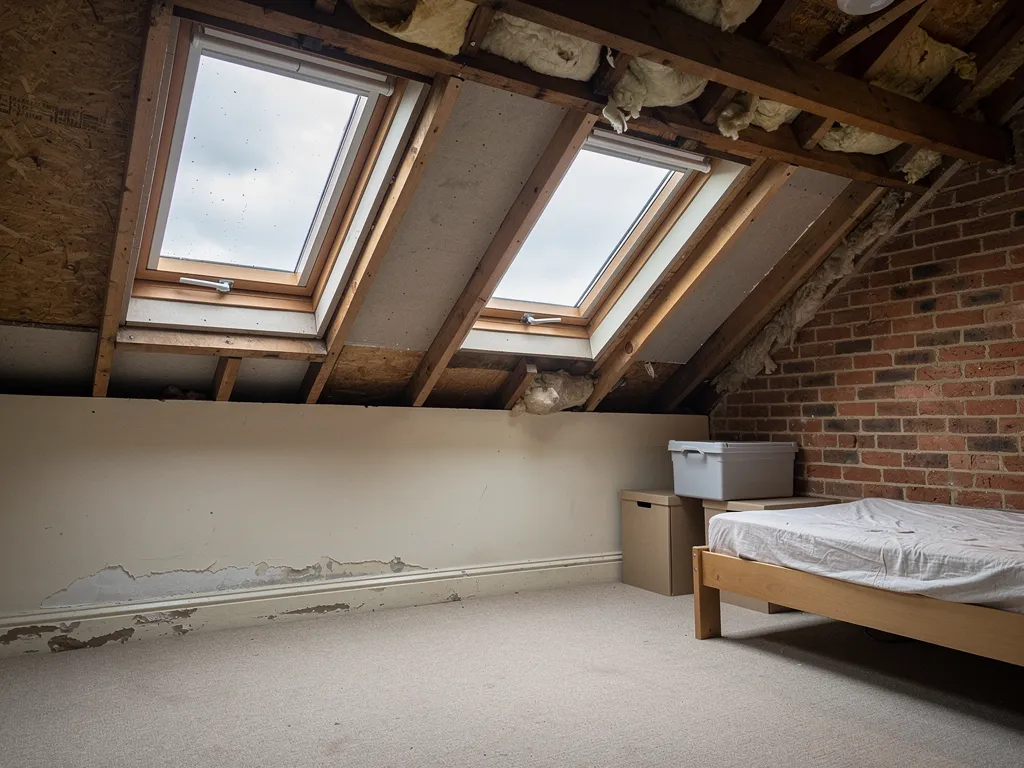
A roof is built in layers, and rain gets past it by whichever weakness the weather can reach. One dramatic hole is rare. Far more often a joint has opened, a fixing has let go or a channel has filled and spilled, and a Channel gale pushes the rain in sideways. Knowing the usual suspects helps you describe the problem accurately on the phone, and helps you judge whether a proposed repair matches the fault.
This guide takes the causes one at a time: the tiles and slates themselves, the lead and mortar joints at walls and chimneys, valleys and gutters, ridges and verges, flat roofs, and the look-alikes that behave like a leak but are not one. For each we describe the part's job, the way it fails and what you can see from the garden, the landing or the loft. The ceiling stain is a poor guide to position, because water travels along the underlay and the timbers before it shows. Our guide to how roofers find a roof leak covers the search itself, and the list below tells you what that search is looking for.
Slipped, cracked and missing roof coverings
Each tile or slate hangs from a batten, a narrow timber lath fixed over the rafters, and is held by a nail or a clip. If the fixing gives way the tile sags downhill and uncovers a strip that the course above no longer protects. If the tile cracks, rain runs through the break onto the underlay, the sheet laid under the covering. A sound underlay copes with the odd drip. A perished one does not.
Wind starts most of these faults on the coast. A gust lifts an edge, the nail loosens over a few storms and the next blow finishes the job. Slates age another way: their nails rust over the decades, so a perfectly good slate slips out of its row. Tiles that have been walked on, or struck by a branch, develop hairline cracks that open slowly.
Signs from the ground
Stand back with binoculars, or use the zoom on a phone. Look for a tile sitting lower than its neighbours, a dark gap in an otherwise even pattern, or fragments in the gutter and on the path. In the loft, a pinprick of daylight on a bright morning is a clear sign, and a stain on the underside of the covering shows where the water ran.
One slipped tile caught early is a small repair. Left through a winter, the water soaks the batten and the rafter beneath, and the job grows. Several tiles slipping in a line across one slope point to a fixing problem across the whole area, and the survey photographs will show that before anyone suggests replacing tile after tile.
Flashings, fillets and flaunching
Wherever a roof butts against something upright, such as a gable wall, a chimney or a dormer cheek, a flashing seals the gap. Normally that is a lead strip, its top edge slotted into a chase in the brickwork and its lower edge dressed over the tiles. Plenty of older houses have a fillet in its place: a triangle of mortar pressed into the angle. Either can let go, and neither is easy to inspect from below, because the damp may turn up some distance away.
Lead fails by lifting, splitting or being dragged out of its groove, since the roof and the wall do not move together. Mortar fillets crack and shrink back from the brick. On a chimney stack, the flaunching is the sloped mortar cap that beds the pots and throws water off the top. Once it cracks, rain runs into the flue or the brickwork and appears as a tide mark on a bedroom wall or the chimney breast.
The giveaway signs
A mark close to a chimney breast or an end wall is the first clue. A drip that appears only when rain comes from one direction suggests a flashing that is open on that side. Outside, look for lead standing away from the wall, gaps along a mortar line, or white salt streaks on the stack. On a listed house the lead and mortar joints are also where consent questions arise, which repairing the roof of a listed building explains.
The remedy follows the condition of the joint. Dressing a lifted flashing back and repointing it is a modest job. Where lead has split along its run, or the fillet has gone, renewing the joint properly outlasts any amount of sealant, which tends to fail again along the same line.

Valleys and gutters that choke, spill or split
Slopes that tilt towards one another leave a valley between them, and it drains both. That concentration makes it a hard-working part, lined with lead, a plastic or GRP channel or, on older roofs, tiles cut to shape. Debris is its enemy. Leaves, moss and seeds settle in the trough, water banks up behind them and climbs over the edge of the lining, under the tiles alongside.
Gutters cause a different leak that passes for a roof fault. A blocked, sagging or badly levelled gutter overflows, and the water often runs down behind the fascia, the board under the roof edge, soaking the top of the wall until it shows as damp on an upstairs ceiling. Brett Martin advises a fall of 1mm for every 600mm and supports no more than 900mm apart. A run that has dropped between brackets holds water instead of shedding it.
What to look for
If you can do it safely from a window, watch the gutters during a downpour. Water spilling over the front lip or pouring out of a joint shows where the system has failed. Green growth in a valley, with a tide line where water has stood, shows a channel that no longer clears. Indoors, the stain tends to sit near an outside wall, or below the line of the valley.
A blockage is cured by cleaning. A split lead valley, or a gutter that has pulled away from its fall, needs repair or renewal, and we price whichever properly solves it. Our roof repairs hub covers the full range of repairs we carry out.
Ridges, hips and verges that have lost their grip
The ridge is the top line of the roof, the hips are the angled arrises of a hipped roof, and the verges trim the gable ends. Each carries special tiles or a cement finish that must withstand the strongest wind the house meets, since they sit at its highest and most exposed lines.
The traditional method bedded these tiles in mortar. Over the years the mortar crumbles and releases its hold. BS 5534 was revised in 2014, and the standard has expected ridge and hip caps to be held by a clip or screw, with the mortar as a supplement. A ridge bedded before that, and never checked since, is a frequent weak point. A dry-fix system, tested to BS 8612, holds the tiles with clips and a vented strip instead of leaning on the mortar bond.
Signs of trouble
From the ground, a wavy skyline, a cap that has slid sideways or a dark gap between the cap and the slope suggests the bedding has gone. Crumbs of old bedding in the gutter or lying on the drive are another clue. In the loft, a wet patch high near the apex, with daylight or stained timber at the head of the rafters, tells the same story. Verge damage shows as loose or missing cement at the gable edge, with water tracking under the first row.
A loose ridge can shed tiles in the next gale, so this is a repair to book soon and not one to leave over winter. On this coast, re-fixing a ridge with clips and fresh bedding is normally a sounder answer than another smear of mortar. You see the existing condition in photographs before a price is given.
Flat roofs: ponding, open laps and failed upstands
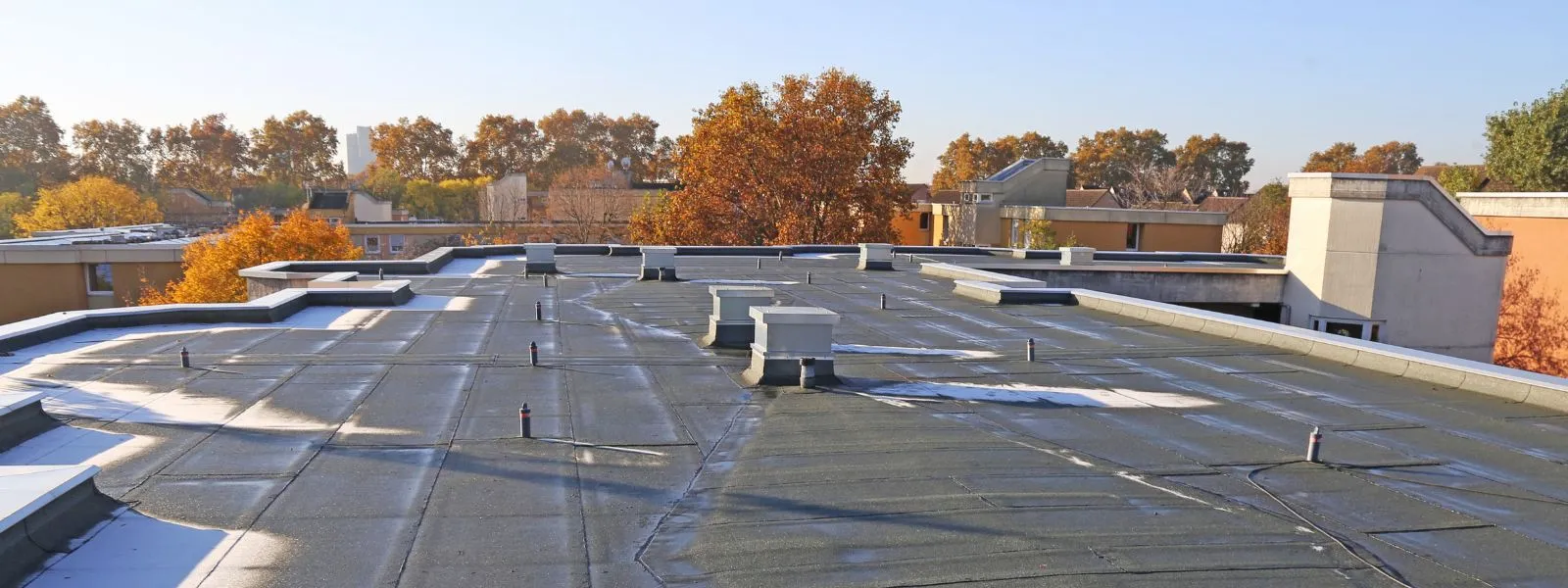
No flat roof is level. It is laid to a gentle slope so water drains off. IKO, citing the 2018 edition of BS 6229 (since revised), gives 1:80 as the recommended finished minimum and says to design for 1:40, which leaves room for tolerances and deflection. A roof that ends up shallower than that lets water stand in pools, and standing water finds any weakness in the membrane given enough time.
The usual faults repeat. A seam in felt, EPDM or GRP opens where the surface has blistered or been dragged by movement. The upstand, the short rise where the membrane climbs a wall, peels away because the flashing above it has failed. An outlet clogs with leaves and the whole roof backs up. And the membrane simply ages: one published guide puts a flat roof at 15 to 30 years, depending on the material and the workmanship.
Signs on a flat roof
Patches that stay dark a day after rain mark where water pools. Blisters under felt, raised edges along the walls and crazed GRP can be seen from a first-floor window or the top of a ladder. Inside, a leak often shows almost directly below the fault, because there is no void for water to wander through. That makes it simpler to place than a pitched roof leak, although a run along a joist can still carry it a few metres.
A small split or an open lap can often be repaired well. Widespread blistering, soft boarding or a membrane that has lost its flexibility generally means re-covering the roof gives the better result, and the survey photographs show which side of that line yours sits.
Condensation and the other look-alikes
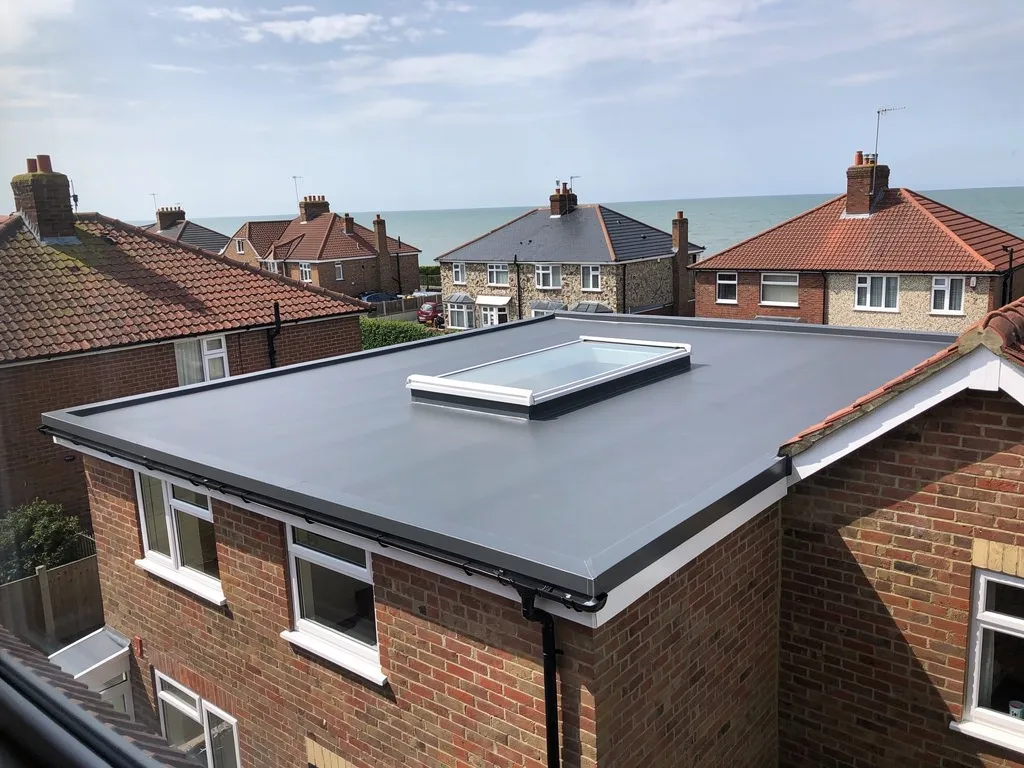
Some of the most puzzling wet ceilings are not roof leaks, and ruling these out early saves money. Condensation comes first. Moist air from bathrooms and kitchens drifts up into the loft, touches cold timber and underlay and condenses into droplets, which fall onto the insulation and darken the ceiling below. It tends to show on cold, still mornings, not during rain.
Ventilation is the cure. Marley's summary of BS 5250 gives a 10mm continuous gap at the eaves for pitches above 15° where a high-resistance underlay is laid, and 25mm for pitches of 15° or less. Quilt packed tight into the eaves can shut that gap, and the loft then holds moisture all winter. Our guide to wet loft insulation shows what that looks like in practice.
Plumbing, walls and windows
A stain that grows on dry days points indoors: a tank, a pipe, a shower tray or a bath seal. Rain driven into cracked render, a tired window seal or porous brick can travel inside and surface at ceiling height. Each of these needs a plumber, a window fitter or a builder, and we tell you plainly when the cause lies with one of them, so you are not paying for roof work that cannot help.
Timing is the quickest test. A mark that appears only after heavy rain from one quarter is a roof or wall fault, while one that comes and goes with cold nights is condensation. If the evidence leaves you undecided, the loft inspection settles it, and the colour and outline of a stain add further clues.