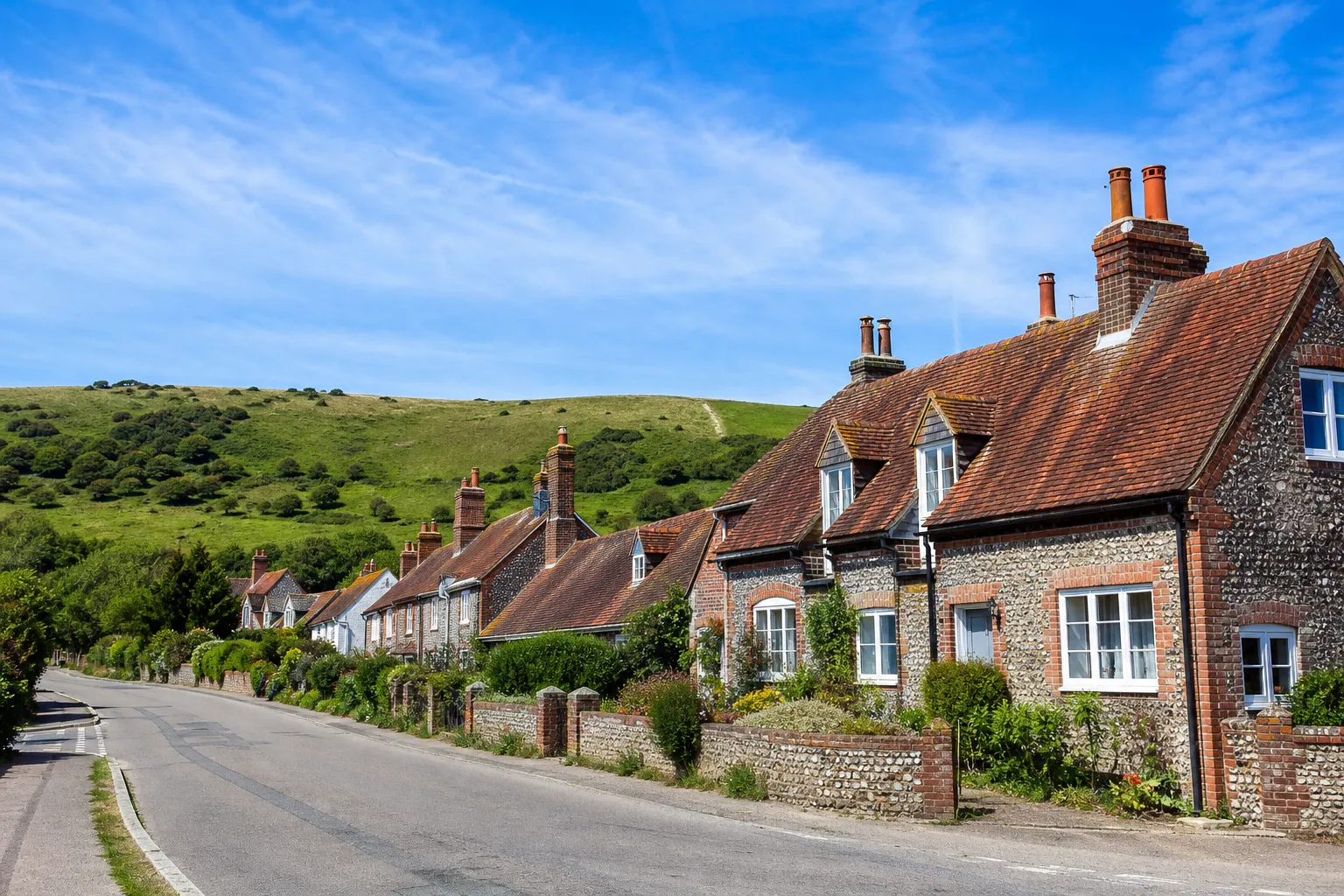
Owning a listed house means looking after something the law treats as part of the national record. The roof is often its most important feature, and also the part the weather attacks first. When a tile slips or a lead flashing splits, the instinct is to book the nearest roofer and have it fixed. On a listed building that instinct needs one pause: is this repair, or is it alteration?
The answer decides whether listed building consent is needed. Everyday upkeep and small mends in matching material generally fall outside it, while changes to the character of the roof, or repairs in different materials, are. The rules sit in the Planning (Listed Buildings and Conservation Areas) Act 1990, and the councils turn them into practical guidance. Adur and Worthing, and the South Downs National Park Authority, each publish their own.
This guide sets out what the councils say, how matching materials work in practice, who decides for your address and what the offence provisions mean. Treat it as background reading and not as legal advice; for your own house the council's conservation officers have the final say.
Where prudent maintenance stops
The Adur and Worthing listed building guide draws the first line. Looking after the building through prudent maintenance and general repairs needs no special step; only an owner who wants to make alterations has to act. That is the starting point for every listed roof job. Prudent maintenance covers the ordinary upkeep that keeps a roof sound: clearing gutters and valleys, refixing a handful of slipped tiles, replacing a few cracked ones with matches and re-pointing a small area of failed mortar.
The National Park Authority says much the same: day-to-day upkeep, and modest repairs done where the fabric sits that simply restore it, do not call for listed building consent. The words that matter are minor, like for like and in place. A repair that stays within those limits keeps the historic fabric where it is and puts back what was there.
Why the line matters to the roof
Historic roofs are valued for their material, their texture and the way they have aged, not only for their outline. A hand-made clay tile, a stone slab or a Welsh slate holds a record of its era that a modern copy cannot. Each unnecessary replacement thins that record.
So the practical test is not how big the job is but what it does to the fabric. Replacing five tiles like for like is maintenance. Replacing the whole slope with a different tile is a change to the character of the building. In between lies a grey zone, such as re-covering one side with salvaged tiles of the same type, and that is the point at which you ask the council before the scaffold goes up. We will tell you plainly which side of the line a repair appears to sit, and what to put in front of the conservation officer.
When a repair becomes an alteration
Section 7 of the 1990 Act sets the rule. Nobody may demolish a listed building, or change or enlarge it so as to affect its special architectural or historic character, unless the works are authorised, and the authorisation is listed building consent.
Both councils turn that into examples. Adur and Worthing include repairs made in a different material to the original on their list of works requiring consent. The South Downs National Park Authority says that where repairs involve alterations, or the complete replacement of historic fabric or features that would affect the character of the building, consent will be required. Read together, they give a workable rule: change the material, change the appearance or remove historic fabric wholesale, and you are into consent territory.
Everyday examples
Some jobs sit clearly on one side. Re-bedding a loose ridge cap with the existing cap is upkeep. Swapping a clay peg tile roof for concrete interlocking tiles needs consent. Replacing a Welsh slate with a cheaper imported one is a change of material. Renewing the lead in a valley with lead of a suitable thickness is normally a repair, while replacing it with a plastic liner would alter the detail.
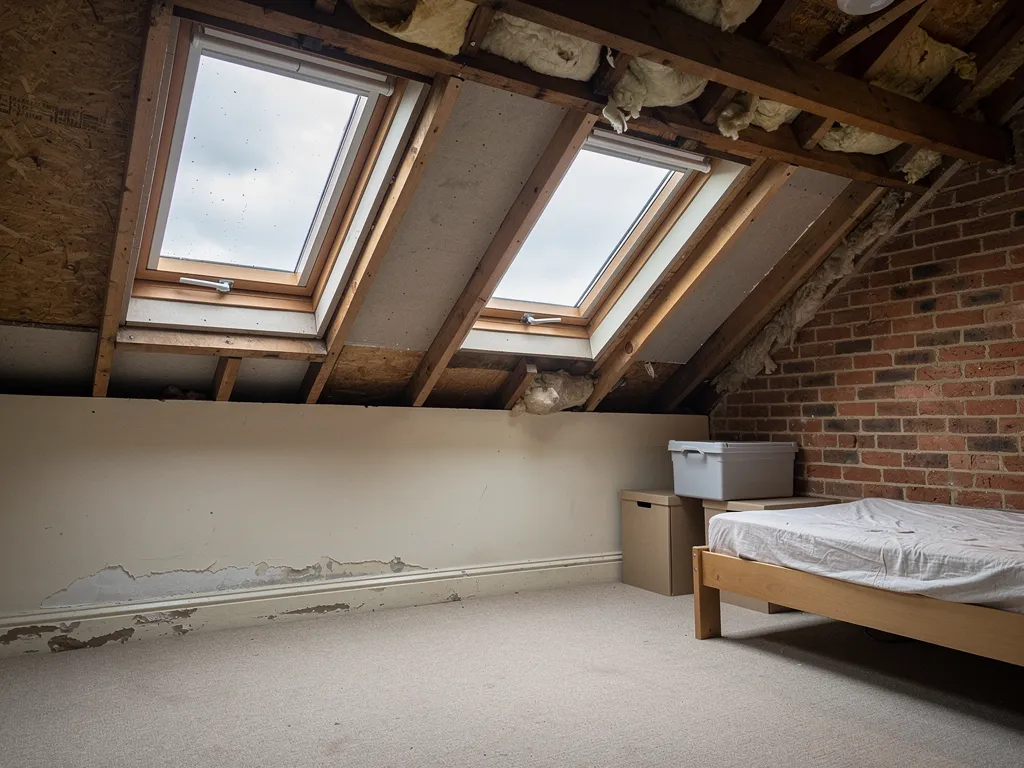
Less obvious are the details most owners overlook: new roof windows, extra vents, solar panels, a changed ridge profile, painting or coating tiles and replacing old rainwater goods with a different material. Each can alter how the building looks or how the roof works, so each should be raised with the council first.
If you are unsure, asking costs nothing and saves a great deal. The council can tell you whether a proposal needs consent, and the answer is far easier to obtain before the work than after.

Matching materials in practice
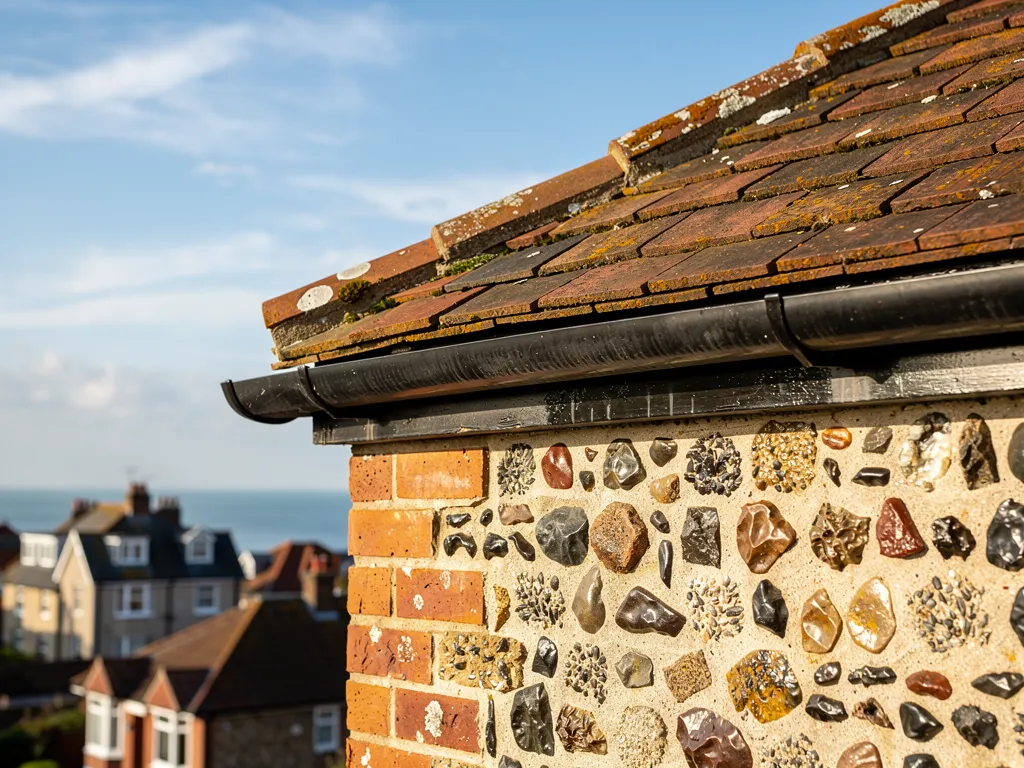
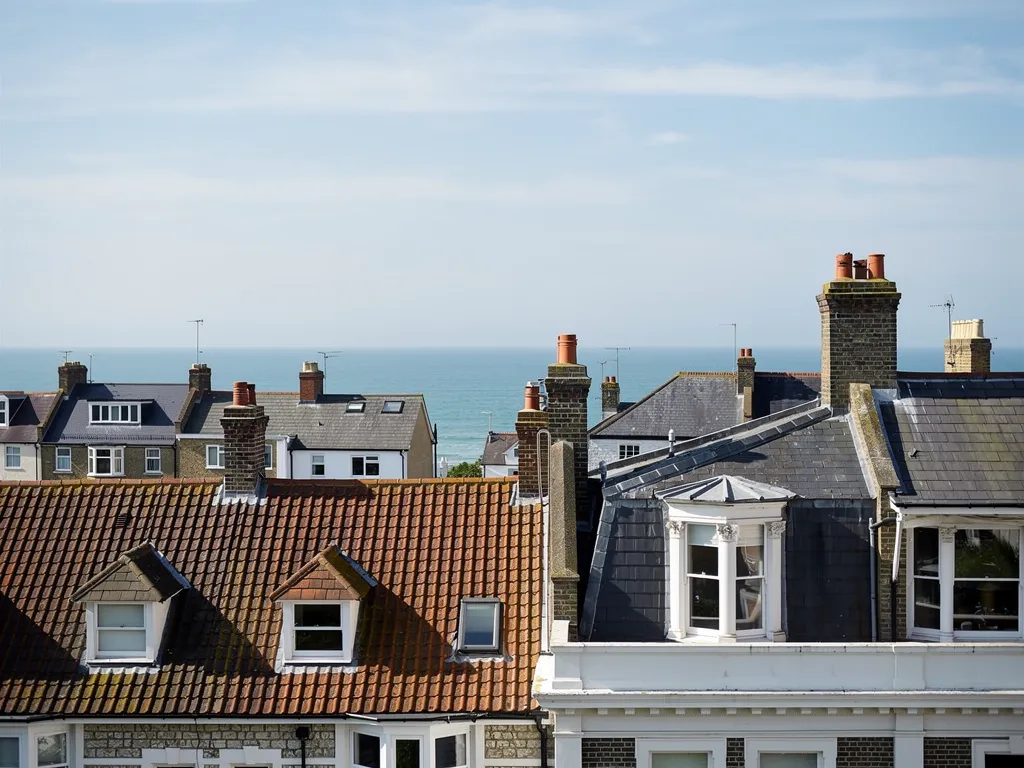
Matching sounds simple until you stand at the foot of a roof. Handmade clay tiles vary in colour and camber. Slates differ in size, thickness and origin. Horsham stone slabs are sorted by size from eaves to ridge, with the biggest lowest, so a replacement has to match more than a colour.
The Stone Roofing Association's advice on Horsham stone is useful as a model for any historic roof. Its first preference is to refit whatever of the roof's original stone can be salvaged. It cautions against importing slabs from other buildings where there is any alternative, because that feeds the loss of other historic roofs, and says new stone, if it can be had, should fill any gap. Those principles read across to peg tiles and slate: salvage and reuse from the same roof first, buy new in the matching type second, and treat buying in from another building as a last resort.
Method matters as much as material
The way a roof is laid is part of its character. Horsham slab roofs, according to the Horsham District appraisal for Steyning, are poorly served when relaid with mortared joints. A tile roof that was laid with lime mortar bedding is not improved by a hard cement substitute, which can trap moisture and crack the tile edges. Even fixings count. Where a roof carries a dry-fix ridge or verge system that did not exist originally, the council may want it looked at.
BS 5534 (the slating and tiling standard) has an A2:2018 amendment noting that heritage roofs may need different treatment, and Marley points readers to the local planning authority and to conservation experts. For a listed building, then, the fixings specification is a conversation, not a default. Our survey photographs record the existing materials, courses and fixings, which gives the council something concrete to respond to.
Which council decides, and how to ask
Listed building consent is handled by the local planning authority, and who that is depends on where the house stands. Adur and Worthing share a single planning office in the Town Hall, yet each council is its own planning authority with its own listed buildings and conservation areas.
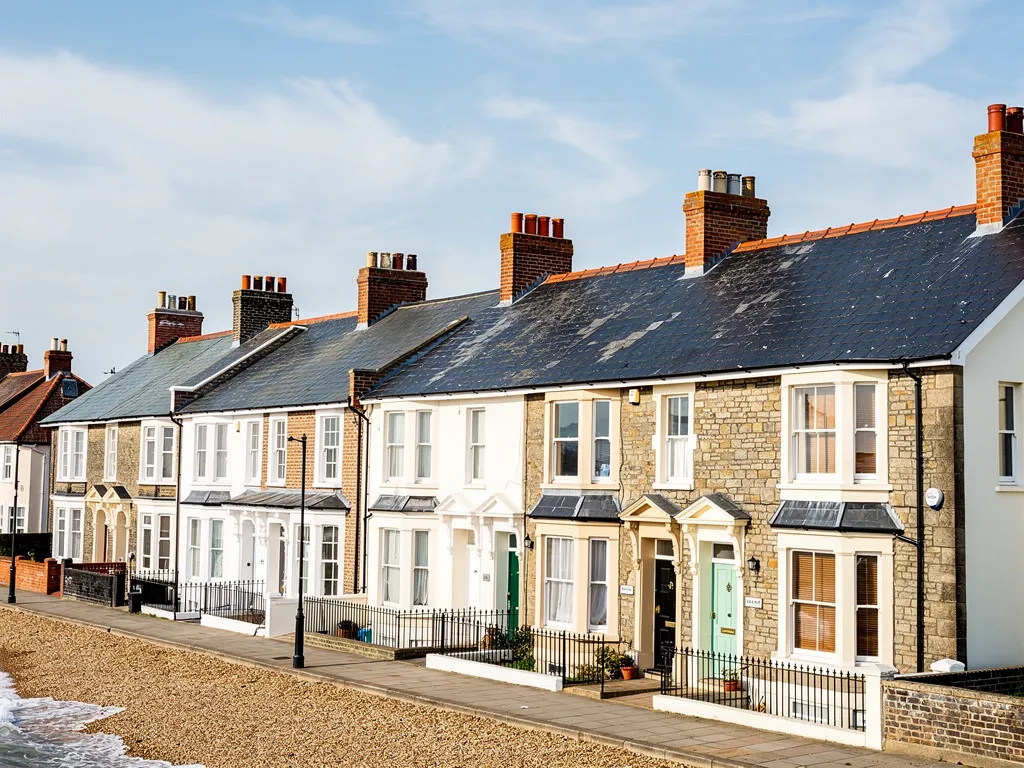
The South Downs National Park changes things. Where a property lies inside the Park in the areas the Authority has taken over, including Adur and Worthing, Arun, Brighton and Hove, Horsham and Lewes, the Authority itself is responsible for planning and enforcement. Castle Goring and Highdown, both in Worthing, are inside the Park for planning purposes. With a house anywhere near the Downs, check whether your address falls in the Park before you write to a council.
What to send
A short email usually does it. Give the address, say that the building is listed and at which grade if you know it, describe the problem and what you propose to do, and attach photographs of the damaged area and of the roof as a whole. Say which materials you intend to use and whether they match the existing ones. A written reply, rather than a phone remark, is the thing to keep on file.
Planning permission is a separate question from listed building consent, and both may apply. Re-covering a plain house with the same kind of tile seldom needs planning permission, though listed buildings and some conservation areas are exceptions, and a few areas in Worthing and Adur have Article 4 directions that remove roof-related rights. The council's planning team can say which regime applies to your house.
Because Watertight works across Worthing and the Downs villages, we see both systems. We explain the consent route, and where building control is involved in a notifiable job, we handle the notification.
The offence, and why unauthorised work is risky
Section 9 of the 1990 Act is brief: a person who breaks section 7 commits an offence. That means doing works that need listed building consent without having it. The offence does not depend on whether the work was done badly; the absence of authorisation is enough.
It matters to the owner and to the contractor. An owner who commissions unauthorised works is exposed, and so is the person carrying them out. It also matters to the next buyer. Unauthorised changes to a listed building can surface in a survey or a solicitor's enquiries years later, and they can complicate a sale.
No comfortable time limit
Many owners have heard of a four-year rule for planning breaches. The Park Authority states that enforcement against unauthorised listed building works is not subject to a four-year cut-off. A change made a decade ago can still be pursued. Whatever you may have read about immunity after a set period belongs to ordinary planning control, not to listed buildings.
This is the strongest reason to ask early and to keep records. A roofer who tells you consent is unnecessary should be able to say why, and you should be able to produce the council's confirmation if it is queried afterwards.
If the worst happens and the house suffers storm damage, make it safe first. Temporary protection is a sensible step, and the permanent repair can follow once the right route has been established. Our guide to the best time of year for roof repairs explains how to fit consent lead times around the weather.
Churches, scheduled monuments and flats in listed buildings
Not every historic roof follows the same route. The ecclesiastical exemption covers listed churches still in use by Anglican, Catholic, Methodist, Baptist and United Reformed congregations. Those churches skip listed building consent and go through the denomination's own approval process, which for Anglicans is a faculty. The exemption does not stretch to other faiths and denominations, and it ends when a church closes for regular worship. A redundant church needs listed building consent in the usual way.
Scheduled monuments are a different category again. A scheduled monument needs its own scheduled monument consent, issued nationally, and the church exemption never reaches it.
Flats and shared buildings
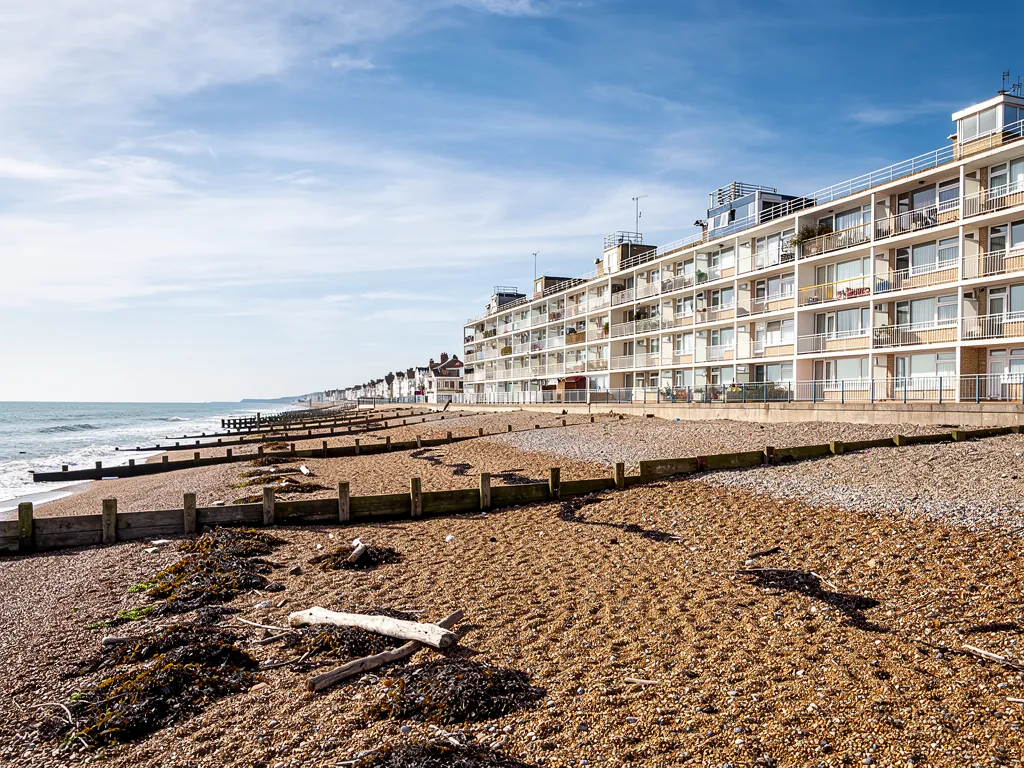
Flats in a listed building are treated as part of the listed whole. A leaking roof above a top-floor flat in a converted Victorian villa raises the same consent questions as it would for a house, and the repair is typically a freeholder or management company matter. If you are a leaseholder, check what your lease says and contact the managing agent before commissioning anything. Tenants of a listed house should pass any roof problem to the landlord in writing; our guide to landlords and roof repairs sets out who is responsible.
Whatever the building, the same habits help. Photograph the roof before work starts, keep the council's replies and ask the contractor to confirm in writing what materials will be used. While a leak is coming in and you wait for an answer, our guide to the causes of a leaking roof helps you name the fault when you write to the council.
Our work on any roof repair starts by tracing the leak before anything is quoted.