A slate that has spent a century on a roof has done something no new slate can: it has weathered. Its edges have softened, its colour has settled, and it sits in the same range of greys, blues and purples as its neighbours. That is why people ask about reclaimed roof slates when a Victorian or Edwardian roof needs mending, or when a whole slope is stripped and the old covering looks good enough to go back.
Reclaimed slate is not automatically better, cheaper or kinder to the building. A second hand slate can be as sound as the day it was split, or it can be hairline cracked, layered with weakness or holed in the wrong place for the roof it is meant for. The merchant's pile does not tell you which. Testing does.
This guide sets out the pros and cons, how a roofer tests a slate before it goes back on a roof, how size and nail holes dictate the gauge, where sound stock comes from, and when consent comes into it. Read it before you agree to reclaimed material on a quote.
Where reclaimed slate earns its keep, and where it does not
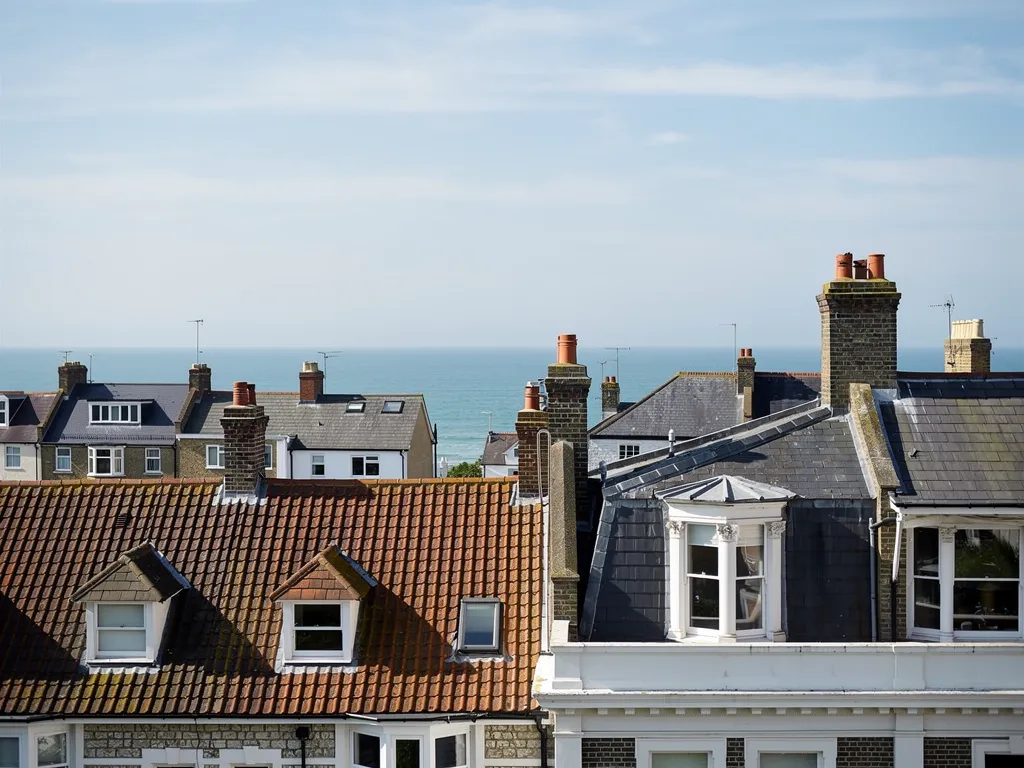
The strongest case for reclaimed slate is appearance. New slate, even a good one, looks flat and uniform beside a roof that has weathered for generations, and a patch of fresh grey stands out from the street for years. Slates salvaged from a similar building blend in at once, which matters on a terrace, on a street of matching villas, or on a house where the roofline is part of the character. It also matters when the original slate is no longer made in the same size or tone.
There is a second argument, which is reuse. A slate that is still sound has plenty of life left, and putting it back keeps it out of a skip. Published lifespans for natural slate are long: MyBuilder quotes 80 to 100 years or more for slate that has been laid well, and Checkatrade puts the range at anything from 50 to 200 years. Those figures describe good slate fixed properly, not any slate pulled off any roof, so they promise nothing about a second hand batch.
The drawbacks
The drawbacks are real. Stock arrives in mixed sizes and thicknesses, which means more sorting and more cutting. Some slates break in the strip, so a roofer has to allow for waste. A reclaimed slate also carries its history: old nail holes, a chipped head, hidden weakness from decades of frost and heat.
Price is not a clear saving either. A new slate re-roof is typically £100 to £180 per m² according to MyBuilder (updated 21/08/2026), and reclaimed material takes more labour to grade, hole and lay. What it comes to depends on the stock, the sorting and the access, and a written total follows, after we have been up and looked.
How a reclaimed slate is tested before it goes up
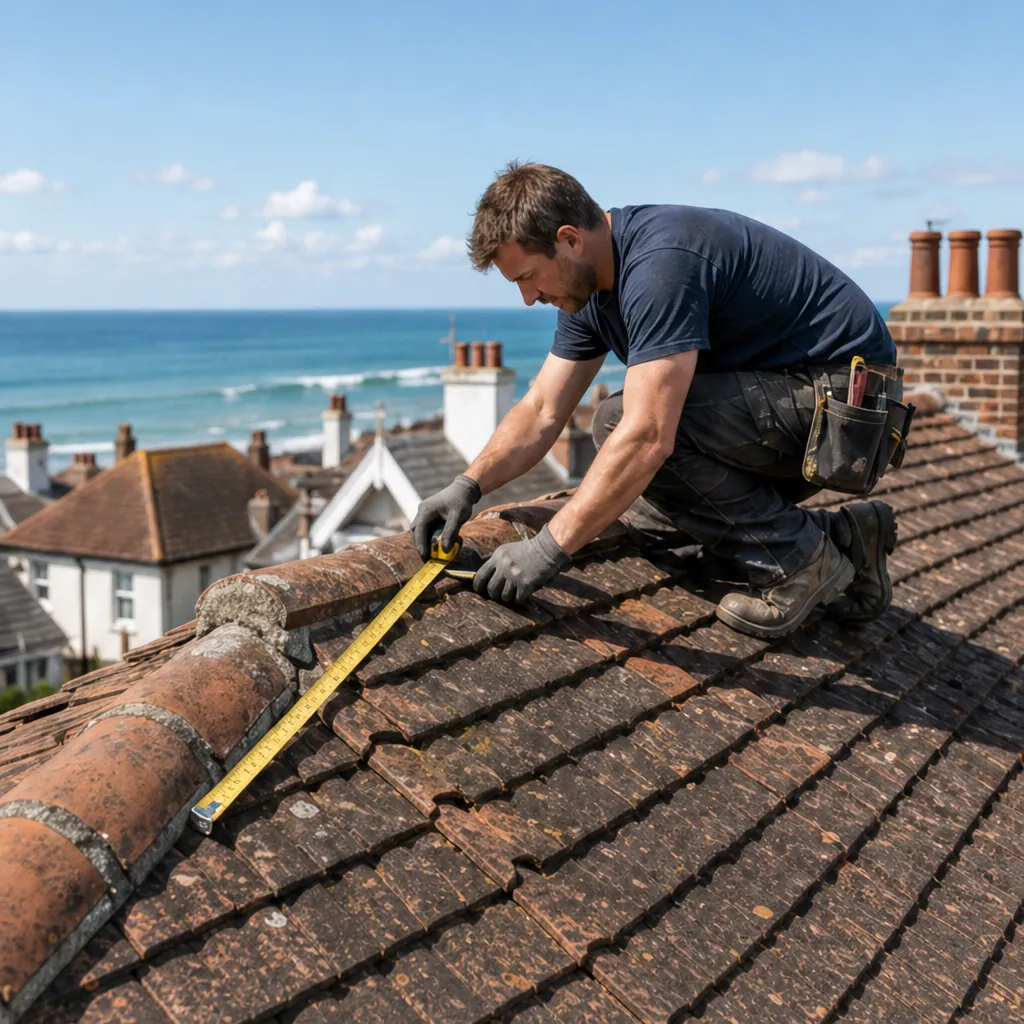
Every slate is checked one by one, and this step separates a sound batch from a bad one. A tired slate looks much like a good one from a few feet away, so the checks are hands-on.
The first is the ring test. Hold the slate by one corner and tap it lightly with a knuckle. A sound slate gives a clear, bell-like note. A dull thud usually means a hairline crack or a layer that has begun to part. The second is the eye test: turn the slate over and look at the back and the edges for flaking, thin layers lifting like pastry, rust stains from old fixings and dark bands that can mark weak bedding.
Then comes the scrape test. Run a fingernail or a knife point along an edge. Sound slate stays hard; slate in the early stages of breaking down gives off pale, powdery dust or crumbles. This is the fault covered in our guide to delaminating slates, and a delaminating slate should never be reused, whatever its colour.
What gets sorted out
A good batch is graded into three piles. Sound slates go back on the roof. Slates with minor damage, such as a chipped corner, can be cut down and used as shorter slates at the eaves or beside a valley. Anything that fails a test is scrapped. A fair share of a strip often lands in the second and third piles, and a roofer who tells you every slate can be reused has not tested them.
Slates from a roof that has leaked for years need extra care, since long-term damp speeds up decay. If you are unsure of a batch, a few slates can be set aside, tested and shown to you before the rest are bought.
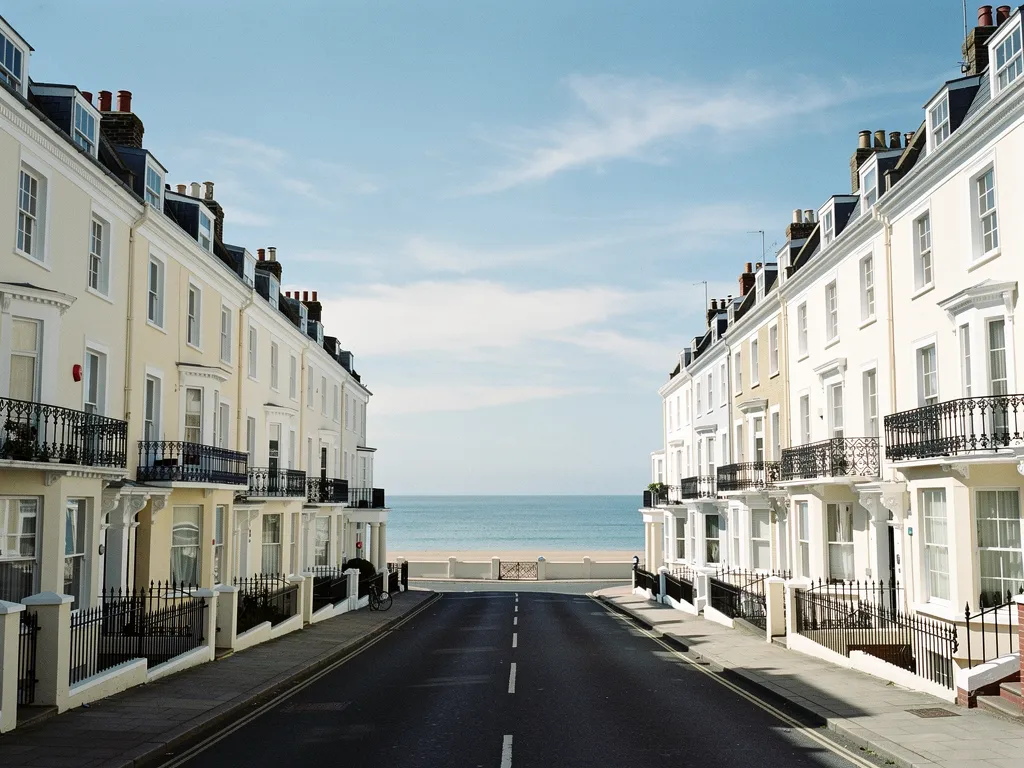
Sizes, nail holes and why the gauge matters
Slate is not sold in one size. A roof is laid in courses, each overlapping the one below, and the spacing between the fixings, the gauge, depends on the length of the slate and the pitch of the roof. Reclaimed slates seldom arrive in one neat size. A pile from a Victorian terrace may hold several lengths, some from the main slopes and some from an extension, and each length wants a different gauge.
That is why mixed stock is sorted by size before anyone climbs a ladder. Where a roof was first laid in diminishing courses, with long slates at the eaves and shorter ones towards the ridge, the same sorting can reproduce the pattern.
The headlap
The headlap is how far each slate laps the course two below it, and it grows as the roof gets flatter. Cupa Pizarras lists the headlaps that BS 5534 expects for a 500 by 300 mm slate in sheltered and moderate exposure: 115 mm at 20 degrees, 95 mm at 25, 80 mm at 30 and 70 mm at 35. For 600 by 300 mm and 500 by 250 mm slates the same table gives no value below 25 degrees. A smaller slate or a shallower roof means a bigger lap, so fewer courses show and more slates are needed. The pitch is therefore part of the decision on reclaimed material.
Nail holes
Old slates were holed by hand, often near the centre. A slate holed in the wrong spot for your roof's gauge is of little use, because the nails would not sit where the course needs them. Holes can be filled, or a slate cut down and re-holed, though a pitch below 25 degrees rules out the hook fixings made for holeless slates. Cupa says hooks should not be used there.
This is work for a roofer who has laid slate before, not for a first attempt.
Provenance: where the slates came from and who may sell them
Reclaimed slate has a source, and the source matters in two ways. The first is practical. Slate from a dry roof in good order is a different material from slate that has sat in a damp yard for years, and a seller who knows the building it came from can tell you what you are buying.
The second is ethical and legal. Historic roofs are lost when slates are taken from buildings that did not need to lose them, and theft of slate and lead from roofs is a known problem. The Stone Roofing Association writes about Horsham stone, but its advice carries over: it urges owners to avoid slates lifted from other historic buildings wherever there is an alternative, and to confirm that any stock was obtained legitimately.
Questions to ask the seller
- Which building did the slates come from, and roughly when was it built?
- Were they taken off in an ordinary strip with the owner's consent, or from a demolition site?
- What type of slate is it, and has it been sorted by size?
- Is there a receipt or a written description of the batch?
- Can you take samples for the ring test before buying the lot?
A merchant running a proper salvage yard will answer without fuss. A seller who cannot, or who will not put anything in writing, is one to leave alone.
If you are reusing slate from your own roof as it is stripped, none of this applies, and it is the better option wherever the slate is sound. Your roof's own slates are already the right size, colour and thickness for that house. The same principle holds on a Horsham stone roof, where the first choice is always the stone already on the building.
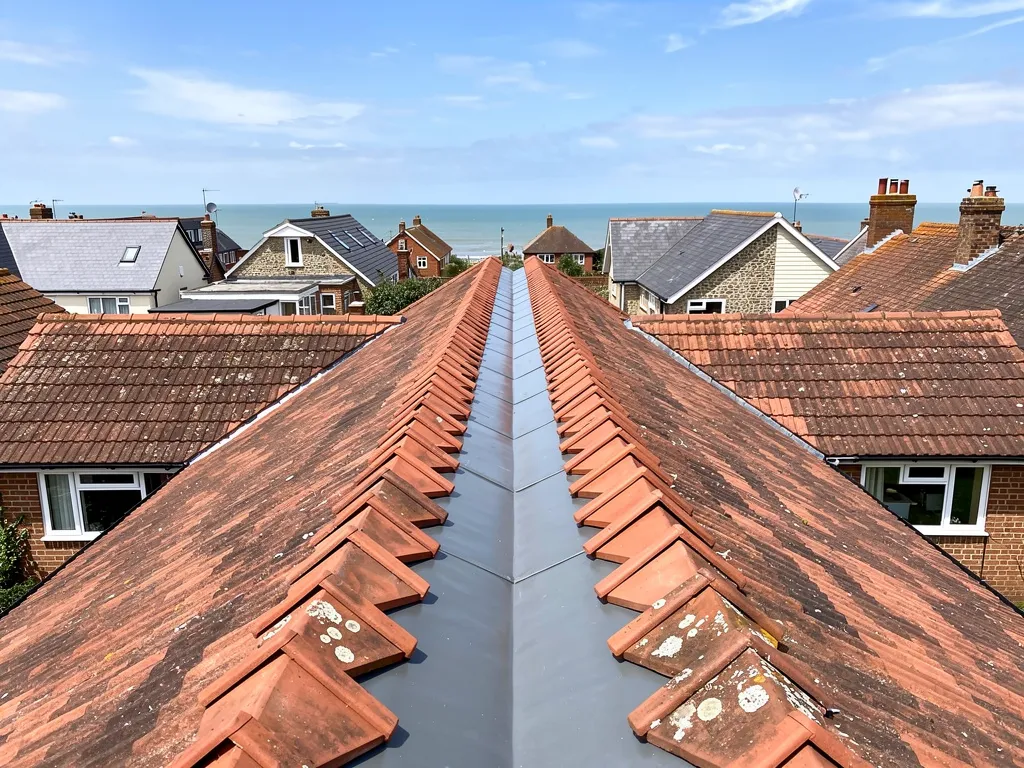
Matching an old roof, and when consent comes into it
Two situations call for reclaimed slate more than any other. One is a repair, where a few dozen slates have to blend into a slope that has weathered for generations. The other is a listed or conservation-area building, where matching materials may be a condition of the work.
Adur & Worthing Councils count a repair done in a different material as work that needs listed building consent. The South Downs National Park Authority does not require consent for tidy-up maintenance or modest patching in kind, but asks for consent once old fabric is swapped out wholesale and the building's feel shifts. If your home is listed, speak to the conservation officer before ordering any substitute slate. Reclaimed material of the right type is often how a repair stays inside the rules, though the council makes that call and not the roofer.
Conservation areas and Article 4
Relaying slate in the existing style rarely calls for planning permission, and living in a conservation area does not change that by itself. Some Article 4 directions do. The Old Shoreham direction, in force since 20 January 2023, removes the permitted development right for roof coverings on dwellings that front a highway. If you live in one of the Adur or Worthing conservation areas, check with the Adur & Worthing planning team before changing the covering.
A roofer who has laid slate in historic streets will hold the reclaimed samples against your own roof, in daylight, before anything is ordered. A mixed batch can look wrong in the first week and settled by the second year, so judging the match on a bright day, dry and wet, is part of the job.
If no sound slate can be found, a different covering may be the answer, and our guide to replacing slate with tiles covers what changes.
Fixings, upkeep and what to look for on the quote
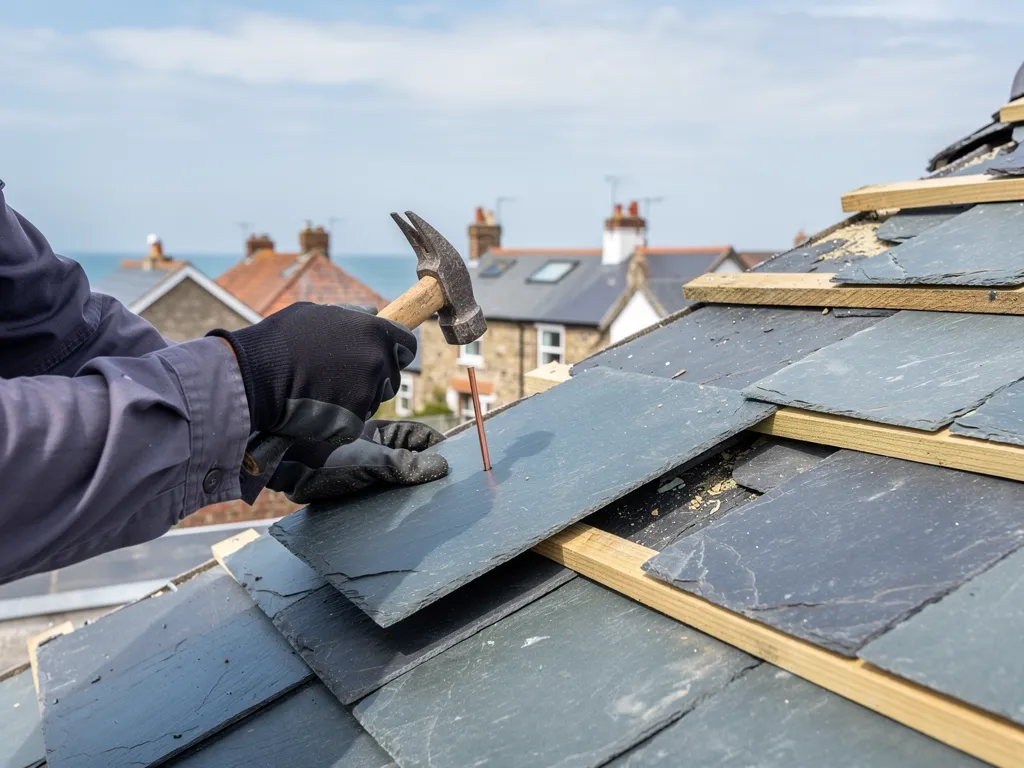
Even a perfect reclaimed slate fails if it is badly fixed. Slates hold on with nails, and old iron nails are usually the first thing to go on an old roof. Laying second hand slates on new fixings is normal practice; reusing the old nails is not.
On this coast, sea weather tests every shortcut. BS 5534 is the current standard for slating and tiling, and the fixing for an exposed slope is chosen on survey, from the slate, the pitch and the supplier's data.
Once the slate is up
Reclaimed slate needs the same upkeep as any slate roof: gutters kept clear, moss controlled gently and loose slates dealt with early. Our guide to slate roof maintenance sets out what a yearly look-over should cover, and the wider slate roofing hub shows how the other slate jobs fit together. Nobody should walk on it casually, and nobody should pressure-wash it.
What to check on a written quote
- Whether the slates are new, reclaimed or a mixture, and where they came from.
- How many are expected to fail the test, and what happens if more do.
- The fixing type and how many fixings each slate gets.
- Whether underlay, battens and lead are part of the job.
- Whether the price includes VAT and scaffolding.
The route in is simple. We survey the roof, photograph it and the available stock, and send one written total price. Where a reclaimed batch is good, the photographs show why. Where it is not, they show that too, and the quote says what we recommend in its place, with the reasons written down.