
Roofers in Kirdford

Kirdford stands on a plateau above the River Kird, at the Weald's western edge, with stone slates, clay tiles and timber frames in its streets. We survey old roofs here with matching in mind.

Three kinds of Kirdford roof, and the care each one needs

  • A stone slate roof

    Horsham stone slates on the church

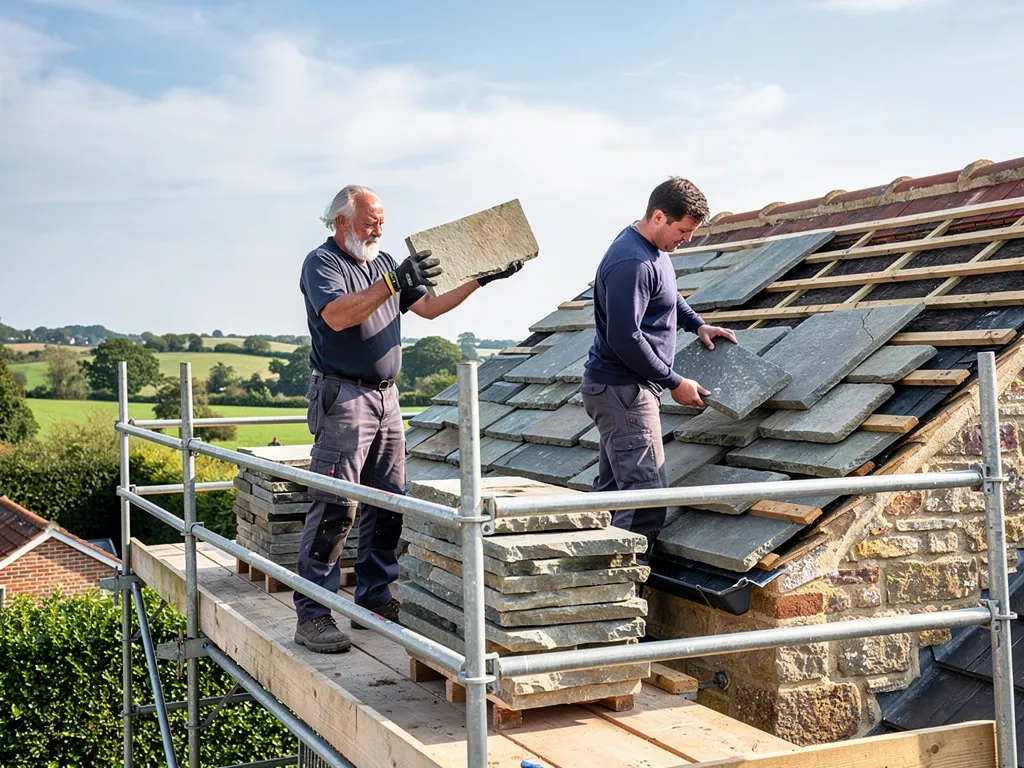
    St John the Baptist is listed Grade I and is notable for its Horsham stone slate roof. Stone slates are graded by size down the slope and cut by hand, so a repair has to be sorted and fitted rather than ordered from a catalogue.

  • Handmade clay tiles

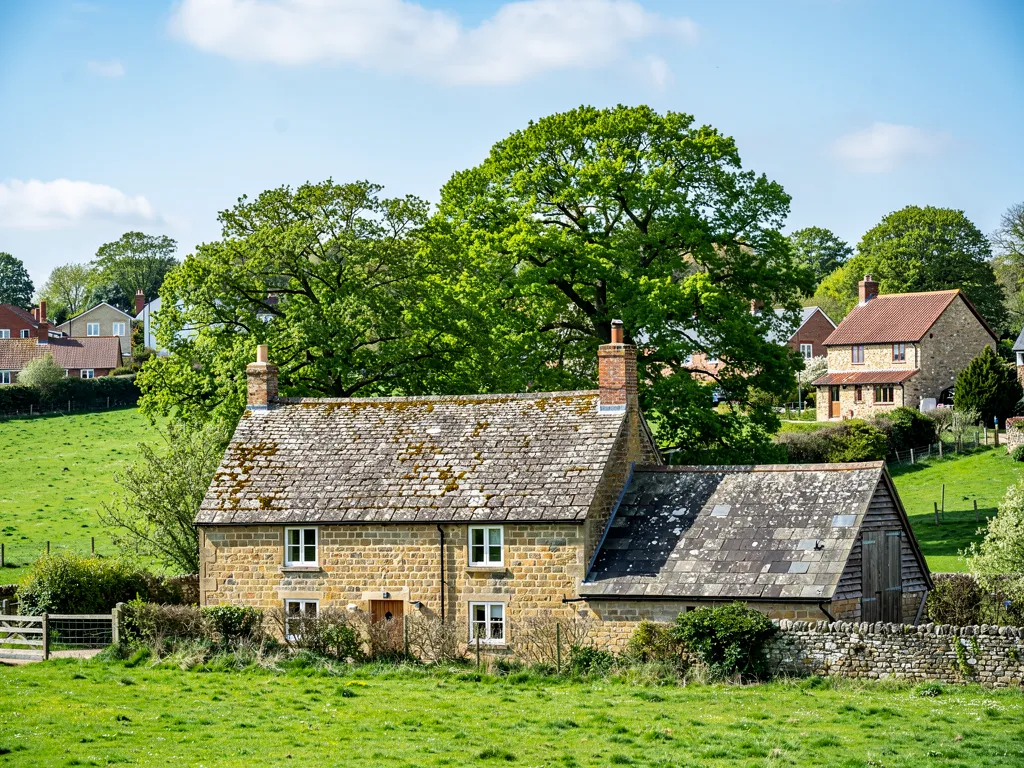
    Handmade clay tiles on village houses

    The conservation area appraisal lists handmade clay tiles among Kirdford's building materials, alongside red brick and timber framing.

    Read more about Handmade clay tiles on village houses

    A handmade tile varies in size and colour, which is why a modern look-alike set beside it tends to show.

  • A timber-framed house roof

    Timber-framed and winklestone buildings

    The appraisal also names timber framing and local greensand stone, called winklestone. Where a roof meets a framed or stone wall, the join is flashed with lead, and in an older house that join is often where water has found its way in.

Street map of Kirdford, north-west of central Worthing, with a pin on the town.

Council rules and listings in Kirdford

Planning authority
Chichester District Council
Councils
Chichester District Council and West Sussex County Council
Conservation area
Kirdford Conservation Area, designated 14 November 1984, with twenty listed buildings
Article 4
No direction found in the 2010 conservation area appraisal text
Listed example
The Grade I parish church, noted for its Horsham stone slate roof
From central Worthing
21.9 road miles, north-west, about 38 minutes by car

Kirdford roofs

Stone slates above the Kird valley

Three roofing questions that follow from the village's stone, tile and timber, and from its 1984 conservation area.

Chapter one

Horsham stone slates and St John the Baptist

The church roof is the village's best-known stone slate roof, and what suits it also guides how we treat every stone roof nearby.

Kirdford's church sets the standard for the village's roofs. The conservation area appraisal lists St John the Baptist as Grade I and notes its Horsham stone slate roof, above a nave from the early 12th century, a 13th-century north aisle and a 15th-century tower. The same appraisal names Horsham stone slates among the local materials, next to handmade clay tiles, red brick, timber framing and winklestone. Stone slate behaves nothing like clay tile. The slates are thick, uneven and individually cut, so no two repairs look alike, and the work starts with sorting. A slate that looks fine from the ground can be cracked across its width, and a gentle tap with a handle, from a ladder, tells us more than a long look from the lane. Which slates are sound, which have split along their bedding, and which have slipped from their fixings decides how much of the roof has to be lifted.

At a glance

  • The church is Grade I with a Horsham stone slate roof
  • Its nave dates from the early 12th century
  • The appraisal lists stone slates among local materials
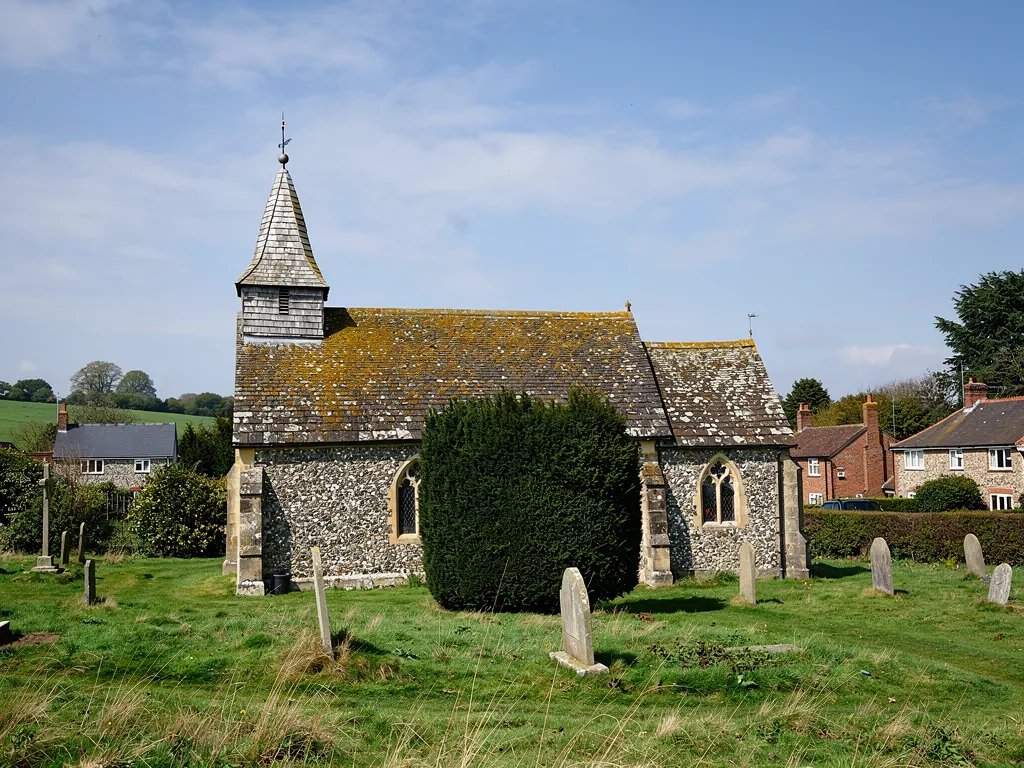
Sussex flint church with a sweeping Horsham stone roof and lichen-covered slabs
Sussex flint church with a sweeping stone roof and lichen-covered slabs

1.1 How stone slate roofs fail

The faults are usually slow. Moss and lichen hold damp against the surface. The mortar shades laid under the joints crack and drop out. Fixings behind the slates rust and let a slate creep downhill. Water finds the gap and runs along the timber, so what you see as a ceiling stain may sit well away from the loose slate. The loft is where we begin the trace, before we climb up to inspect the places where stone meets lead, at chimneys, valleys and wall abutments. Everything is photographed and sent with the written quote.

Sussex flint church with a sweeping Horsham stone roof and lichen-covered slabs
Sussex flint church with a sweeping stone roof and lichen-covered slabs

1.2 Consent, supply and sensible reuse

Because the church is Anglican and in use, roof works there are authorised by a faculty rather than by the council. Stone roofs on houses are another route: listed building consent where the house is listed and the work goes beyond routine repair. In practice the stone that came off that roof is the first to be laid again. Slates come off, get sorted into sizes and are laid again, and any shortfall is made up with care. Reports in 2019 put new roofing slabs in short supply, so nobody should plan a stone roof job around easy replacements, and we budget time for sorting instead. A roof that can be repaired from its own stone is also cheaper to put right than one needing slabs sourced from afar, which is one more reason the survey comes before the quote. Our Horsham stone roofing page goes into the detail of lifting, sorting and relaying.

What the Kirdford appraisal records about the church

Church
St John the Baptist, listed Grade I
Roof
Notable for its Horsham stone slates
Nave
Early 12th century
North aisle
13th century
Tower
15th century

Source: Kirdford Conservation Area Character Appraisal, Chichester District Council and The Conservation Studio, 2010

Chapter two

Living inside the 1984 conservation area

Kirdford's conservation area holds twenty listed buildings, so most roofs here sit close to a listed neighbour or are listed themselves.

Loft room with two roof windows seen from inside

The Kirdford Conservation Area was designated on 14 November 1984, and the 2010 appraisal prepared for Chichester District Council counts twenty listed buildings within it, some of the houses dating to the 17th century or earlier. Kirdford lies outside the South Downs National Park, which makes Chichester District Council the local planning authority. The appraisal describes the village as overlooking the valley of the River Kird, which eventually joins the Arun. It also records that between about 1300 and 1600 timber was felled here for glassmaking, and that ironstone from the greensand ridges fed local ironworking. The buildings that came out of that economy are still the ones carrying the roofs. Houses of that age have been re-roofed more than once, so a single house can show three or four repair campaigns in its timbers, each with its own nails, battens and mortar. Reading those layers is part of the survey.

At a glance

  • The conservation area was designated on 14 November 1984
  • It contains twenty listed buildings
  • The village lies outside the National Park

2.1 Same covering, same character

Relaying a roof with the covering it already has is seldom a planning question, because the building looks as it did before. That changes when the covering changes. Swapping handmade clay tiles for a machine-made substitute alters the look of a street, and in a conservation area that deserves a conversation with the planners beforehand. The appraisal text we hold records no Article 4 direction, which is not the same as confirming none exists, so we ask the council rather than assume. For any roof windows or dormers, the rules in a conservation area are set out in our roof planning permission guide.

2.2 Listed houses and the question of consent

On a listed house the test is whether works would affect its character as a building of special architectural or historic interest. Maintenance and genuinely like-for-like repair is one thing; stripping and replacing historic fabric is another, and doing the second without authority is an offence under the Planning (Listed Buildings and Conservation Areas) Act 1990. We would not start a replacement on a listed roof before the owner has heard from the council's conservation team. Survey photographs, with the work described on paper, are usually what that team asks for first. Old roofs also shelter bats and nesting birds, which the law protects, so we check for them ahead of any stripping.

What people sayA Kirdford house in the conservation area cannot have its roof touched.

What is trueRelaying the same covering is seldom a planning matter; a changed material or a listed building brings the council in, and the council can say which applies.

Chapter three

Tiles, timbers and pricing an old Kirdford roof

A timber-framed house with a handmade tile roof wants a repair that matches, and a price built on the surveyed facts.

An old roof carries its history in its timbers. In a framed house, the rafters and battens may be of several ages, and a repair that ignores that can load a weak member or cover a rotten one. At the survey we look from inside the loft first, tracing daylight, staining and damp wood back to the point of entry. Outside we study the covering for slipped, cracked or delaminating pieces, the lead at chimneys and abutments, and the gutters, which on a village house often overflow against the timber behind them. Everything we find is photographed so that you can see it on your own roof, and we explain what each fault means for the next ten years.

At a glance

  • Handmade tiles vary, so matching needs a close eye
  • Stone slate re-roofs run £160 to £210 per square metre nationally
  • Roof timbers are checked before any quote

3.1 What a matching repair means

Handmade clay tiles are not uniform, and a plain machine tile put among them stands out for decades. Where a few tiles are damaged, we reuse sound ones from a less visible slope and put the new ones there. Where the whole slope has gone, we discuss a full re-tile in a tile that suits the building, and Chichester District Council's planners will want to know about it if the house is listed or if the material changes. Our pitched roofing page covers the coverings and how they are laid.

3.2 Reading the price

Stone and slate cost more per square metre than concrete tile, and a framed house with awkward access costs more again. The figures below are national guides, and the stone slate average is a general one, not a Horsham quote. Your own price is a single total, written after the survey, and we think it is good and fair. Ask any firm whether a figure includes VAT and scaffolding, because guides differ. When the job is done, rubble and old covering leave with us. If part of the roof can be mended for less than a full re-roof, we tell you that first, and we explain the stages of a bigger job on our roof repairs page, so you can set the two side by side before you decide.

National guide prices for slate and stone roofing

  • Moderate roof repair£500 to £1,000
  • Slate recovering, per m²£100 to £180
  • Stone slate, per m²£160 to £210

Our total comes after the survey; a guide's figure may or may not cover VAT, scaffold and removal of the old covering. Source: MyBuilder roof repair and slate roof guides, updated 21/08/2026; Checkatrade slate roof guide, September 2026.

Roof questions from the Kird valley

On an old stone slate roof in Kirdford, what is the first thing you check?

The loft, with a torch: daylight between slates, dark timber and wet insulation show where water is arriving. Then the outside, for slipped or split slates, cracked shades and the lead at chimneys and walls. Those junctions leak more often than the open slope. Photographs go with the written quote, and a listed roof is discussed with the council before we propose anything beyond ordinary repair.

Does the 1984 conservation area mean I need consent to repair my Kirdford roof?

Not for a repair in the same covering, which is seldom a planning matter. The conservation area matters when the material changes, and it matters more if your house is one of the twenty listed buildings in it. The appraisal text records no Article 4 direction, but we suggest asking Chichester District Council to confirm for your address, with our survey photographs to help.

Is second-hand stone slate acceptable for a Kirdford roof repair?

Rarely the best route. Stripped slates from another building often come from a historic roof that has been dismantled, which the Stone Roofing Association discourages. We start with what your own roof holds, ask where any extra stone came from, and keep limestone away from sandstone. New Horsham slates are preferred for any shortfall, when they can be found.

Which council decides roof questions in Kirdford?

Chichester District Council is the local planning authority, because the village lies outside the South Downs National Park. Listed building consent, conservation area questions and any change of material go to its planners. Building Regulations go to the council's building control team or to a registered building control approver. Your survey tells you which route your roof needs, and we do the paperwork for notifiable work.

Tell us about your roof

Describe what is happening and we will call you back to arrange a visit.

  • Photographs of what we find
  • A written quote with one total price
  • Or call 01903 299063

10-year workmanship guarantee, in writing.

Call Get a quote