
Chapter one
Horsham slab roofs round St Peter ad Vincula
The church roofs are Horsham stone, and the first rule for any such roof is to read how it was laid before touching it.
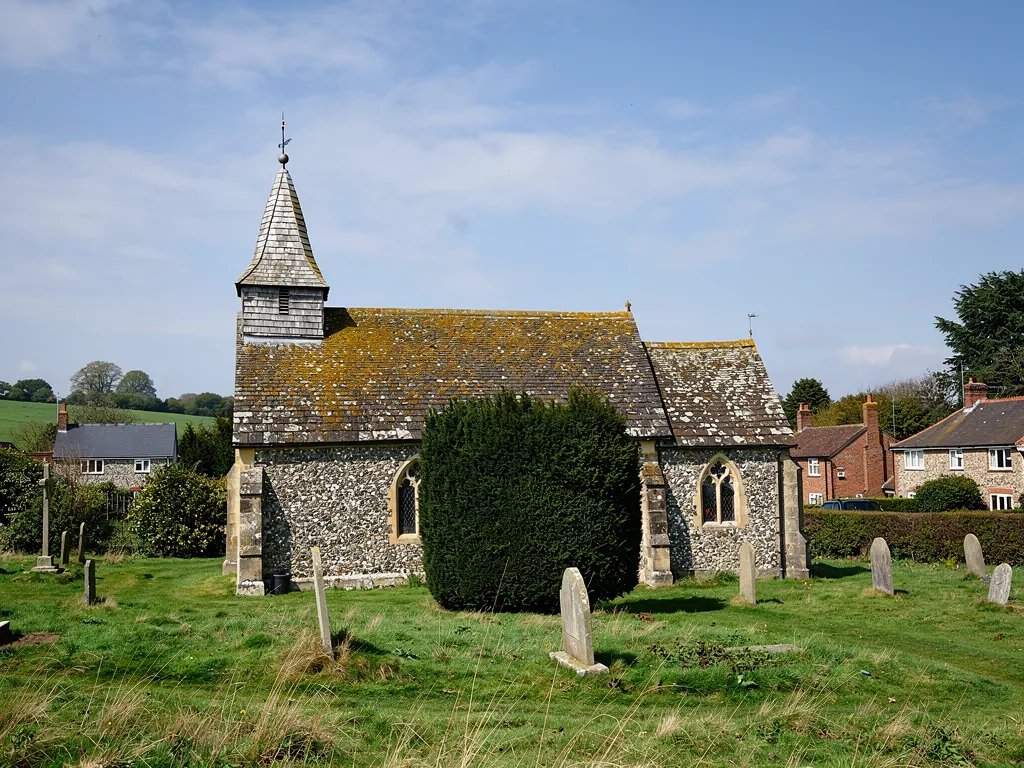
St Peter ad Vincula stands on a low mound, and Sussex Parish Churches records that its Victorian restorer, E Christian, kept the Horsham slab roofs in 1867 and 1868, roofs the guide calls some of the finest in Sussex. A Horsham slab is a thick sandstone slate cut from a flaggy rock, and it is heavy. Horsham District's conservation appraisal describes these roofs as steep, on stout timbers made to bear the weight, and notes that the stones seem to merge with age as moss, lichen and weather knit the surface together. For a roofer, the lesson is to read the roof before lifting anything. Which slabs are original, which were replaced, and where an old method has been patched all show on the surface to a trained eye. Well-meant patches of mortar or sealant deserve a look too, because a daub that traps water behind a slab can rot the fixings and battens beneath it, and we check for them before anything else.
At a glance
- E Christian kept the slab roofs in 1867 to 1868
- Horsham stone roofs are steep and heavy
- A roof's own slabs are the first choice
1.1 Reading how the stone was laid
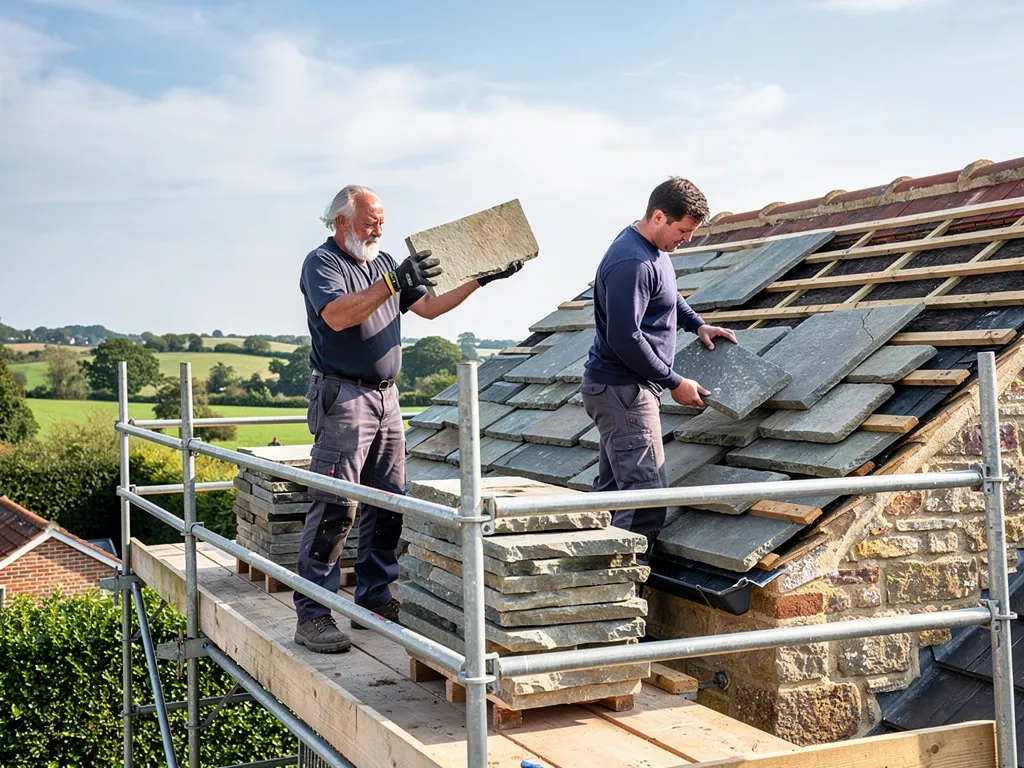
Horsham slabs go on in one of two ways. In double lap, slabs overlap as slates do on other roofs. In single lapping, which the Stone Roofing Association says is unique to Horsham stone, the joints between neighbouring slabs are weathered with small Welsh slate shadows bedded in mortar. A roof repaired over centuries can hold both, as Horsham's appraisal confirms, with shadows filling in where stone ran short. Swapping single lap for double is not a cosmetic change: the association says the loading must be reviewed and building control approval or a church faculty obtained, with listed building consent added on a listed building.
1.2 Where replacement stone comes from
A split slab is first made good from spare stone belonging to the same roof. After that the association's order of preference runs to newly quarried slates, where any can be had, with stone stripped from other buildings as the last resort, since each purchase can mean another old roof coming down. Supply is the snag. Ancient-building campaigners warned in 2019, as trade reports recorded, that the thin slabs which suit roofing were running out at the top of the quarry. So we ask suppliers at survey stage and tell you plainly if the programme must wait for stone. Our Horsham stone roofing page sets out the whole process.
Horsham stone roof facts
- Laying order
- Slab size diminishes from eaves to ridge
- Preferred system
- Double lap kept or restored where possible
- Single lapping
- Unique to Horsham stone, with Welsh slate shadows in mortar
- First choice for repairs
- The roof's own stone-slates
- Supply
- Described as a crisis in 2019
Source: Stone Roofing Association, Horsham Stone Roofs (2009); Horsham District Council appraisal (2022); Stone Specialist, 31 July 2019