Roofers in Rottingdean

Rottingdean lies in a coombe of the Downs where it runs down to the sea. Its Article 4 direction covers roof coverings, roof lights and chimney stacks, so each survey starts there.

Village green houses, pebble cottages and the coombe

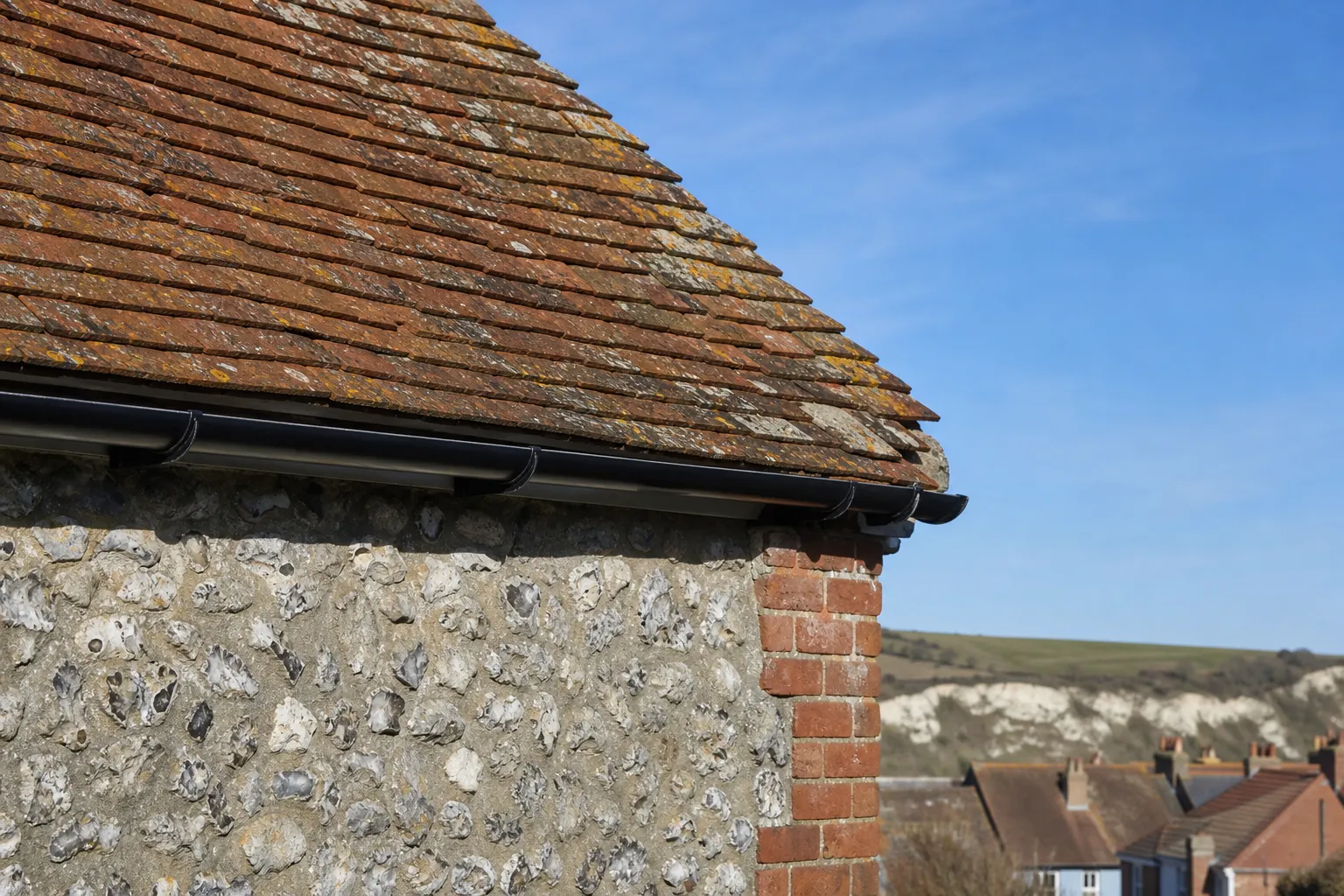
  • An old clay tiled roof

    Houses round the village green

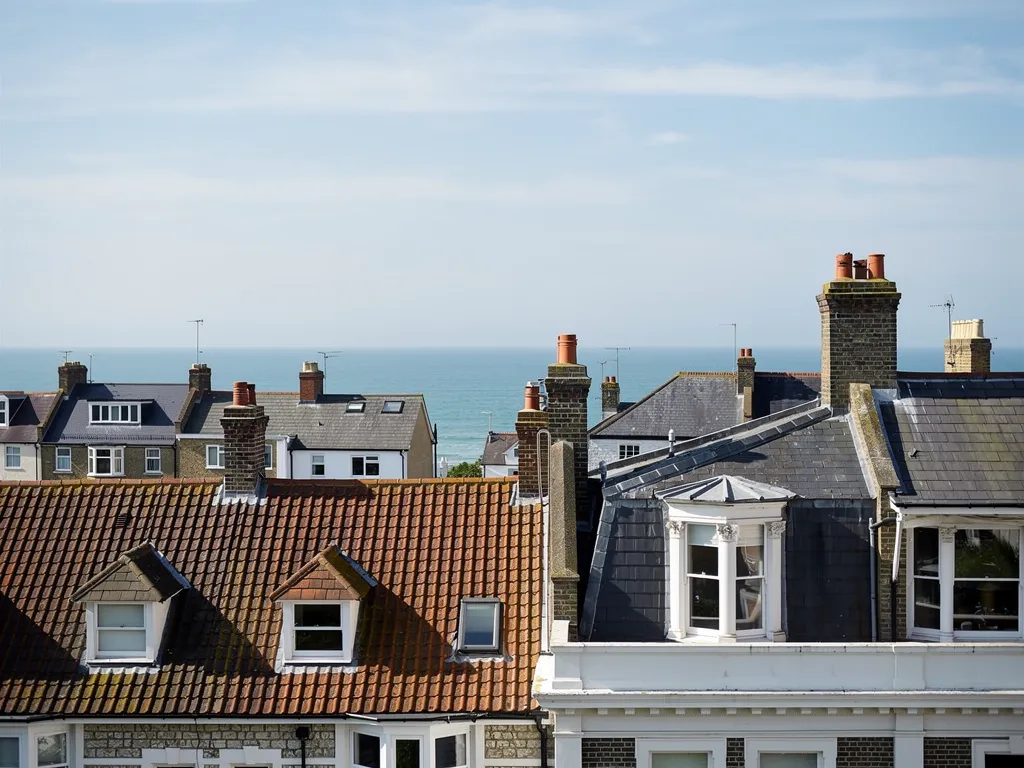
    The Victoria County History notes good 18th-century houses around the green. Roofs from that era have been recovered several times, so we look for mismatched tiles, softened battens, and chimney stacks whose lead has lifted from the brickwork.

  • A flint wall beside a roof

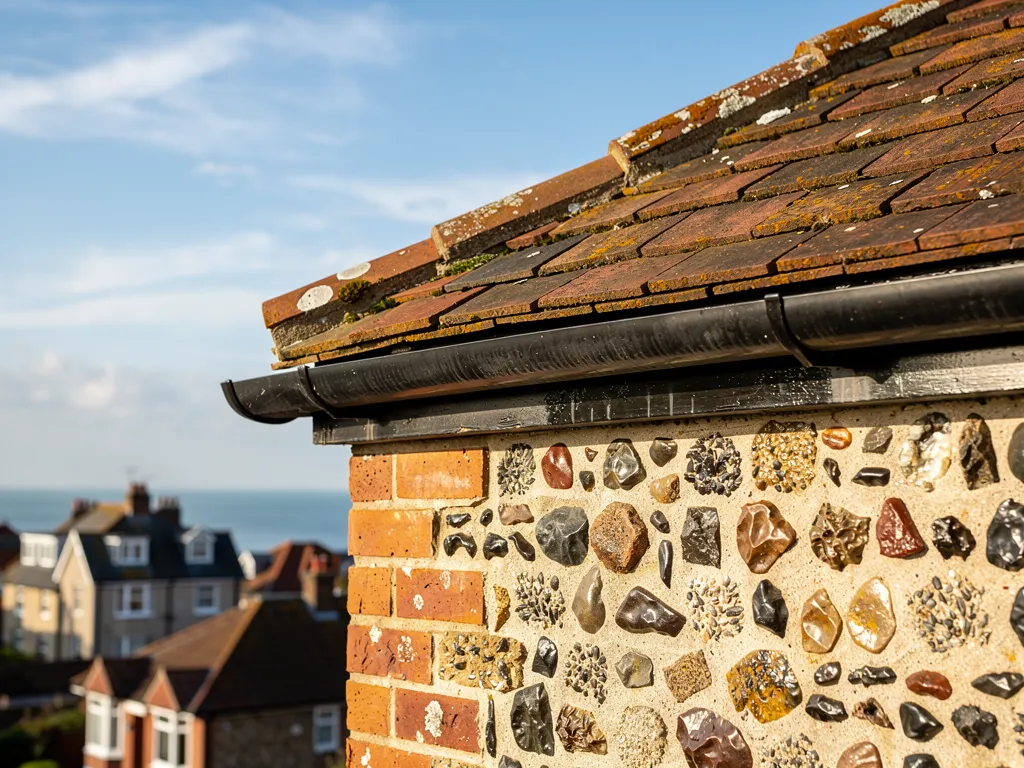
    Pebble-faced and flint cottages

    Some old cottages here are faced with pebbles from the shore, and St Margaret's is rubble and flint.

    Read more about Pebble-faced and flint cottages

    Roof edges against those walls rely on lead tucked into rough joints, which loosen as the wall face weathers.

  • Tiled roofs near the coast

    A coombe running to the sea

    The village sits in a coombe of the Downs that runs down to the coast, and the Victoria County History records long-running erosion here.

    Read more about A coombe running to the sea

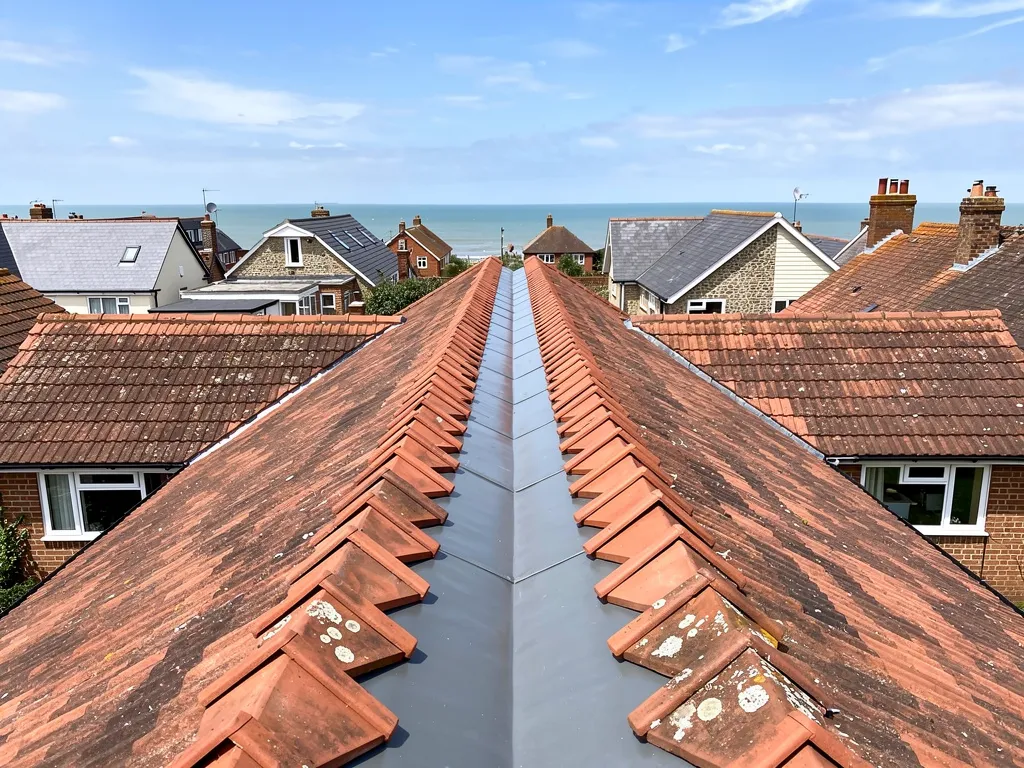
    Sea air and gales reach the lower roofs, so fixings, gutters and soffits get close attention.

Street map of Rottingdean, east of central Worthing, with a pin on the town.

Designations around Rottingdean roofs

Planning authority
Brighton & Hove City Council
Councils
Brighton & Hove City Council (unitary)
Conservation area
Rottingdean Conservation Area (designated 1970, extended 2012)
Article 4
Roof coverings, roof lights and chimney stacks on dwellings need permission. Repairs to unlisted dwellings, and replacing like with like, are outside it
Listed example
St Margaret's Church, Grade II*, 12th century
From central Worthing
20.1 road miles, east, about 31 minutes by car

Rottingdean roofs

The green, the church and the coombe

A village direction on roof coverings, old flint and pebble walls, and sea weather all shape the work.

Chapter one

What Rottingdean's Article 4 direction asks of a roof

Here the direction names roof coverings, roof lights and chimney stacks, so a change that would be routine elsewhere starts with an application.

Rottingdean Conservation Area was designated in 1970 and extended in 2012. Brighton & Hove City Council, which is the planning authority here, has an Article 4 direction for it. A direction of that kind removes permitted development rights that a householder would otherwise have, so some work needs a planning application first. In Rottingdean it requires permission for altering a dwelling's roof coverings, adding roof lights, and altering, replacing or removing a chimney stack. It reaches further than the roof, to windows, doors, porches, boundary walls and exterior painting, but for anyone planning roof work these three items are the ones that matter, and every survey we do in the village starts by asking which of them the job touches.

At a glance

  • Changing a roof covering needs permission
  • Roof lights and chimney stacks are covered too
  • Repairs and like-for-like swaps need no application
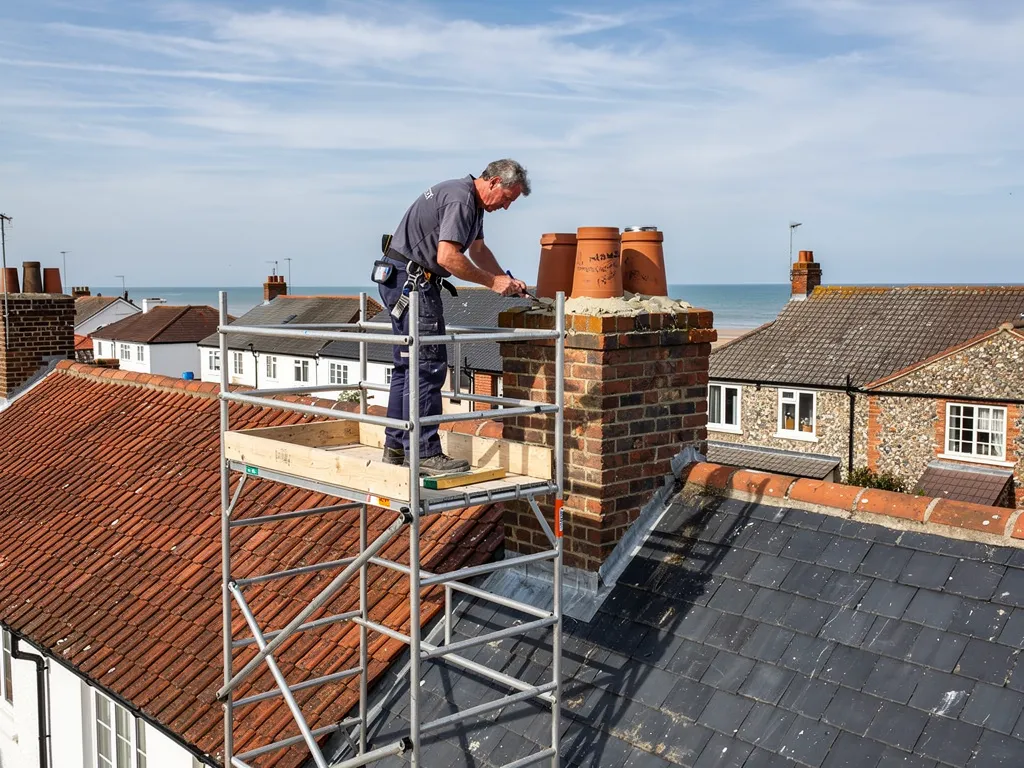
Roofer on a chimney scaffold repointing an old brick stack

1.1 What does not need an application

The council states that repairs to a dwelling, unless it is listed, and a like-for-like swap carry no application requirement. So patching slipped tiles, re-bedding a ridge to match the old one or renewing a failed lead flashing is repair. The line is crossed when the material changes: clay to concrete, slate to a different tile, or a new roof light cut into a slope. A chimney stack is a particular case, because altering or removing one is named in the direction. When a stack leaks, we can often renew the flaunching, the sloping mortar around the pots, and repoint the brickwork as a repair, leaving the stack as it is. That keeps the work outside the direction and usually costs less than a rebuild.

Roofer on a chimney scaffold repointing an old brick stack

1.2 How we work within it

Before pricing a change of covering, we confirm with the council what is needed, and tell you at once if an application has to come first. Photographs of the roof as found go with the quote, which also helps if a planning officer wants to see the starting point. Where a roof was changed years ago, we ask the council how the direction treats it rather than assume. Roof windows bring conditions of their own in a conservation area; our skylights and roof windows page sets out the planning route. A listed house falls under different rules altogether, because repairs in unlike materials there can need listed building consent.

Rottingdean's Article 4 direction on roofs, in short

Work on a dwellingPermission needed?
Altering roof coveringsYes
Adding roof lightsYes
Altering, replacing or removing a chimney stackYes
Repairs, if not listedNo
Like-for-like replacementNo
Source: Brighton & Hove City Council, Article 4 Direction: Rottingdean Conservation Area

Chapter two

Flint, pebbles and St Margaret's roofs

Old walls of flint and shore pebbles meet the roofs of the cottages and the 12th-century church, and the join is where leaks start.

Knapped flint wall meeting the eaves of an old clay tile roof

St Margaret's stands on rising ground east of the village green. The Victoria County History describes a church of rubble and flint with stone dressings that dates from the 12th century, and the church is Grade II* listed. The same history records old cottages faced with pebbles from the sea-shore. Both are rough walls with irregular faces, and the roof has to be made weathertight against them somehow. The sealing is done with lead: a strip is let into a joint, then dressed down over the covering so that water runs out and away. Against a pebble face the joints are shallow and uneven, which gives the lead very little to grip, and it can lift in a gale before the wall behind shows any sign of trouble.

At a glance

  • St Margaret's is rubble and flint, Grade II*
  • Some cottages are faced with sea-shore pebbles
  • An Anglican church in use follows the faculty route

2.1 The usual faults at a rough wall

Lead swells and shrinks with the day's temperature and slowly creeps downhill. At a flint or pebble wall, that movement can pull the lead's upper edge free of the joint, or the surrounding mortar can fail, and rain then finds a way behind. The stain appears on the inside wall, frequently some distance from where the water got in. We follow it back, probe the joint, and tell you whether the answer is repointing and re-dressing or a length of new lead. On an old cottage we also look at the timber beneath the covering, because a hidden leak can soften a wall plate, the beam the rafters rest on, before any mark appears indoors. Photographs of every stage accompany the quote, which lets you check the fault with your own eyes instead of trusting us. If the wall itself is the trouble, with pebbles loosening or flint falling out, a mason should look at it before lead goes back.

2.2 Church and cottages

The parish church is Anglican. While services continue, roof work there follows the Church's faculty system under the ecclesiastical exemption, not listed building consent. A cottage beside the church is a different case. If it is listed, a repair in unlike materials can need consent from Brighton & Hove City Council, and an unlisted house in the conservation area may still be under the Article 4 direction for anything beyond repair. Our lead roofing page covers flashings, valleys and the lead codes in more detail, including why the weight of the sheet matters.

Roofing a listed Rottingdean cottage

  1. Confirm listing We check the grade and what consent covers before any quote is written.
  2. Record Photographs of each slope, stack and wall junction come first.
  3. Match Tiles and lead are chosen to copy what the cottage already has.
  4. Apply Where consent is needed, we say who applies and what to send.

Chapter three

Salt air and gales on the coombe roofs

Where the village runs down towards the shore, tiles, gutters and soffits face sea weather that inland roofs rarely meet.

The Victoria County History places the village in a coombe of the Downs and notes that the coast here has long suffered erosion. A roof close to the sea meets salt-laden air and gales, and that a coombe may channel them, so the fixing of each tile, ridge and verge counts for more than the colour of the covering. A house low in the village can face a different day from one on the higher ground, and we note the position of the roof when we survey. We also look at whether trees, walls or neighbouring buildings give any shelter, because shelter changes how a roof is exposed from one street to the next.

At a glance

  • Soffits and fascias collect salt the rain misses
  • Pitches under 30 degrees see stronger suction
  • Brighton & Hove licenses its own street scaffolds
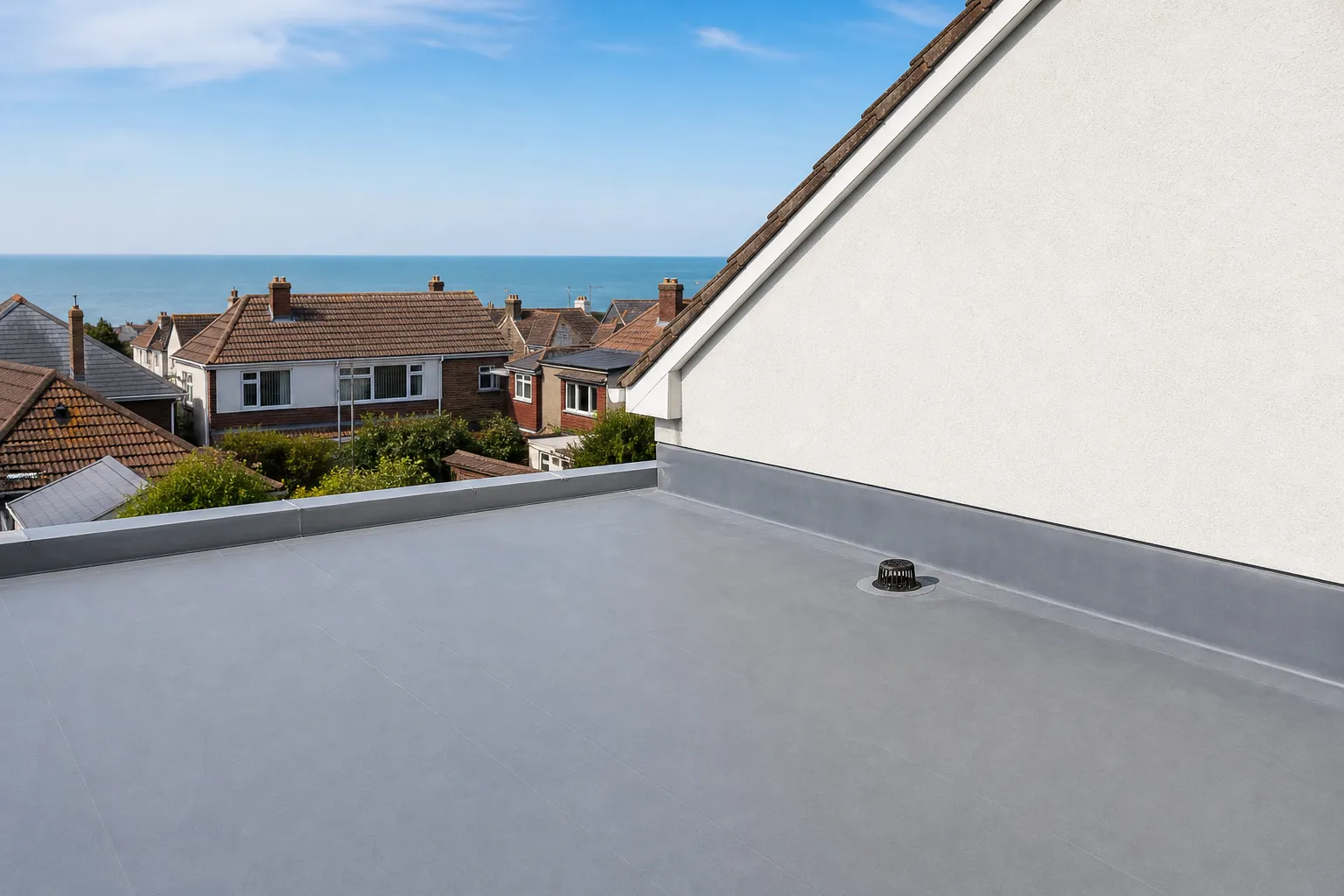
New single-ply membrane flat roof with a welded upstand and edge trim near the sea

3.1 Fixing, gutters and soffits

HomeBuilding observes that the air near the sea is salty, and that soffits and fascias hold deposits of it because rain does not reach them to wash them. We therefore check the roofline closely: soffit boards that have flaked, fascia paint that has lifted, and gutter brackets that have worked loose. Marley says a slope under 30 degrees can see severe suction on its windward side, so low pitches such as a 1930s extension or a porch roof deserve extra care. BS 5534 was revised in 2014, and since then each ridge or hip tile has had a screw or clip alongside its mortar bed. Our ridge tile repairs page explains the choices between a bedded and a dry-fix ridge.

New single-ply membrane flat roof with a welded upstand and edge trim near the sea

3.2 Scaffold, consent and cost

Brighton & Hove sits outside West Sussex County Council's area for highways, so the council licenses any scaffold on the public road itself, and the scaffold firm makes the application. Where a change of covering falls under the Article 4 direction, allow time for the planning application before a start date is fixed. When you compare prices, check that each includes VAT and scaffolding, since both can shift a total. The bands below are typical national figures for the kind of work a coastal house may need, and the figure for your house is set after we have been up on it.

Typical UK costs for coastal roofline work

  • Re-bedding ridge tiles£300 to £600
  • Guttering, per metre£30 to £70
  • Moderate roof repair£500 to £1,000
  • Hipped re-roof, semi£8,000 to £12,000

Once we have surveyed, our written quote gives you one total for your roof. Source: MyBuilder roof repair, new roof, slate roof and gutter price guides, updated 21/08/2026.

Rottingdean roofs: questions about the village green and the shoreline

Can I replace my Rottingdean roof tiles without an application?

A swap like for like needs no permission under the Rottingdean Article 4 direction, and nor do repairs to an unlisted house. Changing the material, adding a roof light or altering a chimney stack does need it. We confirm with Brighton & Hove City Council before pricing any change of covering, and a listed house follows its own consent rules, which we explain at the survey so nothing is ordered too early.

Why does the chimney stack get special mention in the Rottingdean direction?

Stacks shape the street scene, so altering, replacing or removing one is named in the direction. Repairing a leaking stack is different from altering it. Repointing the brickwork, renewing the lead flashings and refreshing the flaunching around the pots keep the stack as it is, which is the approach we take unless the survey shows the stack itself has failed, and then we explain the options.

How do you seal a roof against a pebble-faced cottage wall?

With a lead flashing let into the joints and dressed over the covering. Pebble faces are uneven, so the joints must be raked clean and repointed first, or the lead has nothing sound to sit in. We photograph the old flashing, find where water was passing, and renew only what has failed, tying the new lead into the existing work. A tired wall face may need a mason's attention before any lead is fitted.

Does the sea air at Rottingdean shorten the life of my roofline?

Salt deposits settle on soffits and fascias that rain does not reach, according to HomeBuilding, so these boards often want washing, repainting or renewal ahead of the covering over them. We check them at every survey, along with gutter brackets, and report what we find in photographs. The quote then covers what the roof actually needs, rather than a full roofline renewal you may not require.

Tell us about your roof

Describe what is happening and we will call you back to arrange a visit.

  • Photographs of what we find
  • A written quote with one total price
  • Or call 01903 299063

10-year workmanship guarantee, in writing.

Call Get a quote