Chapter one
Flat roofs, parapets and sun decks
Where Saltdean's seaside buildings go flat, falls, membrane and upstands decide whether the weather stays out.
Saltdean Lido was built in 1937 to 1938 and upgraded from Grade II to Grade II* in March 2011; its café and sun deck sit on a flat roof. What matters for the rest of the neighbourhood is the style it belongs to. The buildings nearest the beach are the most architecturally varied, some showing Bauhaus and Cubist influence, and designs like that lean on flat roofs and parapets (low walls around the roof edge) rather than ridges and eaves. A flat roof has no ridge to throw water off, so everything rests on the membrane, the slope built into it and the upstands, the turned-up edges where the membrane meets a wall.
At a glance
- A flat roof sheds water by slope alone
- Design for a 1:40 fall to finish at 1:80
- Re-covering can bring a thermal upgrade with it
1.1 Falls, ponding and upstands
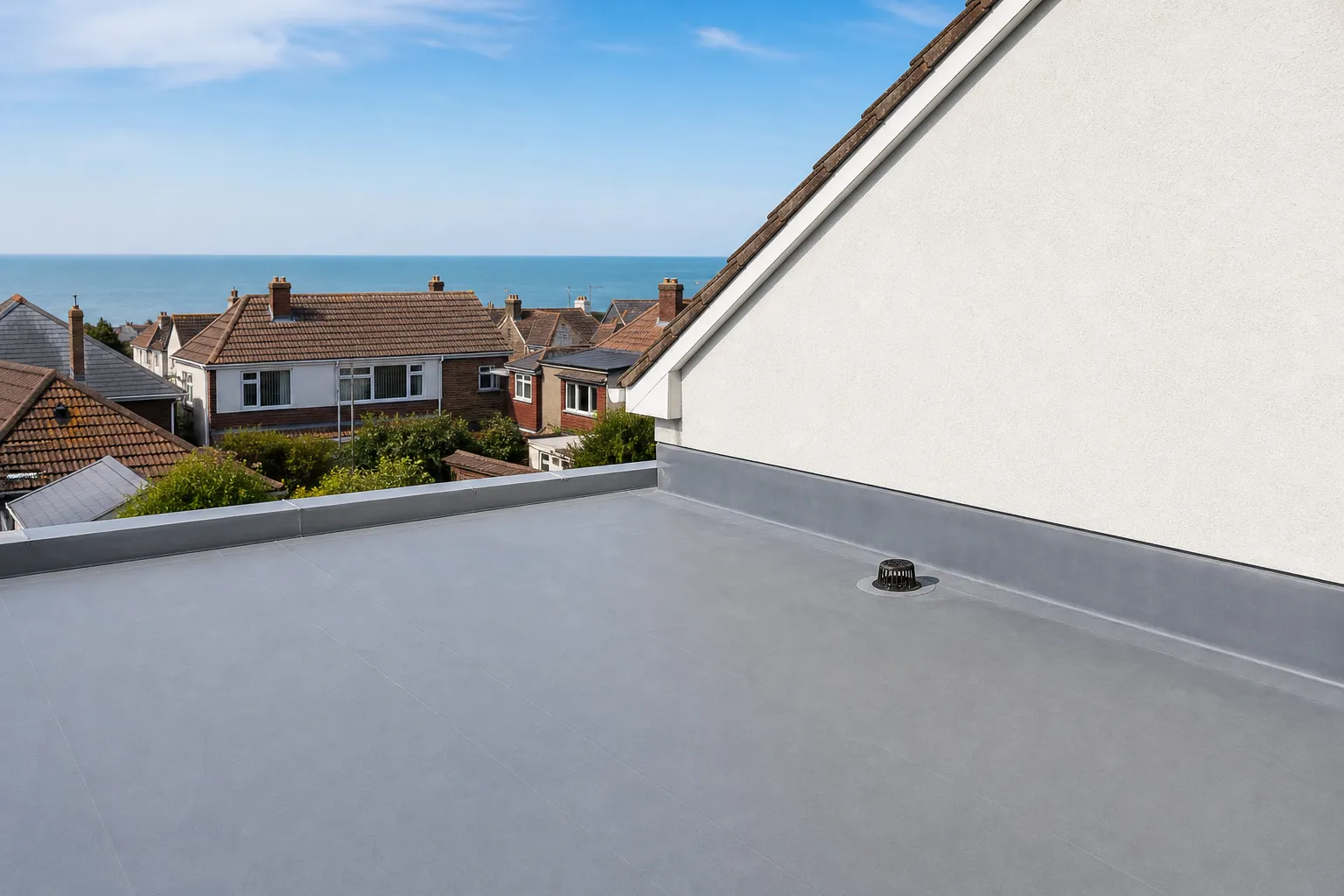
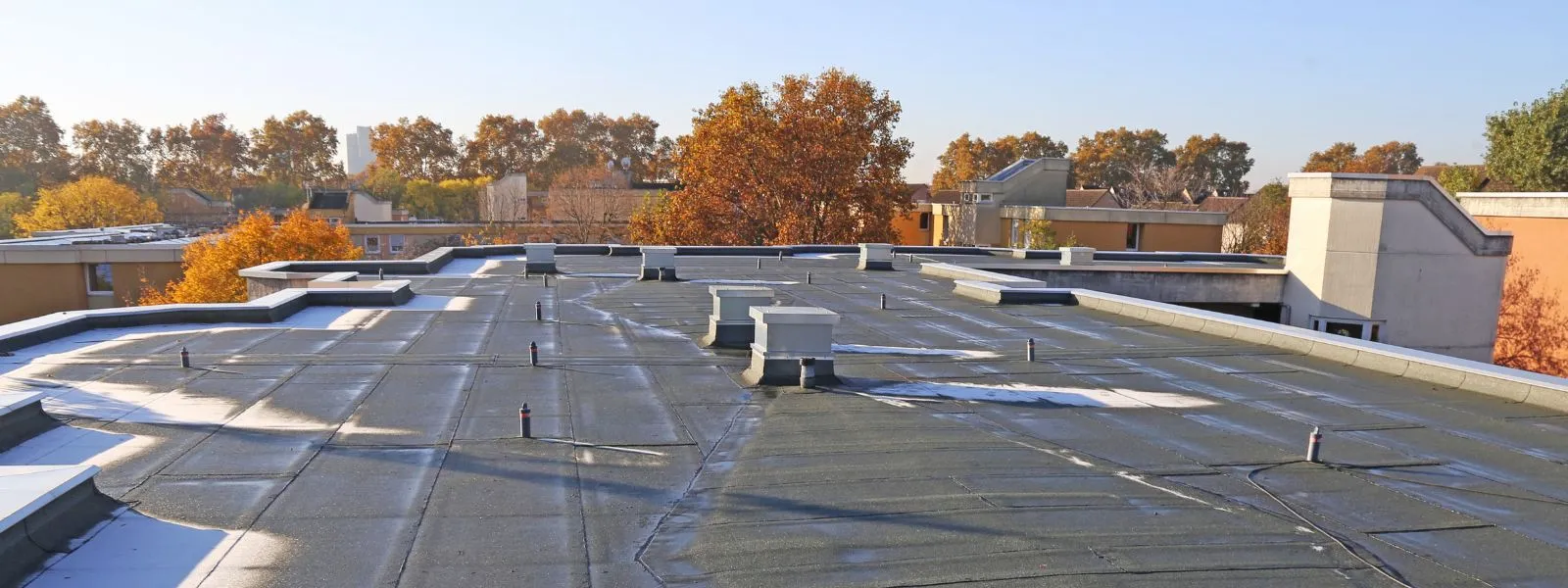
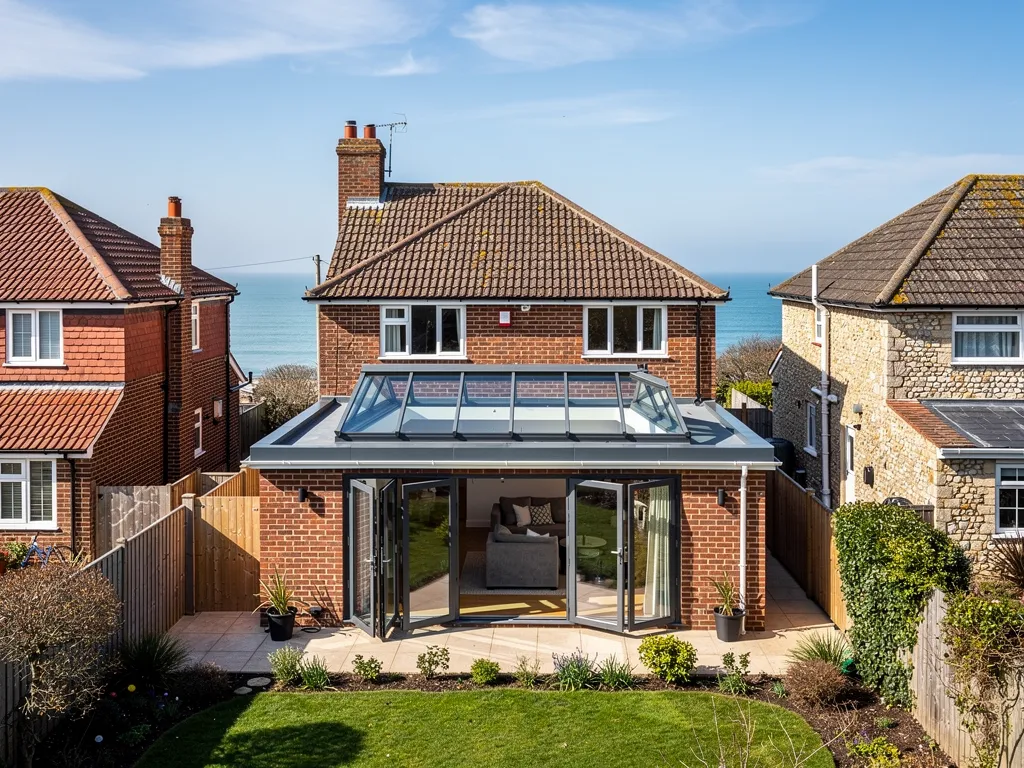
No flat roof is truly flat. The BS 6229:2018 figure that IKO quotes is a finished minimum fall of 1:80, which is why a roof is designed to 1:40: tolerances and sag then eat into the slope without taking it below the minimum. Where the fall is missing, water ponds, and standing water finds every weakness in the covering. At a parapet the membrane turns up the wall and ends beneath a coping or a lead flashing, and if that edge lifts, water runs behind the membrane and appears inside as a stain nowhere near the cause. On a survey we look for puddles that remain a day after rain, blistered or split seams, the state of each upstand edge and the outlets, and every one is photographed. Our flat roofing page covers falls and coverings in more detail.
1.2 Choosing a new covering
Which covering suits a Saltdean flat roof depends on its age, its use and whether anyone walks on it. EPDM (a synthetic rubber sheet), GRP (a fibreglass and resin laminate) and torch-on felt each suit different roofs and have different lives, as the table shows. Under Part L, a flat roof whose waterproofing is renewed has been renovated as a thermal element, and once over half the surface is done, insulation may need bringing up to standard as well. That is a cost to expect rather than a surprise to meet, which is why we raise it at the survey and not afterwards.
Flat roof coverings: typical life and typical UK cost
| Covering | Typical life | Typical cost per m² |
|---|---|---|
| Torch-on felt | 10 to 20 years | £70 to £100 |
| EPDM | 20 to 30 years or more | £90 to £130 |
| GRP | 25 to 40 years | £95 to £150 |
| Lead | 50 to 100 years | £150 to £200+ |