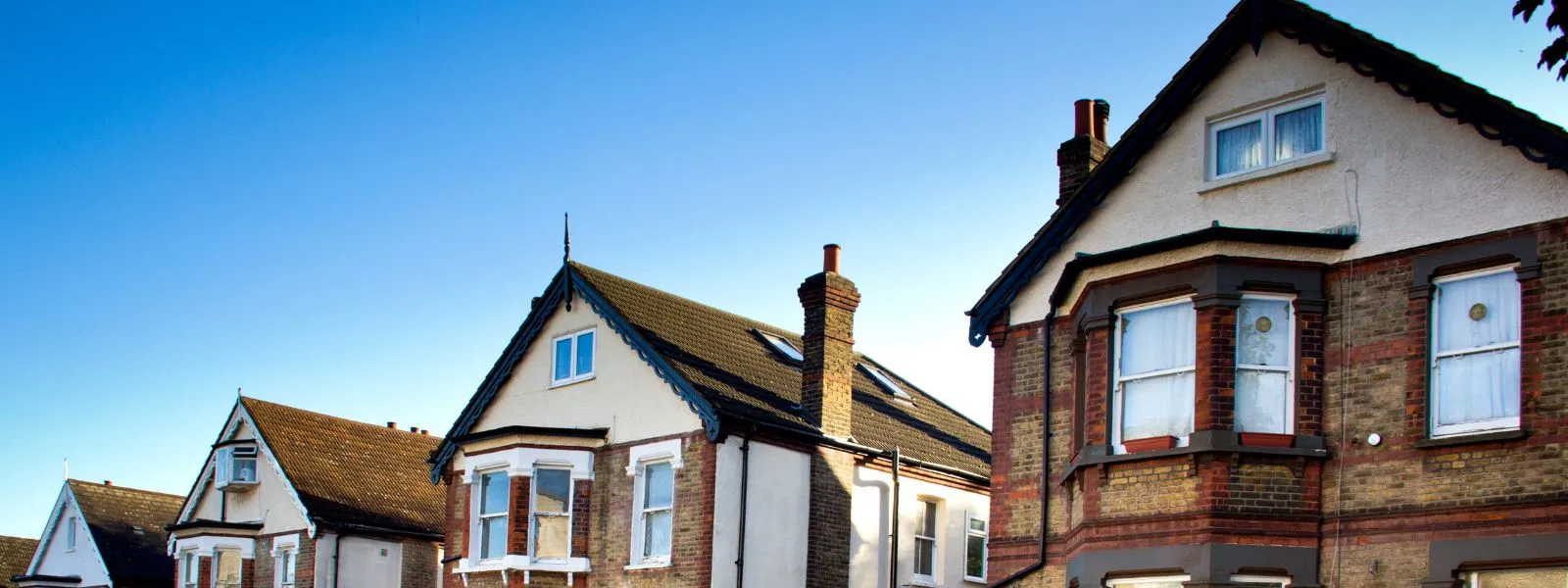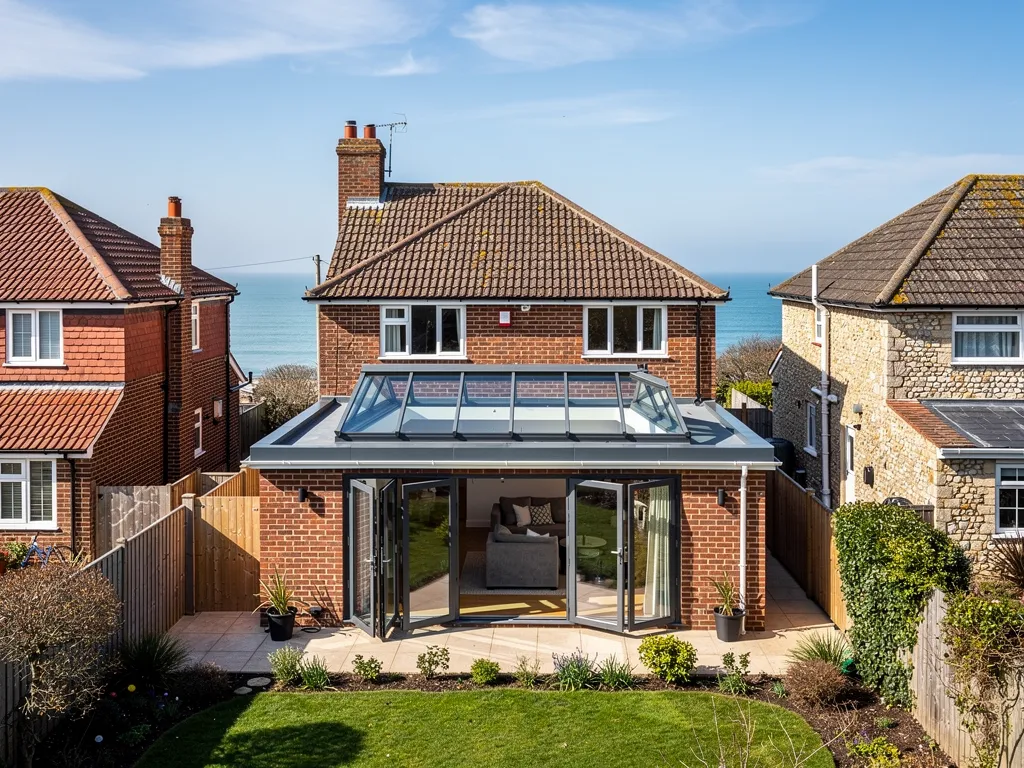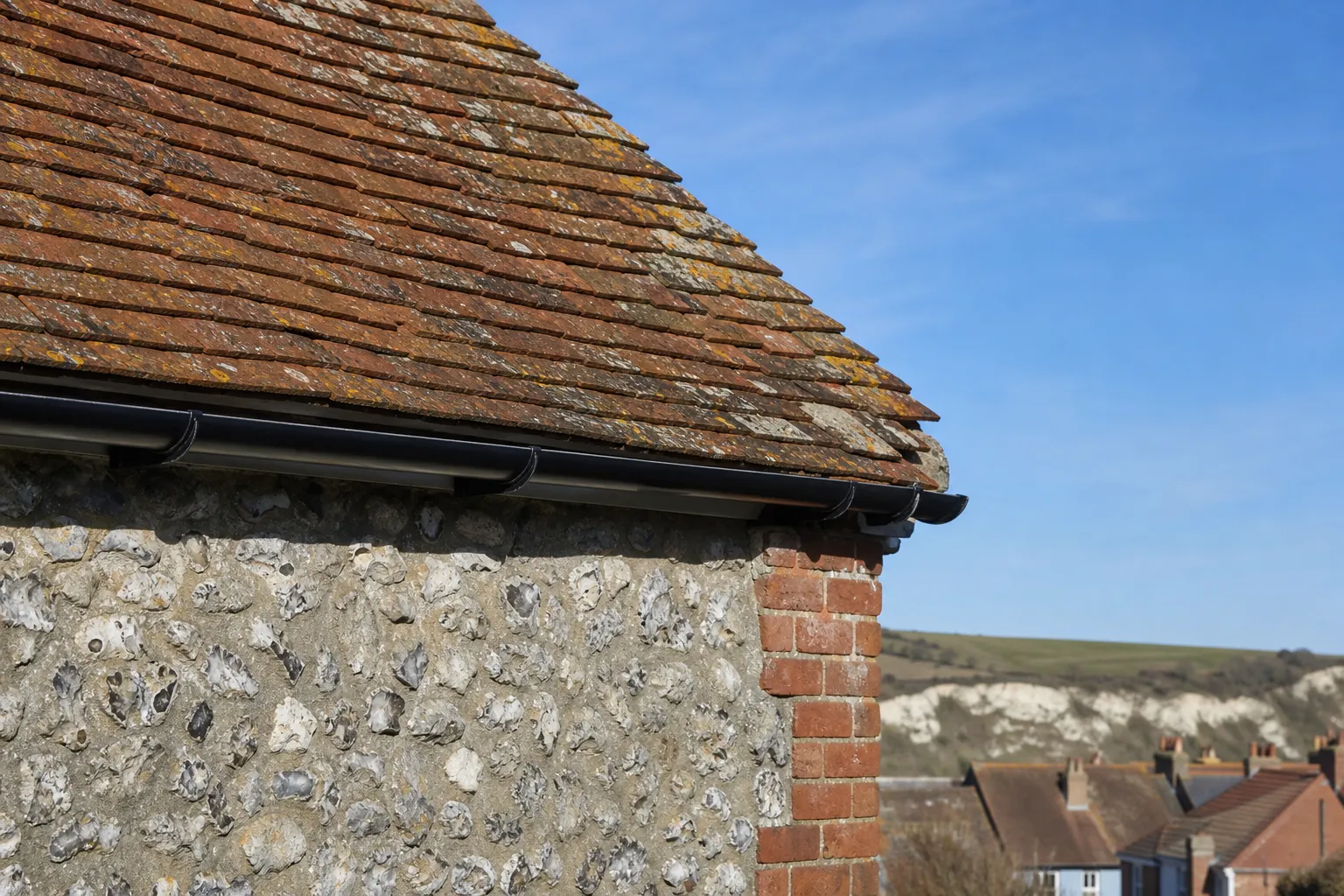
Look at almost any chimney and the same three parts show up. There is the brick stack, a sloping bed of mortar across its top, and one or more clay pots standing in that bed. If something sits over the opening of a pot, that is the cowl. None of it is glamorous, and because it sits so high, it is easy to forget.
That is a pity, because the top of a flue is where rain, wind and birds all arrive first. An open pot lets every shower run down the flue and into the chimney breast, which is the solid block of brickwork that carries the flue through the house. A pot that has cracked in a hard winter can drop clay onto the roof or the path below. A nest dropped into the flue can stop smoke leaving the room.
Below, we set out what a pot and a cowl each do, how the cowl follows the appliance underneath it, how to cap and ventilate a flue nobody uses, and where bird guards fit in. We also cover what replacing a pot involves and what shapes the price. For wider work on stacks, see our chimney repairs hub.
What the pot and the cowl each do
A chimney pot is a short tube of clay or terracotta set on top of the stack. It lengthens the flue, gives smoke a clean place to leave, and gives the mortar around its base something to grip. That mortar bed is the flaunching, the sloping collar that holds the pot upright and sheds rain away from it. Our guide to chimney flaunching covers that part in detail.
A cowl is whatever fits over or into the top of the pot. The word stretches across a whole family of fittings: a plain rain cap, a hood that turns the wind aside, a spinning head that pulls on the draught, a mesh guard that keeps birds out, and a flat cap that closes a flue for good. Each does one job, and picking the wrong one for the flue underneath can leave a chimney drawing badly or filling with damp.
Why the top of the flue is the weak spot
An uncapped pot is a funnel. Every shower that falls on the opening runs straight down the flue, wets the lining, soaks into the brickwork of the breast and later shows as a brown patch on a bedroom wall, or as a smell of damp in a room that has not seen a fire for years. Birds drop twigs into the same opening, and a pot that has shifted on its bed lets water in around its base as well.
The pot and cowl are also the first parts to fail. They stand higher than anything else on the house, take wind from every side, and are bedded in mortar that has dried and cracked over many seasons. They are worth a look from the ground each year, with binoculars if need be, long before anyone climbs up to them.
Choosing a cowl for the flue beneath it
The right cowl follows from what the flue serves, and that is the first question we ask on site. A flue that carries an open fire needs an outlet through which smoke leaves freely, so a rain cap or a hooded cowl with generous gaps suits it. A stove or wood-burner usually needs a liner, which is a metal or clay tube fitted inside the old flue, and a terminal made to match it, and the stove maker's instructions come first. A gas appliance has its own rules for its terminal. In England, Approved Document J covers where the outlet of a solid fuel flue should finish above the roof, and it warns that wind exposure, tall neighbouring buildings, trees and high ground can all upset the draught.
That matters on this coast: a stack on an open seafront terrace takes more wind than one in a sheltered close.
The common types
- Rain cap: a small lid held above the pot on short legs. It keeps most rain out and leaves the gap around it open for smoke.
- Hooded or anti-downdraught cowl: shaped to turn gusts aside so smoke is not blown back into the room.
- Rotating cowl: a vaned head that turns to face away from the wind. It has a moving part, so it needs the odd check.
- Bird guard: a wire basket or mesh cage that stops birds landing in the pot.
- Vented cap: a lid that closes the flue against rain but still lets air through, used for flues that are no longer lit.
If you are unsure whether the flue is clear and draws well, a sweep can test that. The stack, the pot and the weathering around them are a roofer's side, and our page on whether you need a sweep or a roofer explains how the two fit together.

Capping and ventilating a flue that nobody uses
Plenty of houses have fireplaces that were blocked up decades ago. The flue above is still there, and it is open to the sky unless someone has dealt with it. The tempting fix is to seal the pot with a solid lid, but a flue closed at both ends traps still, damp air. Condensation then forms on the inside of the brickwork, and the damp has nowhere to go but into the chimney breast, where it turns up as a stain on the wallpaper or as salts on the plaster.
The better answer is a cap that keeps rain out while letting air pass through, paired with a vent low down in the room where the fireplace was. Air then drifts up the flue and carries moisture away. That flow of air is what keeps a quiet chimney dry, and it is why we fit a vented cap on a disused flue rather than a flat slab. Our page on capping a chimney goes through the options.
Soot and tar from old fires
Old coal and wood fires leave tar in a flue, and it can bleed through fresh plaster as brown marks long after the fireplace has been closed. If a breast keeps marking through the decoration, mention it when you call.
Planning to light the fire again? A flue that has been closed for years should be swept and checked before anything is burned in it, and the cap taken off first.
Taking out a whole breast is another matter. It always needs Building Regulations approval, as the Planning Portal says, plus a party wall notice where it sits on a shared wall. Our page on what happens when a chimney breast is removed covers it.
Bird guards, nests and what lives in a flue
An open pot looks like a ready-made nest site, and jackdaws, pigeons and gulls will all use one. A nest of sticks packed down a flue can block it, and a blocked flue is more than a nuisance. Smoke and fumes have to go somewhere, and with an open fire or a stove that somewhere is the room. A guard fitted over the pot stops the problem before it starts.
A good guard is a rigid mesh basket with gaps wide enough that soot will not clog it but too narrow for a bird to pass. Cheap ones with fine mesh fur up with soot from a working fire and become a blockage themselves, so the mesh has to suit the appliance. Where the flue is disused, a vented cap does the job and no guard is needed.
If a nest is already there
Wild birds and their active nests are protected, so clearing waits until the nest has finished with. We check for signs of use before any work on a pot, and plan the job around what we find. A sweep clears a stuffed flue once the nest is finished with, and the guard goes on afterwards.
On a coastal house, gulls are large, and a light cage tied on with wire will not survive a season of them landing on it. The guard should clip or strap onto the pot firmly, or sit on a collar bedded in the flaunching, so the sea wind cannot lift it. Our shorter page on fitting a bird guard deals with that job alone.
Sweeping a fallen nest out of the fireplace is a job you can do in a mask. Anything up the flue or on the stack is work at height.

Replacing a pot or a cowl
A pot is replaced when it has cracked through, when its top has spalled away, or when it leans. The work starts with a look from below, then access by tower or scaffold, since a ladder resting on a chimney is no place to work. The old flaunching is cut away, the pot is lifted off, and we check the top courses of brick and the flue lining before anything new goes on.
The new pot is set on a fresh mortar bed, plumb and at the right height, and the bed is shaped to fall away from the pot with a small drip at its edge so water drops clear of the brickwork. Then the cowl or guard is fitted. Our answer page on replacing a chimney pot sets out the same sequence in brief.
Matching what is already there
On terraces and villas, the pots are part of the look of the street. Tall clay pots in a row, in a colour and profile that the neighbours share, are easy to spoil with one mismatched modern replacement. We try to match the profile, and where pots can be salvaged and reused, they are. On a listed building or in some conservation areas, a like-for-like pot is also the route that avoids needing consent, as our guide to chimney repairs on listed buildings explains.
What shapes the price
Access is the biggest driver. MyBuilder (updated 21/08/2026) gives a typical UK range of £400 to £900 for scaffolding a chimney, and that sits on top of the pot itself. The number of pots, the stack height and the brickwork beneath all change the job. After we have been up and looked, the written quote arrives as one total figure, and we keep our pricing good and fair. Once the scaffold is up, it is sensible to check the flaunching and flashing in the same visit, since they sit at the same height.
Frost, old mortar and when to act
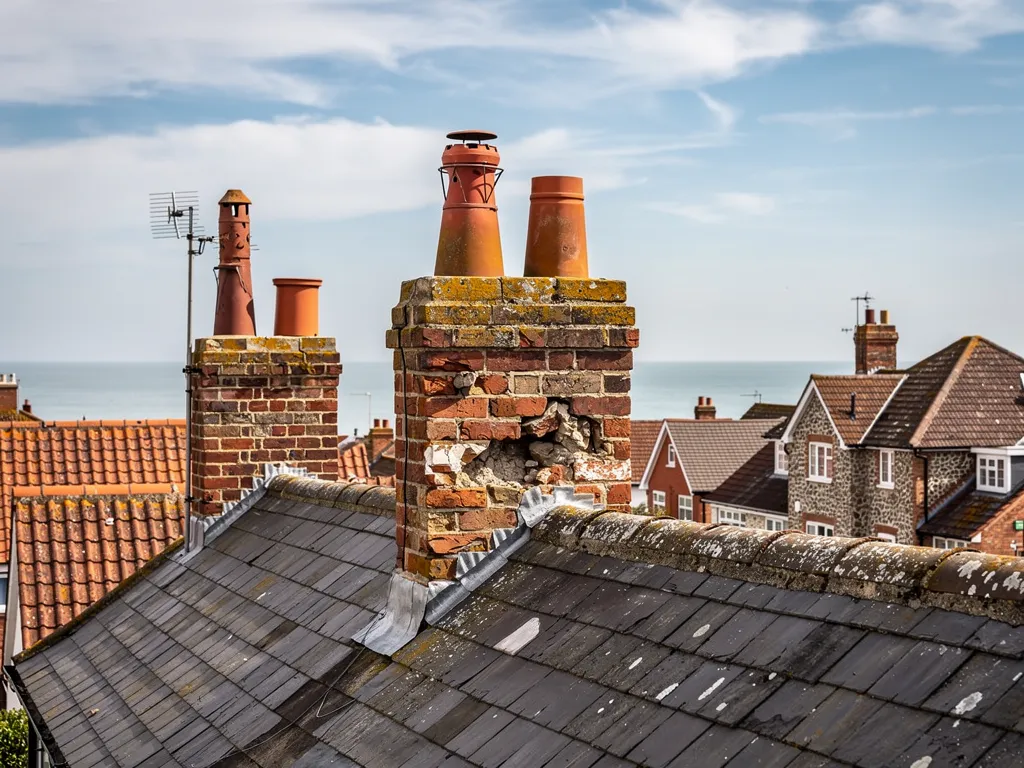
Clay pots crack for a simple reason: they soak up water, the water freezes, and the ice pushes the clay apart. A hairline crack at the rim in autumn can be a split by spring. The same applies to the flaunching around the pot, and to the top courses of brick. Our guide to frost and weather damage to chimneys shows what that looks like and why timing matters.
On older stacks the mortar is as important as the pot. A pot bedded in a hard cement mix on top of soft old brick puts stress on the brick, and the brick breaks before the mortar does. Where a stack was built in lime, we bed the pot in a mix that suits the brickwork around it, as set out in our page on lime mortar for chimneys.
Signs worth acting on
None of these needs a ladder to spot, and each is worth a phone photograph:
- A pot that leans, or that sits at a different angle from its neighbours.
- Cracks running down the clay, or chips lying in the gutter.
- White or crumbling mortar around the base of the pot.
- Damp showing on the breast indoors, or a smell of soot when it rains.
A clear ground-level picture of the stack helps, along with a note on whether any flue is still in use and which appliance, if any, is connected. Armed with that, we can usually say what the survey will look at before we arrive.