Yes, a leaning chimney stack can be dangerous, and the risk is greater than the angle suggests. A stack is a tall, heavy column of brick standing on a roof slope above rooms, a gutter, and often a path or a garden. When it tilts, the bricks near the base carry the load unevenly, the joints open on one side and the whole column becomes easier for a gale to push over. The lean you can see is the result of damage that has been going on for years.
That does not mean every tilted stack is about to fall. Many have leaned slightly since the day they were built, and some have been stable for decades. The question is whether this one is moving, and the answer comes from measuring it, looking at the mortar and checking what it stands on. A thin crack that has not changed is a very different matter from a stack that is bowing a little more each season.
This guide sets out the causes, the warning signs, what to do straight away and the ways a leaning stack is put right.
How worried should you be?
Think of urgency in three bands. A stack that leans slightly, with sound joints and no new cracks, needs a proper inspection soon but not an emergency. A stack with a visible lean, open joints or a horizontal crack needs attention within days, and a stack that has moved since you last looked, or that shifts in a gale, needs making safe at once.
You can do a simple check without leaving the garden. Stand square to the stack and compare its edge with a vertical line nearby, such as a downpipe or a door frame. Take a photograph from the same spot, and take another a few weeks later. Photographs from the same place on different dates show movement far better than memory does. Look at the roof around the base too, because slipped tiles or a crack in the flaunching point to the same trouble.
Signs that mean act now
Bricks or mortar on the ground below the stack, a gap opening between the stack and the roof, a pot that has slipped, and a fresh horizontal crack are all signs of recent movement. So is a lean that has appeared suddenly after a storm. Treat any of these as urgent.
If bricks have fallen, or the stack looks about to, keep children and animals clear of the ground beneath it and out of any room directly below, then call us. Leaks and storm damage come first with us, and a loose stack is made safe before anything else is discussed.
Do not climb up to look, and do not try to prop or tie a stack yourself. A ladder against a loose stack puts you under the thing that may fall.
Why stacks lean: sulphate attack and weather
The most common cause on older houses is sulphate attack. Burning coal, wood and oil puts sulphur compounds into the flue gases. These soak into the inner face of the stack and attack the cement in the mortar, forming new compounds that take up more space than the old ones. The mortar expands. Because the weather does not reach every face of the stack equally, the damper face swells more at its joints than the drier face, pushes the courses out and bends the stack towards the less affected side. The movement is slow and cumulative, so the lean grows over years.
Wind plays its part, but mostly as a final push. A stack with sound joints stands up to a gale. One whose joints have swelled, softened or opened is weakened, and repeated gusts coming off the sea work it further out of line. Exposed stacks on the coast, and tall ones on gable ends, take more of this loading, though we do not need a figure for it to know which are at risk.
Other causes worth ruling out
Not every lean is sulphate attack. A stack can tilt because the structure underneath has moved: a rotted timber, a settled gable wall, a breast that was altered without proper support. Water running down the inside of a stack over many winters can soften the brick and wash out the mortar from within. A heavy cowl or a cluster of large pots adds to the load on a weak top.
We look for the cause before we recommend a fix, because rebuilding a stack onto a base that is still moving only repeats the fault. Our guide to chimney cowls and pots explains how the top of the stack adds to the problem.

How we judge a leaning stack
An inspection starts outside. We study the stack as a whole, first from below and then from the slope. We check its line against a plumb reference, note the courses where a step or crack has opened, and check each face for bulging. A bow in one place is a different fault from a steady lean along the whole height.
Next comes the mortar. Taking out a few joints with a hand tool shows whether the bed behind is sound. Pale, crumbly or powdery mortar, or joints that look wider on the leaning side, suggest sulphate attack. Sound, dark mortar with a tilted stack points to movement lower down, which is a structural question rather than a masonry one.
What we look at inside
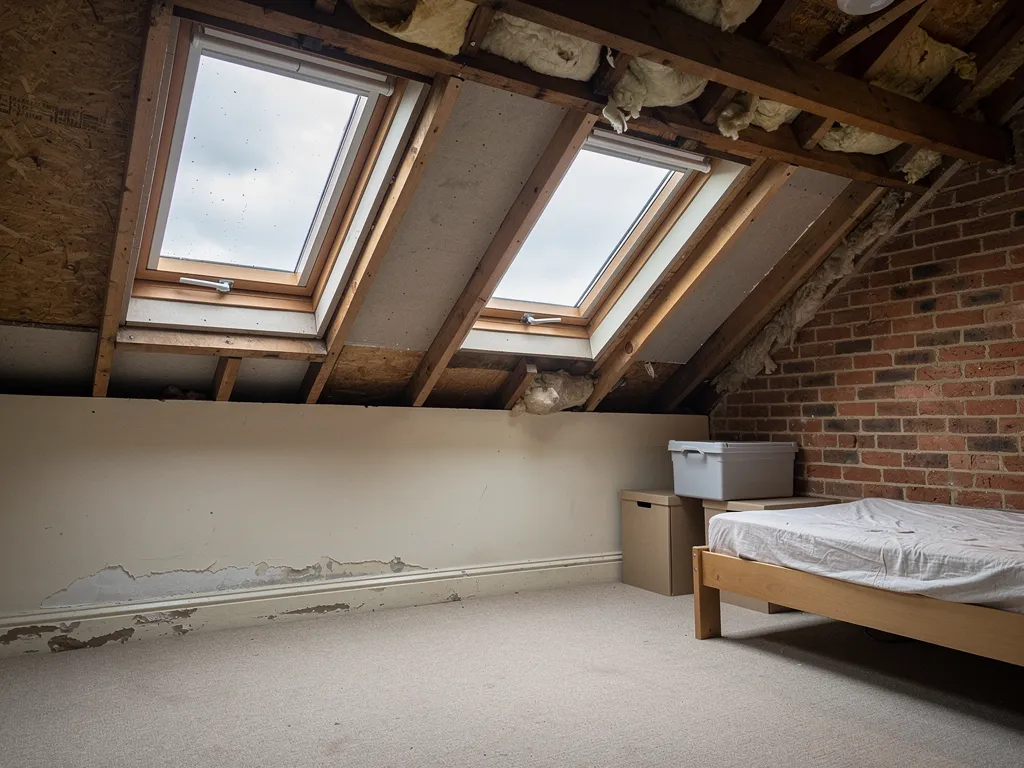
The loft is the next stop. Where the stack rises through the roof timbers we check the trimming around it, the state of any bearing timbers and the base of the breast. Damp staining, soft or rotted wood and open joints at the base all matter. In the room below, cracking in the breast or the ceiling can show that the whole structure is shifting.
You see all of this. We photograph each finding from the loft and the roof, and the photographs come with the written quote. If the lean comes from something other than the mortar, we tell you, even when the remedy is a carpenter's job and not ours.
If the lean proves old and stable, we tell you that as well and put forward only the work the fault needs. That might be fresh pointing and flaunching, not a rebuild. Our guide to lime mortar on old chimneys explains the choice of mortar for the pointing, which matters on older stacks.
What to do today
If you have noticed a lean or a crack, the first job is to look after people and property. Keep children, pets and cars away from the area beneath the stack and from the path or garden it could fall into. If the room under the chimney breast is a bedroom, consider using another room for now.
Photograph the stack from several angles, in daylight and from a safe spot, and note the date. If you can see a crack, hold a ruler or a coin beside it in the shot so the width is clear. Those pictures help us judge the urgency over the phone and show whether anything changes before we arrive.
What not to do
Do not light a fire in a fireplace served by a stack you think is unstable, because the heat and smoke move through the same cracked brickwork. Do not try to remove loose bricks yourself. Do not seal a crack with mastic or a coat of mortar from a ladder, since it hides the evidence without stopping the movement. And do not assume a stack that has leaned for years is safe because it has not fallen yet.
If you rent, tell your landlord in writing. On most shorter tenancies the landlord is responsible for the structure and exterior, which covers the roof and the stack, and the council can inspect where nothing is done.
Call us with the address and your photographs. We make a leaning stack safe first, either by taking it down to a stable level or by stabilising it for the interim, and then talk through the permanent fix once the weather allows. That is a calmer way to decide than doing so with bricks coming down.

Putting a leaning stack right
The permanent repair depends on how far the damage has gone. At one end, a stack with a slight, old, stable lean and sound mortar may need nothing more than fresh pointing, a new flaunching and a clear view from the loft that the base is solid. At the other end, a stack ruined by sulphate attack comes down and is rebuilt.
A partial rebuild is the middle path. The top courses are taken down to the first sound level, usually below the point where the lean starts, and relaid plumb on fresh mortar. Where mortar has failed in depth, everything above the roof line is rebuilt, as set out in our guide to when a chimney stack needs rebuilding. A rebuild cures the cause as well as the symptom, because the old, expanded mortar is gone.
Choosing the mortar and the finish
The rebuilt stack is laid on a mortar that suits the bricks. Lime suits older work because it lets moisture out through the joints, while a strong cement mix traps it and invites the same trouble to return. The flue should also be checked, as a lining that is in poor condition lets gases back into the brickwork. Fresh flaunching, correctly dressed lead and a cap or cowl suited to the flue finish the job.
When the stack is not worth saving
If the fireplace is disused and the stack is tall, awkward or shared, taking it off may make more sense than rebuilding it. Our guide to removing a chimney stack covers the questions of permission, party walls and cost. Before taking out the breast, read the page on permission to remove a chimney. The quote comes in writing with one total, and a guarantee on the workmanship, for ten years, is set out alongside. More on the trade is on our chimney repairs page.
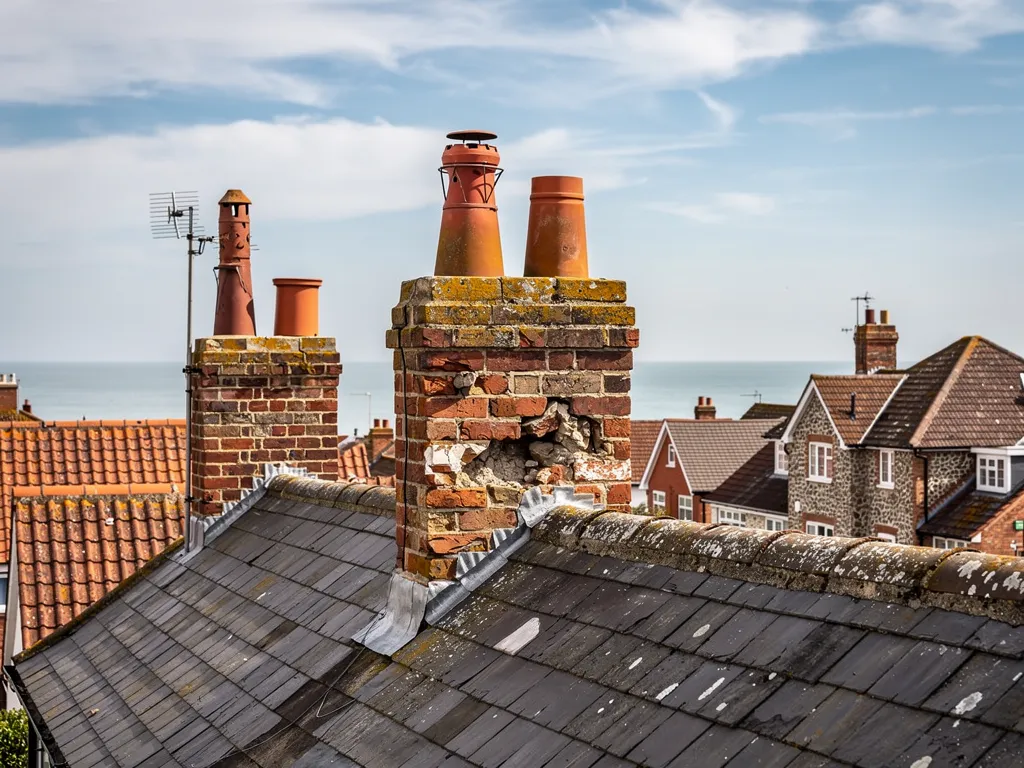
Keeping a stack straight afterwards
A corrected stack stays straight if the causes are dealt with. The first is water. Fresh flaunching, intact lead and a cap that sheds rain keep the brickwork from soaking, and a stack that stays dry is far less likely to suffer frost damage or soften at the joints. If the flue serves a fire, regular sweeping keeps deposits from building up on the inside.
The second is the choice of mortar. Cement-rich repairs on soft old brick are a common reason a stack fails again, and a lime-based mix is usually the better match on period houses. It copes with movement and lets the brick breathe.
The third is a habit of looking. Check the stack from the ground after every severe gale, and compare it with an earlier photograph. A quick look costs nothing. Slipped tiles near the base, a new crack or a pot out of true all call for a closer inspection, and sooner is cheaper than later.
Unused flues
A flue that has been out of use for years should still be capped and ventilated. An open top lets rain run down the inside of the stack and the breast, and a sealed top with no air movement lets damp build up. A ventilated cap does both jobs. If you plan to light a fire again, have the flue swept and checked first.
If you would like a second opinion on a stack you are unsure about, send us photographs and the address. Good pictures tell us whether a visit is urgent, and you see our photographs of your own stack before any figure is written down.