Lead is the metal of old roofs. It lines the valleys of manor houses, covers the flat tops of towers, carries water along the gutters behind parapets and runs over the aisles of churches that have stood for centuries. When it wears out, a listed owner faces a choice that a neighbour in a 1930s semi never meets: the repair has to respect the building as well as stop the water. Our wider lead roofing section covers the metal itself.
The law behind that choice is short in outline. Works that change what makes a building special need consent, repairs that simply restore what was there do not, and the line between the two depends on materials, method and how much original fabric is lost. Churches add a second layer, because some denominations manage their listed buildings through an internal approval system rather than through the council.
This guide walks through that picture as it applies to leadwork. It explains what like-for-like means in practice, who grants consent, how the exemption for churches in use works denomination by denomination, and what to ask before anyone climbs a scaffold. Treat it as background reading rather than legal advice, since the council or church authority has the final say.
Why listing changes a lead repair
A listed building is protected as a whole, inside and out, and the roof is part of what is protected. Section 7(1) of the Planning (Listed Buildings and Conservation Areas) Act 1990 forbids works of demolition, alteration or extension that would alter the character of a building graded for its architectural or historic importance, unless consent authorises them. Section 9(1) makes breaking that rule an offence. So the starting point for any lead job on a listed roof is a simple question: could this work change the building's character?
Most owners relax at the next part. The Adur and Worthing council guide to listed building consent says an owner who only maintains the building and carries out general repairs need take no special action, and that consent becomes a question when alterations are planned. Patching a split, dressing a lifted flashing back into its joint and clearing a blocked gutter are the sort of general repairs it has in mind.
Where the line falls
The trouble starts when a repair stops being a repair. The same guide puts work done in materials that do not match the original on the list of jobs needing consent. In practice that catches a lot of ordinary-sounding jobs: replacing traditional lead with another metal, swapping a folded seam for a stuck-on membrane, or smearing a roof edge with sealant where lead should be dressed over a drip.
The South Downs National Park Authority describes the same dividing line from the other side. Ordinary upkeep and minor matching fixes done in place need no consent, while repairs that replace or reshape old fabric so that the building's character is affected do. We raise this at survey, before a price is agreed, and not after the first sheet has been rolled out.
What like-for-like means when the material is lead
Like-for-like sounds simple until you stand on a roof and try to apply it. For lead it has four parts: the metal, the thickness, the pattern and the method. Replacing lead with lead covers the first. The second means choosing a code suited to each position, using the same logic as on any other roof, so that soakers, flashings and flat bays are not all cut from one sheet. The Leadworx guide describes code 3 as soakers only, code 4 as the usual flashing lead and code 5 as general, vertical and pitched work.
The pattern is how the lead is laid. A roof with rolls running down the fall keeps its rolls, a stepped flashing keeps its steps, and a valley keeps its lined channel. Changing the layout to make the job quicker begins to alter the way the roof looks and behaves.
Method and old lead
Method matters as much as material. Traditional lead is joined by folding and, in places, by welding or burning two sheets together with a flame so that no seam or sealant is left to fail. Where an original roof was done that way, the repair should be too. Our note on lead welding explains when the technique suits a roof.
Old roofs can also carry cast lead, poured on sand, which differs from the milled sheet used today. A surveyor or conservation officer may ask what the existing metal is before agreeing a replacement. Because cast and milled lead look and weather differently, we photograph what is there and describe it in the written quote, so the consent request starts from facts. Salt air also affects which metals suit a roof near the sea, and the zinc question is dealt with in zinc roofing near the sea.
Getting listed building consent
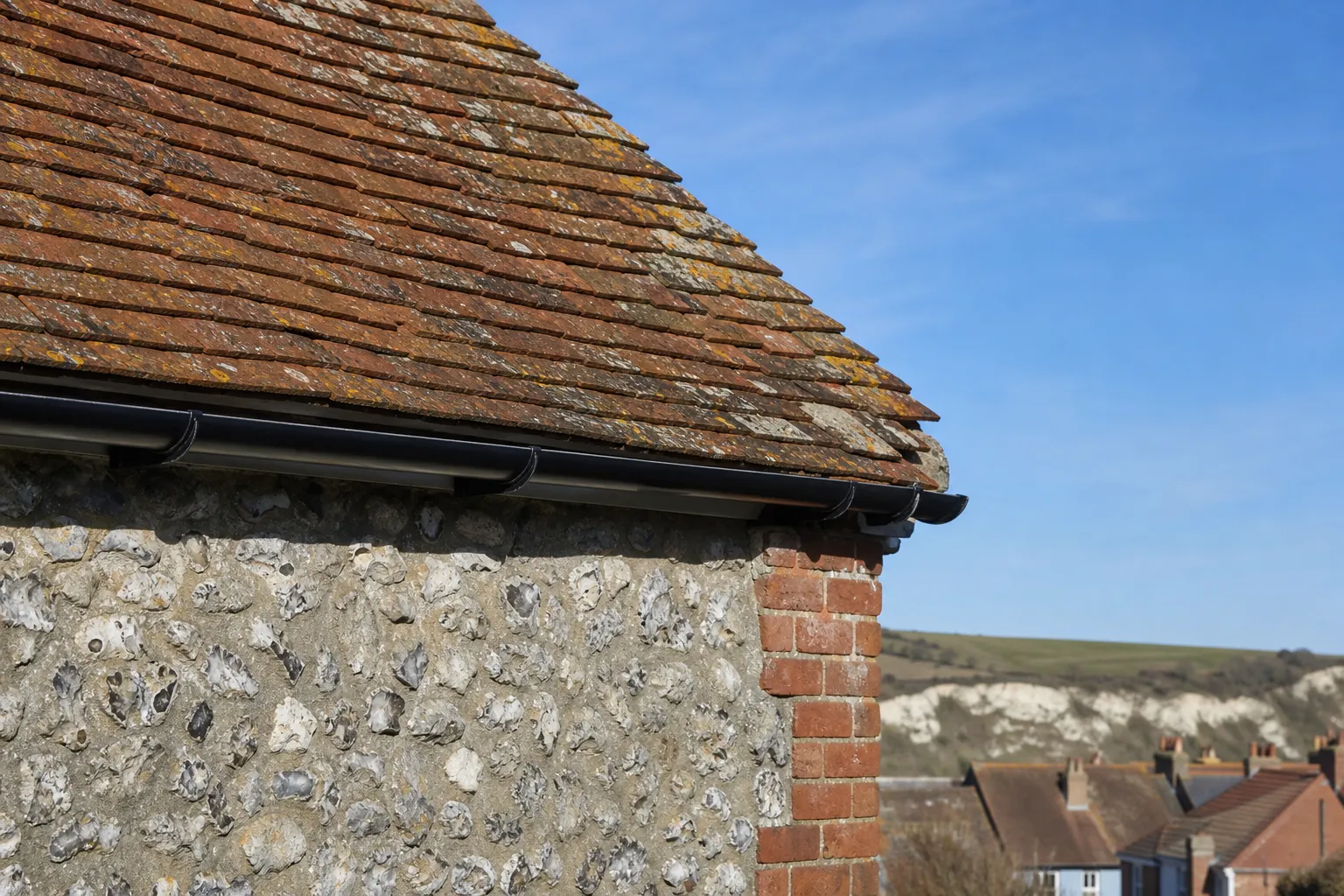
When the work does need consent, the application goes to the local planning authority. For most of Worthing and Adur that means the shared planning team based at Worthing Town Hall, although the two councils remain separate planning authorities. Inside the South Downs National Park, the Park authority takes that role. Further west and north, the district council for the place applies, such as Arun or Horsham.
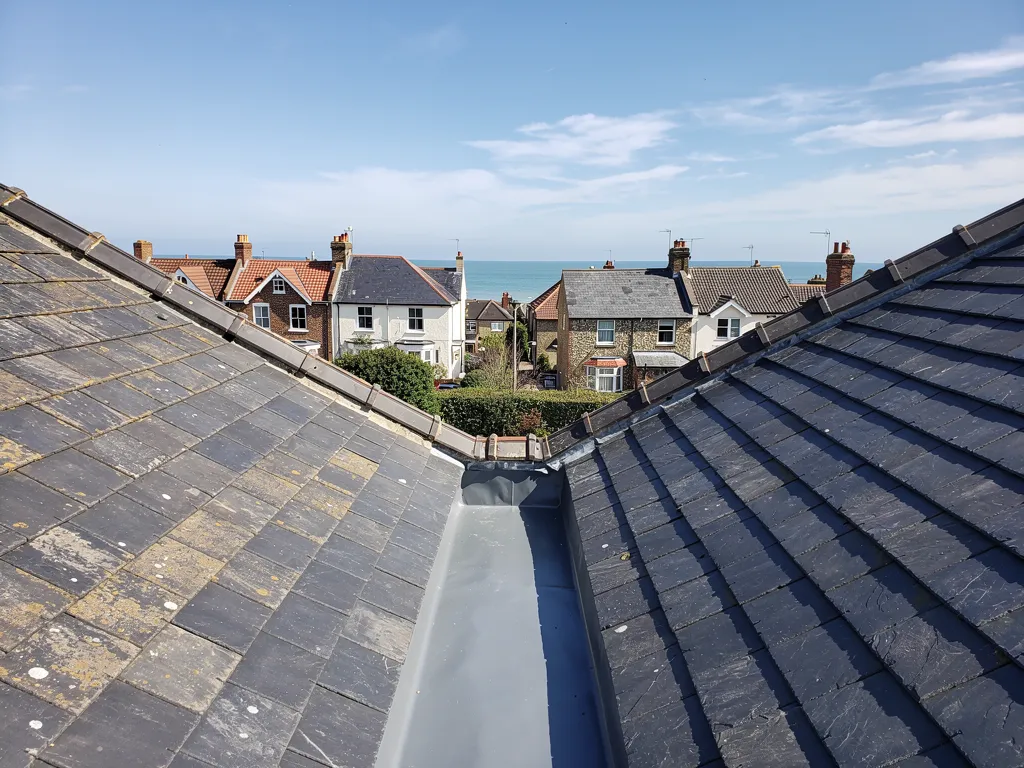
An application describes the building, the proposed work and the reasoning, and it is easier to decide when photographs back it up. That is where a roofer's survey helps. We photograph the existing lead from several positions, record the splits, lifted laps and failed joints, and write down what we propose to replace and with what. Pictures like these often separate a request the officer can answer quickly from one that bounces back for detail.
Consent is the owner's responsibility
Even when a contractor prepares the paperwork, the duty sits with the owner. The Park authority also notes that the usual four-year time limit on enforcement does not apply to unauthorised listed building works, so a mistake can resurface years later. For that reason we never start on a listed roof until you have confirmed the consent position in writing.
It is also worth asking the planners informally before you commit. Some jobs that sound like replacement, such as relaying one failed bay, are treated as repair; others that sound modest, such as changing the metal, are not. The answer depends on the building, and a short phone call or email with photographs costs nothing. If consent is needed, expect it to take time, and arrange temporary protection for the roof meanwhile so a leak does not worsen while the paperwork moves.
Churches in use and the ecclesiastical exemption
Churches are treated differently. Under section 60(1) of the 1990 Act, the listed-building controls do not reach a church building currently in ecclesiastical use. The Ecclesiastical Exemption Order 2010 then narrows that to the denominations it names; its article 4 removes the exemption from every building that falls outside the articles following it.
The practical result is that an exempt listed church in active use does not ask the council for listed building consent for lead repairs. It follows its own denomination's approval process instead. The table sets out the route for each.
| Church in use | Route for works to a listed building |
|---|---|
| Church of England | Exempt; the Church's own faculty jurisdiction |
| Roman Catholic | Exempt; the denomination's own procedure, with historic churches committee advice |
| Methodist | Exempt; the denomination's own documented procedure |
| Baptist Union | Exempt only where held by a listed trust corporation; own procedure |
| United Reformed Church | Exempt where held on the specified trusts; own procedure |
Source: Ecclesiastical Exemption Order 2010, articles 5 and 7, and the Department for Culture, Media and Sport guidance of July 2010.
The Order also keeps the exemption for Church of Scotland worship. For a Sussex church roof, the Church of England line is the one you are most likely to meet, and a faculty is applied for through the parish. We do not name a diocese or committee here, so check with your parish or denomination for the exact contact. A parochial church council does well to hold the lead specification in writing before any application is lodged.
Where the exemption does not reach
The exemption is narrower than many people assume. The Department for Culture, Media and Sport guidance says no other faith or denomination currently has the benefit, so a Unitarian chapel or a Quaker meeting house sits outside the system and needs listed building consent from the local authority, just as a private house would.
Closure ends the exemption too. Once an Anglican church is closed under the Pastoral Measure 1983, it comes under ordinary council controls. The other exempt denominations lose the exemption at the moment worship ends, and council control returns from that point. A redundant chapel converted into a house, studio or store therefore needs consent for its lead like any other listed building.
Planning permission and scheduled monuments
Two further points catch people out. The first is planning permission. Government guidance also says the exemption does not excuse a denomination from planning permission where new development changes how a listed church looks from outside. Laying new lead to match the old does not normally count as development, whereas a visibly different finish can, so the planning question still has to be asked.
The second is scheduled monuments. A church or churchyard feature that is scheduled needs scheduled monument consent, which only the Secretary of State grants, and the ecclesiastical exemption never covers it. Section 2 of the Ancient Monuments and Archaeological Areas Act 1979 makes unauthorised works to a scheduled monument an offence, and that includes repairs.
If you are unsure which category a building falls into, ask before work begins. The building's listing entry, the council's conservation team or the parish office can help to establish whether a church is in use and which route applies.
Planning the lead job on a protected roof
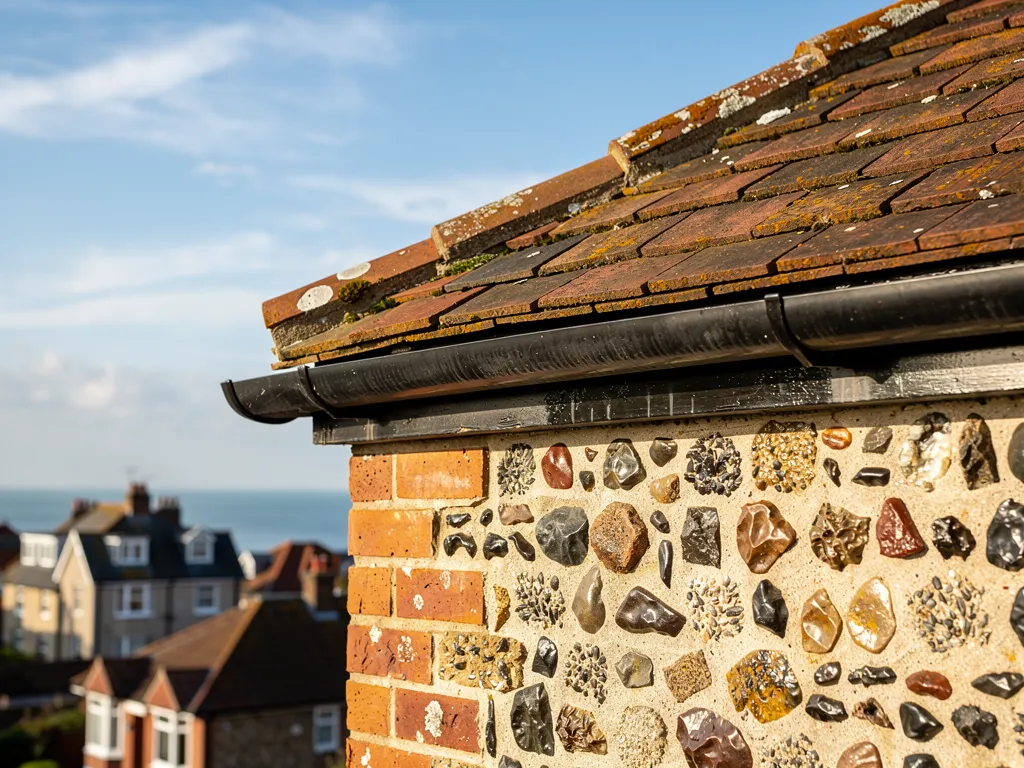
Once the consent route is clear, the practical side of a listed lead job is about care. Access comes first. Church roofs and tall town houses usually need scaffolding or a tower, a scaffold that stands on the highway needs a highway licence, which the scaffold firm obtains, and the structure has to be supported without marking old stone or brick. The deck below the lead is often old timber, so we check it as the metal comes off and tell you what we find before work continues.
Appearance comes next. New lead is bright when it goes on, and on an old roof it can look jarring for a season or more, besides leaving pale streaks on stone below. Patination oil is the usual answer, and it is covered in lead patination oil: why new lead is treated. Mention the finish when you ask for consent, because it is part of how the roof will look.
Cost and what we promise
The price of listed leadwork turns on access, on the area and the code of lead, on how much of the deck needs attention, and on how long the consent route takes. MyJobQuote (22/09/26) says lead flashing can last over 80 years, and over 100 years for higher codes, though that is only a published range and no one's guarantee. It is one reason historic roofs repay careful specification.
Our part is the survey, the written quote and the work. Your quote comes with pictures taken on your own roof, we propose the least work that cures the leak, and we describe the lead in terms a conservation officer can follow. If the building also has dormers with leadwork of their own, lead dormer cheeks and roofs covers those details.