
Question answered
Does home insurance cover moss damage?
The short answer
Home insurance does not normally cover moss damage, because moss grows slowly and policies often exclude gradual damage and wear and tear. A storm that tears tiles off a roof is a different event, though a mossy roof can complicate a claim. Check your own policy wording, and speak to your insurer before arranging permanent work.
Usually not for the moss itself, and rarely for the leak it slowly causes. Moss is a gradual process, and plenty of policies leave out gradual damage, so it pays to read the wording.
Why moss sits on the wrong side of the line
Buildings insurance is designed to pay for sudden, accidental events: a storm, a fire, a burst pipe. Moss does not arrive suddenly. It spreads over seasons and years, and any harm it does, such as lifted tiles, soaked battens or a slow drip, builds in the same gradual way.
According to the Financial Ombudsman Service, policies often list gradual damage among their exclusions. That single point explains most refused moss claims. Check the policy sections on gradual damage, wear and tear, maintenance and storm, because those four decide most outcomes. Insurers also treat cleaning and maintenance as the owner's job, in the same way as repainting windows or clearing gutters.
A claim to remove moss, or to repair a roof that failed because moss was left in place, is therefore likely to run into an exclusion. This is the general picture and not a promise either way, because the wording differs from one policy to the next and only your own schedule counts.
Storm damage on a mossy roof
Which? says buildings cover should include storms, but the insurer must be satisfied that a storm caused the damage. The Ombudsman starts by asking whether a storm took place that day, then whether the damage fits what storms generally do, and finally whether the weather did the main harm or the damage would probably have happened regardless.
Which? reports that insurers often rely on a storm definition with a stated gust speed, and that wear and tear is a typical reason for turning a claim down, for example where water gets in through a poorly maintained roof.
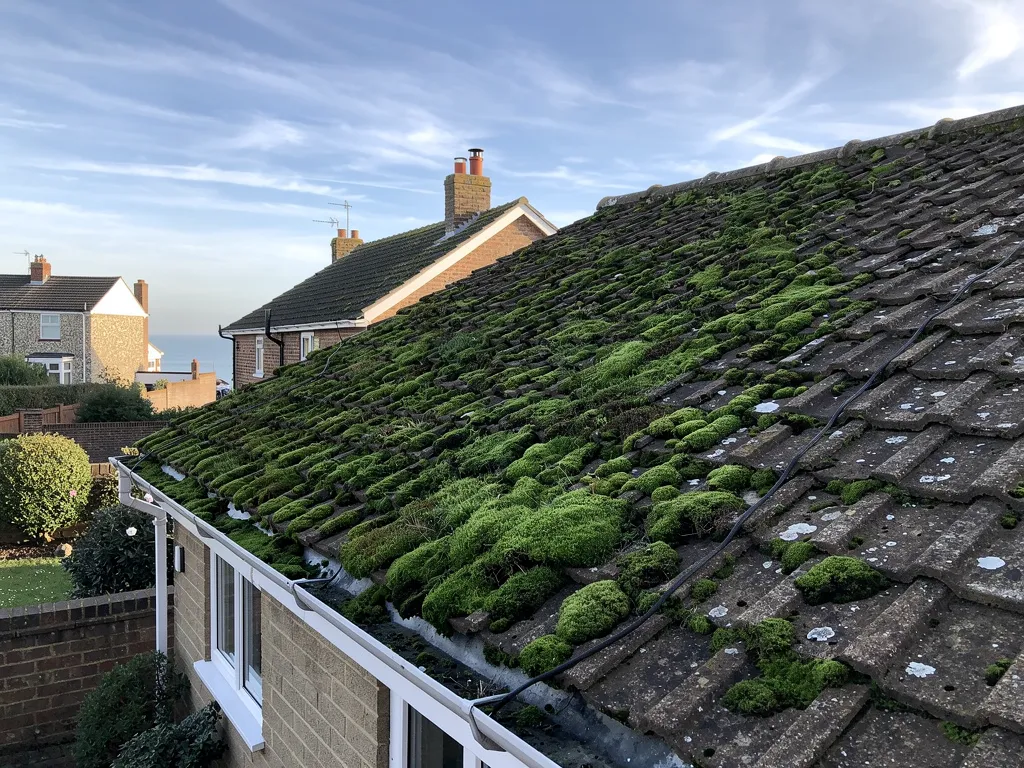
A roof covered in moss is more likely to be questioned. If tiles were already loose or the underlay was already sodden, an insurer may argue the weather was not the main cause. That does not mean every claim fails, but it shows why the condition of the roof beforehand matters.
What to do before you claim
Contact your insurer as soon as damage is found. Guidance put out after Storm Eunice in 2022 said that makeshift repairs to limit further harm are sensible, provided the insurer hears about them first. Take dated photographs, keep receipts for any emergency work, and hold on to tiles or debris that came down.
Where rain is entering the house, making the roof safe comes first for us, and our photographs record its state. Clear pictures help you explain the damage to your own insurer, and whether a claim succeeds is the insurer's decision.
Do not clean or treat a roof you are about to claim on before the insurer has been given an opportunity to inspect it. Clearing away evidence, even with good intentions, can make the cause harder to assess and give the insurer a reason to query the claim.
Prevention is the kinder route
Because moss is gradual, regular maintenance is the real protection. A clear roof and clear gutters leave less room for an argument about wear. Our guide to zinc strips and moss looks at one preventive option, and roof cleaning cost sets out typical UK prices for a clean.
Compare that with a repair bill. MyBuilder gives a typical UK range of £150 to £1,500 for roof repairs, as updated on 21 August 2026, while a roof clean from its other guide starts from around £300. Neither figure is a quote for your roof, which comes in writing after a survey.
A dated record of past cleans costs almost nothing to keep and can settle a dispute about whether the roof was looked after. A modest clean every few years, with the gutters kept clear, is generally easier on the budget than letting growth build up for a decade. The roof cleaning and moss removal hub has more.
If your claim is refused
Start by complaining to the insurer. Should it fail to give a final answer within eight weeks, or should you dislike the answer, you can take the case to the Financial Ombudsman Service at no charge. You then have six months, counted from the dated final response, so ask for that response in writing.
The Ombudsman adds that an insurer relying on an exclusion carries the burden of showing it applies. That is useful to know, though it guarantees no outcome, and it is wise to keep your records in order: invoices, photographs, dates and the insurer's letters.
While you wait, the roof still needs looking after. If access is awkward, our page on roof cleaning run-off and the neighbours covers notice to those next door, which matters when a tower or ladder is needed.
Moss and your policy
Will my premium rise if I tell my insurer about moss?
We cannot say, because each insurer prices differently. Moss alone is rarely a reason for a refusal at renewal, but a leak or tile damage may be recorded. Ask your insurer or broker how they treat maintenance, and keep a record of any cleaning.
Does a cleaning receipt help if I claim later?
It can help show the roof was maintained. A dated invoice and survey photographs give you something to point to if an insurer queries the condition of the roof. They are evidence of care, not a guarantee that a claim will be paid.
Tell us about your roof
Describe what is happening and we will call you back to arrange a visit.
- Photographs of what we find
- A written quote with one total price
- Or call 01903 299063
10-year workmanship guarantee, in writing.