
Question answered
Roof cleaning run-off and the neighbours
The short answer
Roof cleaning run-off is the water, moss and grit that leave the roof during the job, and it should be kept on your own property. Gutters and downpipes are protected, debris is collected as it comes off, and plants, cars and washing nearby are covered or moved. Telling the neighbours the date beforehand lets them do the same and avoids disagreement.
A roof clean sends moss, grit and treated water down the slope and sometimes over a boundary. A little protection and a word with next door in advance keeps it a non-event.
Where the run-off actually goes
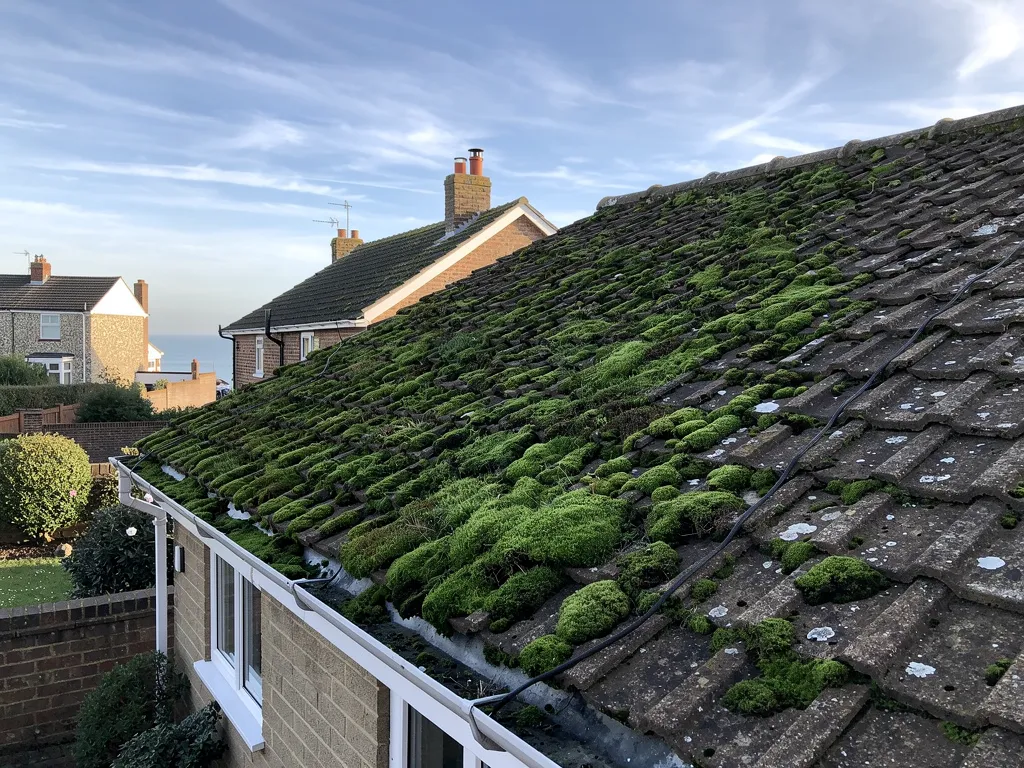
Everything that comes off a roof goes somewhere. Loose moss falls towards the eaves, treated water follows the slope into the gutter, and fine grit travels on any spray or breeze. On a terrace or semi, the neighbour's roof, gutter or garden is only a short distance away.
Most of it lands in your own gutter, which is why gutters are emptied as the job goes. A downpipe should run to a drain, not a flower bed or a neighbour's path, and the outlet should be checked before work starts. Ask the crew where the downpipes discharge, because on older houses they sometimes run to a shared gully. Blocked gutters overflow quickly once debris arrives, so they are watched through the job.
Wind is the main variable. A gusty day carries lightweight debris and spray far beyond the roof, so work is paused or rearranged when the weather turns. That is a matter of safety as much as courtesy, and on a coastal street it happens more often than inland.
Protecting plants, cars and boundaries
Dust sheets and boards go down over beds, paths and patios before cleaning begins. Moss and tile grit are swept up afterwards, and the waste leaves with us. Treated water is the item to plan around, since a biocide can harm plants if it pools in a bed. Covering planting and directing flow to a drain solves most of this.
Cars should be moved, and the same goes for garden furniture, toys and washing. Windows should be shut so that nothing blows indoors. Pets and children should keep clear of treated areas until the surface has dried, so tell the household as well as the street. If your neighbour has a conservatory roof or an extension beside the clean, tell them, because debris may collect on it.
Where roofs share a wall or a boundary line, the work is planned so that nothing falls onto the neighbouring roof, and anything that does is cleared. Each method behaves differently, and the survey is where we explain which one suits the boundary.
Giving notice: a courtesy that pays off
There is no need to ask permission to clean your own roof, but a short note or a word on the doorstep makes a real difference. Give the likely date, the hours, and the fact that the boundary will be protected. People who know about a job tolerate noise and mess far better than those surprised by it.
If the access is awkward, for example a tower on a shared drive or a ladder placed across a path, you do need agreement. Scaffold on a pavement needs a highway licence, which the scaffold firm applies for.
Where a neighbour's property would have to be entered to reach your roof, that is a matter for their consent and for proper arrangements between you. Shared drives need particular care: leave room for vehicles, and agree where the tower will stand. It should never be assumed, however friendly the street, and it is better settled in writing than by a shrug over the fence.
Treatments, strips and what drips afterwards
After the clean, the treatment keeps working and the dead growth washes down with rain over several weeks. Some of it will reach the gutters and downpipes again. Keeping the outlets clear stops it overflowing onto next door.
Metal strips under the ridge are sometimes proposed as a preventive measure. Our page on zinc strips and moss looks at what to ask before fitting them.
If you are told a method sheds a lot of water onto a boundary, ask how it will be contained. A hot-water clean, covered in steam cleaning a roof, uses less force than a jet but still produces run-off. Everything we plan, we explain at the survey, before the written quote. A shower after the clean is no cause for alarm; it simply carries the loosened residue towards the gutters, which is why they are left clear.
If something does go wrong
Stained paint, a blocked drain or a damaged plant next door can happen, even with care. The sensible response is to speak early, clear it quickly and put right what the job caused. Photographs from before the work help both sides agree on what was there.
A written quote and a clear scope also help. They record what was planned, including protection and clean-up, so that nobody is arguing from memory. If damage to your own roof or a neighbour's is in question, insurance may come into it, and moss damage and insurance explains how insurers read such claims.
Ten minutes with a camera before the crew arrives is time well spent, and it protects both households. Most disagreements start with surprise. Tell people, protect the boundary, and keep the site tidy. The roof cleaning and moss removal hub has more on how a clean is run.
Next-door questions
Must I tell the neighbours before a roof clean?
No rule says you must, but it is sensible. A short note covering the date, the hours and the protection planned avoids complaints about noise, spray or parked vehicles. If access crosses their land, you need their agreement first.
Who pays if debris damages a neighbour's property?
The person who caused the damage is generally expected to put it right. If you hire a contractor, discuss this before work starts and ask how protection and clean-up will be handled. Photographs taken beforehand make any disagreement easier to settle.
Tell us about your roof
Describe what is happening and we will call you back to arrange a visit.
- Photographs of what we find
- A written quote with one total price
- Or call 01903 299063
10-year workmanship guarantee, in writing.