
Question answered
Does lead flashing sealant work?
The short answer
Lead flashing sealant works as a short-term stop-gap, not a repair. It can close a hairline gap and slow a drip for a season, but lead moves with temperature, and a rigid or tacky bead soon peels away from it. If the flashing has lifted, split or lost its wall joint, the lasting fix is to dress it back, renew it or rework the joint.
Sealant can slow a drip where lead meets a wall, and it is usually the first remedy people reach for. Whether it holds depends on why the joint opened, and most of the time it only buys a little time.
What a tube of sealant can and cannot do
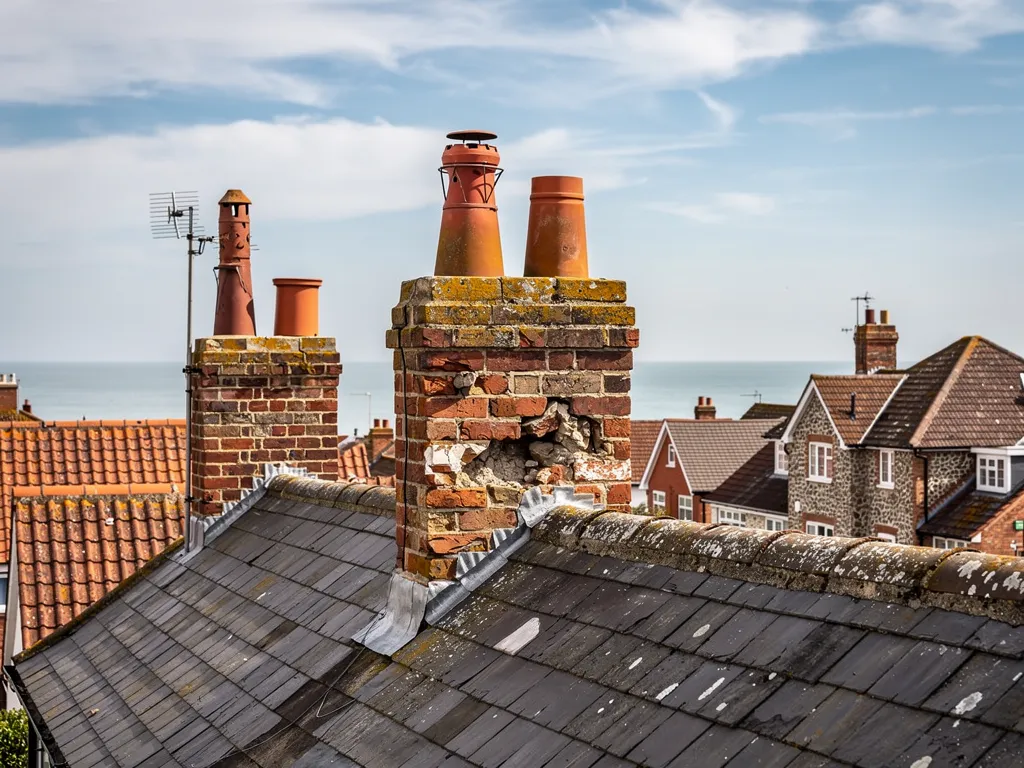
Lead flashing is the strip of metal that seals the line where a slope abuts a wall or chimney. One edge goes into a groove cut in the brickwork, the other lies over the tiles. That joint is meant to be gripped with lead wedges and pointed in mortar, not glued.
A bead of sealant can fill a pinhole, a small crack or a gap where old pointing has fallen out. For that kind of fault it can slow a leak. It does not stiffen a flashing that has lifted in the wind, it does not stop a split caused by the lead moving, and it cannot stand in for a wedge that is missing.
Sealant is also only a surface treatment. If water is getting behind the lead, a bead on the outside simply stops it draining out again, and the wall behind stays wet for longer. That wet brick is then slow to dry out, and damp in a chimney breast or party wall can reach the plaster inside the house.
Why lead and sealant do not stay together
Lead expands and contracts every day, with the sun and with the cold, and over a long run the movement is enough to matter. A sealant has to stretch with it, and many general-purpose tubes do not. Their bond fails at the edge, a thin gap opens, and the wall draws water straight into it.
The surface of lead also develops an oxide layer, a dull grey skin, which makes a poor base for adhesion. A bead laid over dirt or oxide can peel away within a season, leaving a thin gap that looks sealed from the ground. A thick bead pushed into a moving joint may crack in a different place rather than seal.
There is a practical risk too. A smear of sealant hides the original fault from the next person who looks, which makes diagnosis harder. It can also leave a stain on brickwork that is difficult to remove when the flashing is eventually replaced.
When sealant is a reasonable short-term step
There are moments when a tube earns its place. A leak that starts at night in a storm, a roof you cannot reach safely until the weather settles, or a small gap you want to watch for a few weeks. In each case a neat bead can cut down the water coming in while a proper repair is arranged.
If you do use sealant, clean and dry the surface first, choose a product made for exterior metal work, keep the bead small, and photograph the area before and after. That record helps whoever repairs it later. Stay off wet roofs and off ladders in wind; looking up from the pavement with binoculars tells you a good deal about the joint.
Treat the result as temporary and keep an eye on the ceiling and the wall below. If the stain grows after the next heavy rain, the bead has not solved it, and the cause needs a proper look.
What lasts: re-dressing, wedging and renewal
A lasting repair deals with the lead itself. If the flashing has simply lifted, it can be dressed back down and held with fresh wedges, then pointed into the joint. If it has split, a new section is fitted, or the whole length is renewed. Stepped flashings along a gable wall are laid in short pieces, each stepping up with the brick courses, so that movement is shared out and no single piece is long enough to tear.
MyJobQuote puts lead flashing at over 80 years of life, and over 100 for higher codes, which is why lifting a sound flashing and refixing it is often worth doing. The front piece at a chimney is explained on lead apron flashing, and the lead codes guide covers thickness.
For faults in a gutter behind a wall, see lead parapet gutters. All the other lead topics sit under lead roofing.
Deciding between a stop-gap and a repair
We look at the lead first. Is it intact, is it still dressed tight, is the joint loose, and where does water run when it rains? Those answers show whether the flashing needs a small correction or a proper replacement. Photographs of the area let you see what we see, and the quote that follows is written down as one price.
Where a small adjustment will hold, that is the job we put forward. If the lead is worn out, a bead of sealant would only postpone a bigger bill, and we explain why before you decide.
Scaffolding and VAT can shift the total on any job, so check whether each quote you receive includes them. A visit that leaves the cause in place can cost more over a few years than a repair done once.
Where the metal is in doubt, copper or lead compares the two.
Sealant on lead: further queries
Is it safe to put sealant over old lead that has started to crack?
It will not do harm, but it will not help for long. Cracked lead has usually tired from repeated movement, and a bead over it simply cracks again. Sealant can cover a crack for a few weeks while a repair is arranged, though the section generally needs replacing.
Can sealant be used instead of pointing a lead flashing into the wall?
Not as a lasting alternative. The flashing is held in a raked-out joint with wedges and then pointed, so the lead is gripped rather than stuck. Sealant used there tends to fail at the movement joint. A proper repoint with fresh wedges is the sounder fix.
Tell us about your roof
Describe what is happening and we will call you back to arrange a visit.
- Photographs of what we find
- A written quote with one total price
- Or call 01903 299063
10-year workmanship guarantee, in writing.