
Question answered
Should you clean the roof before selling?
The short answer
Cleaning the roof before selling is worth doing when the roof is sound and simply looks tired. It lifts the first impression for viewers and listing photographs. It does not change what a surveyor finds, so repair genuine faults first. If the covering is worn or slipping, a clean will not hide that.
A roof covered in moss and black streaks puts viewers off before they reach the front door. Cleaning helps that first impression, but it does nothing for a survey, so it pays to know which is which.
What a buyer sees from the pavement
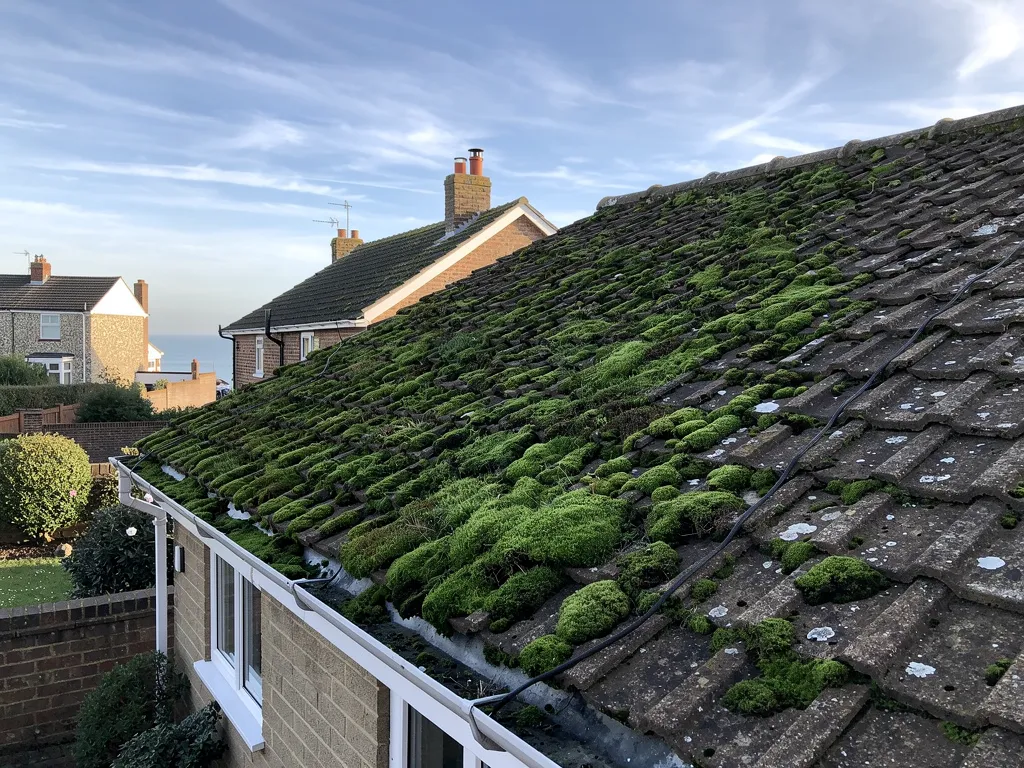
Buyers judge a house within seconds of pulling up. A roof thick with moss, algae and stains reads as neglect, even when the tiles beneath are perfectly good. Viewers see a long job on the to-do list, and some carry that into an offer.
A clean roof does the opposite. The colour of the tiles or slate returns, the lines of the courses show again, and the house looks cared for. That matters on streets where every roof is in plain view, which describes the terraces and semis around Worthing, Hove and Shoreham, overlooked from the road and from the neighbours.
Cleaning is also quick next to most pre-sale work, and the effect on the listing photographs is immediate. Those photographs are often where a buyer first forms a view, long before anyone books a viewing. A sharp image of clean, even tiles under a clear sky does more work than a paragraph of description, and it costs very little next to the price of the house.
Cleaning is not the same as a sound roof
A buyer's surveyor looks at structure and covering, not shine. They note slipped, cracked or missing tiles, sagging ridges, failing flashings and any sign of leaks in the loft. Moss may get a mention, but a freshly cleaned roof with a loose ridge still produces a loose ridge in the report.
That is why the order matters. Have the roof inspected before you clean it. If cleaning exposes a cracked tile or a gap, repair it as part of the same visit. A buyer can be reassured by a dated, photographed record of faults found and put right, and the whole thing reads better than unknowns left for the buyer to price.
Our page on whether moss damages a roof explains why heavy growth deserves attention, and it is a fair question to settle before deciding how much to do. Growth that has lifted tiles or choked a valley is a repair matter. Growth sitting on sound tiles is mostly a question of looks.
Choosing a method that will not cause new damage
A harsh clean can create a problem you did not have. Strong jets wear the surface from concrete tiles, push water under laps and break old, brittle slates. Brushing, scraping and a suitable treatment look less dramatic and are safer for the roof you are trying to sell.
Some roofs call for particular care. Valleys collect the heaviest growth, and moss left there can send water back under the tiles; see moss in roof valleys. A corrugated cement roof may contain asbestos and must not be brushed or jetted, as covered in cleaning an asbestos cement roof.
MyBuilder's cost guide (updated 21/08/2026) gives typical UK ranges of £400 to £750 for tile roofs and £500 to £1,000 for slate. What yours costs depends on the roof's area, pitch and access, and the figure you are given is a single total, put in writing after we have seen the roof. Check that any quote you receive says whether VAT and any access equipment are included.
A sensible order of work before the sale
Begin with a survey of roof, loft and gutters, with photographs. Fix anything that lets water in, because that is what costs a sale its confidence. Next clean the roof and clear the gutters and downpipes, which also lifts the look of the fascias.
Keep the paperwork: the photographs, plus a short written note listing each fault and each repair. Dates and locations on the roof make it far more useful to a buyer's solicitor. Pass it to the estate agent or your solicitor so it can go into the sale pack.
If the roof is close to the end of its life, cleaning may not be the best use of money. You could do better to be open with the buyer, or to agree a repair or replacement before exchange. A tired roof with a clear plan reads better than a gleaming one with something to hide.
Extensions, garages and the parts nobody checks
Sellers often clean the main slopes and forget the extra roofs. A flat roof over an extension is visible from upstairs windows, and heavy growth there suggests water is not leaving it; see moss on a flat roof.
Check the gutters at the same time. Plants growing from a gutter, or green streaks down the wall below it, tell a viewer that water has been overflowing for years.
Do not forget the chimney stack and the pointing around it, which show clearly from the street. Finally, think about timing. Allow a couple of weeks before photographs are taken, so that any repairs can be done first and the roof looks its best when the listing goes live. For the whole range of treatments, see roof cleaning and moss removal.
Selling a house: two quick questions
Will a buyer's surveyor mark the roof down if it has moss?
They may mention it, but their report weighs the condition of the covering, ridge, flashings and loft timbers far more. Moss on its own is a maintenance point. Evidence that the roof has been inspected and faults put right reassures more than a spotless surface.
How soon before listing should the roof be cleaned?
Ideally in the weeks before listing photographs are taken, so the roof is at its best online. Leave time for any repairs the survey finds. Moss can return, so a treatment applied during the clean helps the result last through the sale.
Tell us about your roof
Describe what is happening and we will call you back to arrange a visit.
- Photographs of what we find
- A written quote with one total price
- Or call 01903 299063
10-year workmanship guarantee, in writing.