
Question answered
Moss on a flat roof: problem or not?
The short answer
Moss on a flat roof matters when the roof is holding water, and counts as a small cleaning job when it is not. The moss is light and soft, but it only thrives on a surface that stays damp. Thick patches usually point to ponding, a weak fall or a blocked outlet. Clear the growth gently, then deal with whatever allowed it.
Green growth across a flat roof says more about drainage than appearance. Wherever it thrives, water is staying put long enough for something to root, and that is worth understanding before anyone picks up a brush.
Why a flat roof grows moss at all
A roof described as flat still carries a gentle slope, called the fall, which sends rain towards an outlet or gutter. IKO, citing the 2018 edition of BS 6229 (since revised), gives the recommended minimum fall as 1:80, and adds that the design should be 1:40, which leaves room for building tolerances and later deflection. Across the years, deck boards sag and buildings settle, so the slope can disappear in places.
Moss needs damp, a little shade and a few crumbs of dirt to root in. A tired roof supplies all three. Leaves and wind-blown grit gather along the edges, behind upstands (the short walls where the roof meets the house) and in every dip. Trees overhead add shade and a steady supply of debris.
So the pattern is a useful clue. A scatter on a shaded edge is one thing. A thick mat spread over the middle suggests water lies there long after the rain has stopped.
What growth can do to the membrane
The membrane is the waterproof skin: EPDM (a synthetic rubber sheet), GRP (a glass-fibre and resin laminate) or felt. Moss does not eat any of them, but it is not harmless.
A mat of moss behaves like a sponge. It holds water against the surface and keeps laps and seams wet for longer than bare roofing would be. On mineral-faced felt it can work into the surface and lift the protective chippings. Thick growth also traps leaves, which is how a modest patch turns into a blocked outlet and a pool several centimetres deep.
Standing water adds weight and keeps pressure on every weak spot, such as an old repair, a split at a corner or an edge trim that has lifted. We therefore treat moss as a symptom first. When a flat roof leaks indoors, the wet patch outside is often some distance from the stain, and growth shows us where water has been sitting.
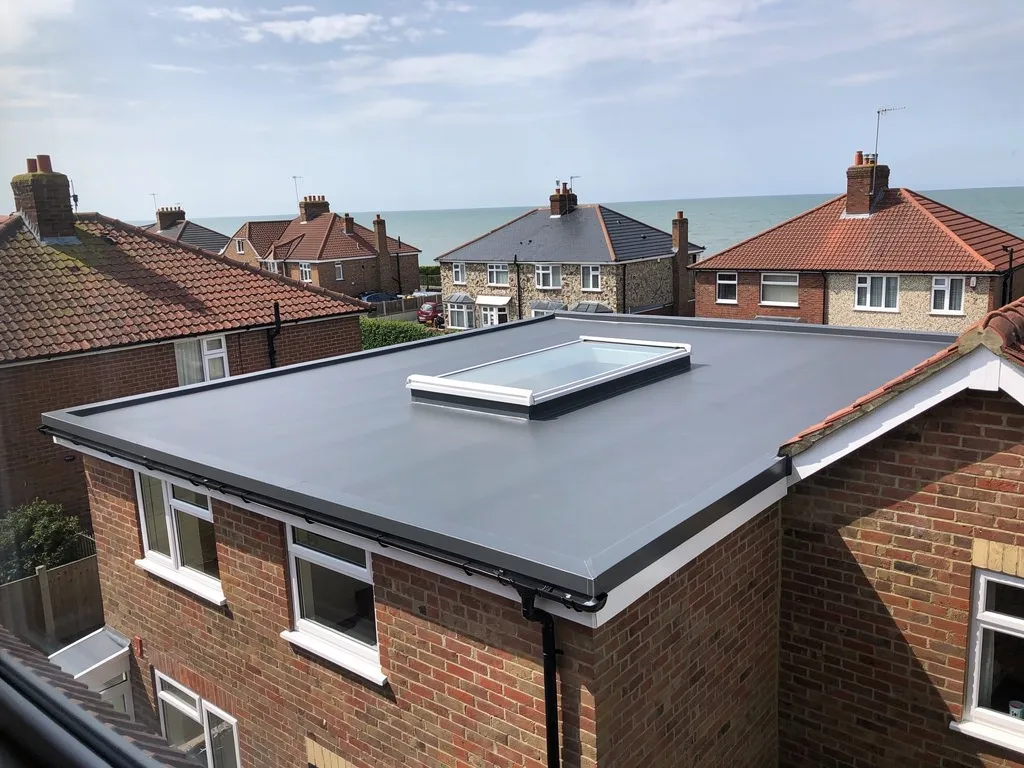
Clearing it without damaging the roof
Gentle methods win here. A soft brush and a plastic scraper lift most growth, and a hand tool is far kinder than anything with a steel edge. A pressure jet is a poor idea: it can drive water beneath laps, strip the mineral surface and open seams that were sound. Our page on steam cleaning a roof looks at a softer approach and its limits.
Work from the high side towards the outlets, bag the debris and take it away rather than sweeping it into the gutter. Then flush the outlets and watch that water runs off freely. A biocide wash slows regrowth, though only on a roof that drains properly afterwards.
Keep off a wet membrane, and keep weight away from thin or brittle areas. MyBuilder's guide (updated 21/08/2026) gives a typical UK range of £300 to £600 for cleaning a flat roof. Your own figure turns on size, access and how much there is to do, and we set it out in writing after seeing the roof.
Check the water, not just the moss
Go up, or look from an upper window, a day or two after rain. If pools are still sitting there, moss will come back, because the cause is untouched. Cleaning alone only buys time.
What happens next depends on the survey. A blocked or badly placed outlet may need clearing or an extra one. A shallow dip can sometimes be corrected locally. Where the fall has gone across a wide area, or the surface is worn out, the answer is more likely to need re-covering with a new fall built in, and we show you pictures of that on your own roof before suggesting it.
Look at neighbouring pitched roofs too, since water from one can overload the other: see moss in roof valleys. Lichen is a different growth with different habits, described in lichen on a roof.
Planning a sale, or just tidying up
A mossy flat roof over an extension or garage tends to catch a buyer's eye from an upstairs window. If you are preparing a property for market, our note on cleaning the roof before selling sets out what a clean achieves and what it leaves untouched.
For owners staying put, a sensible habit is an autumn visit once the leaves have come down: clear the surface and the outlets, and look for any change in how the water leaves. Photograph it each time, from the same window, so any change in where the water pools stands out.
If the surface is blistered, cracked at the upstands or soft underfoot, stop there and ask for a survey. The full range of roof cleaning is on our roof cleaning and moss removal page, and a repair is only the right answer when it reaches the cause of the damp. We would sooner recommend a clean and a drainage fix than a new covering the roof does not need, and we say which applies once we have seen it close up.
Flat roof growth: two practical questions
Is a thin film of moss safe to leave on a flat roof for now?
Usually, if the roof drains fully within a day or so of rain and the outlets run clear. Keep an eye on it after leaf fall and in shaded corners. If you notice standing water, a soft patch or damp on a ceiling below, have it looked at rather than waiting.
Can I clear flat roof moss myself?
Only where you can get at it from firm, safe footing without stepping onto the membrane in poor weather. Use a soft brush, never a wire one or a jet wash, and do not rest a ladder on the edge trim. If any part needs you on the roof, ask a roofer.
Tell us about your roof
Describe what is happening and we will call you back to arrange a visit.
- Photographs of what we find
- A written quote with one total price
- Or call 01903 299063
10-year workmanship guarantee, in writing.